From Teller to Touchscreen: The Rise of Mobile Banking Apps

TL;DR

Mobile banking apps have changed how people manage their finances, but building one takes careful planning and serious attention to security. This article covers the key factors behind mobile banking app development – UX/UI, security, integration with banking systems, regulatory compliance, and performance – along with the core features users expect, the main types of banking apps, and examples of top mobile banking apps.

Make a summary of this article with AI:

Do you know how mobile banking applications have revolutionized the way we manage our finances? It is important to analyze how the evolution from traditional banking to mobile platforms increased convenience. Creating a mobile banking app covers innovative technology, careful planning, and dedication to stringent security protocols.

Financial institutions aim to provide user-friendly experiences, so understanding mobile banking application development becomes essential for staying competitive. This article explores the vital aspects of building a successful mobile banking app, from conceptualization to deployment.

The driving factors behind mobile banking application development

Mobile banking apps have become critical tools for modern banking. These apps offer exceptional convenience, allowing users to manage their finances on the go. However, the development of a successful mobile banking app involves several critical factors that ensure functionality, security, and user satisfaction. Let’s check the main elements of mobile banking app development.
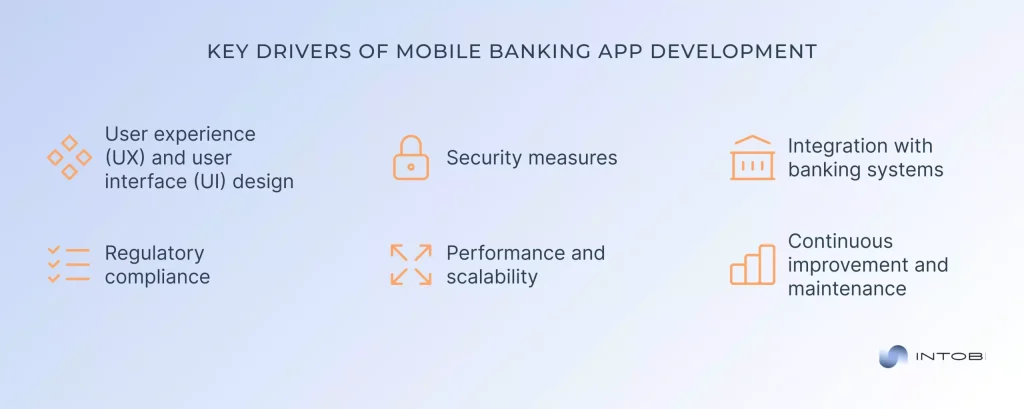
What to consider when developing a mobile banking app

User experience (UX) and user interface (UI) design

The goal is to provide an intuitive and engaging experience that makes banking tasks easy and pleasant for users. UX design focuses on the overall feel of the app, ensuring that users can navigate smoothly from one feature to another. This involves streamlining processes like account management, transaction history, and customer support.

On the other hand, UI design deals with the app’s visual elements, such as layout, colors, and fonts. A well-designed UI makes the app visually appealing and enhances usability. Consistent design elements, clear icons, and responsive layouts contribute to a more user-friendly experience of digital mobile applications. 

Security measures

Given the sensitive nature of financial transactions and personal information, robust security measures are necessary to protect users from fraud and data breaches. Fundamental security features include:

  • Encryption: Data encryption ensures that sensitive information transmitted between the app and banking servers is protected from unauthorized access.
  • Multi-factor authentication (MFA): It adds an extra layer of security by requiring users to provide additional verification, such as a one-time password (OTP) or biometric authentication (fingerprint or facial recognition).
  • Secure coding practices: Developers must follow secure coding practices to prevent vulnerabilities and potential exploits.
Interesting

Implementing these security measures helps build trust and confidence among users, essential for a successful mobile banking application.

Integration with banking systems

Integrating the mobile banking application with existing banking systems and infrastructure is essential to development. This integration allows the app to perform real-time transactions, access account information, and update balances seamlessly. Critical integrations include:

  1. Core banking systems: These systems handle the backend operations of banking, such as processing transactions and managing account data.
  2. Payment gateways: Payment gateways facilitate secure transactions, enabling users to make payments and transfers directly from the app.
  3. Third-party services: Integration with third-party services, such as credit score providers or financial planning tools, can enhance the app’s functionality.

Effective integration ensures that the app operates smoothly and provides a cohesive banking experience.

Regulatory compliance

In general, compliance with regulatory requirements is a critical factor in mobile banking development. Financial institutions must adhere to various laws and regulations designed to protect consumers and maintain the integrity of the economic system. 

Regulations such as the GDPR in Europe and the California Consumer Privacy Act (CCPA) in the United States govern how personal data is collected, stored, and used.

On the other hand, Anti-Money Laundering (AML) and Know Your Customer (KYC) regulations require banks to verify the identity of their customers and monitor transactions for suspicious activities.

Performance and scalability

Performance and scalability are crucial for the success of a mobile banking application development. The app must perform efficiently under various conditions, including high user traffic and large transaction volumes.

It is essential to conduct load testing to ensure the app can handle a high number of simultaneous users without performance degradation. Also, design the app’s architecture to support future growth, allowing for easy upgrades and adding new features.

Thus, a well-optimized app should provide a smooth and reliable user experience, even during peak usage times.

Continuous improvement and maintenance

Post-launch, continuous improvement and maintenance are crucial for keeping the mobile banking application relevant and functional. This involves:

  • User feedback: Regularly collecting and analyzing user feedback to identify areas for improvement and address issues.
  • Software updates: Releasing updates to fix bugs, enhance features, and improve security.
  • Monitoring and support: We monitor the app’s performance on an ongoing basis and provide customer support to resolve any issues promptly.

A commitment to continuous improvement ensures the digital banking application remains competitive and meets evolving user needs.

Key features of mobile banking apps

In the digital age, digital banking applications offer a range of features designed to provide users with convenient, secure, and efficient banking experiences from their smartphones. We prepared a list of best mobile banking app features.

Account management

It is a fundamental feature of mobile banking applications, allowing users to view and manage their accounts easily. This includes:

Account overview

Users can view balances, recent transactions, and account details for all linked accounts, including savings, checking, and credit accounts.
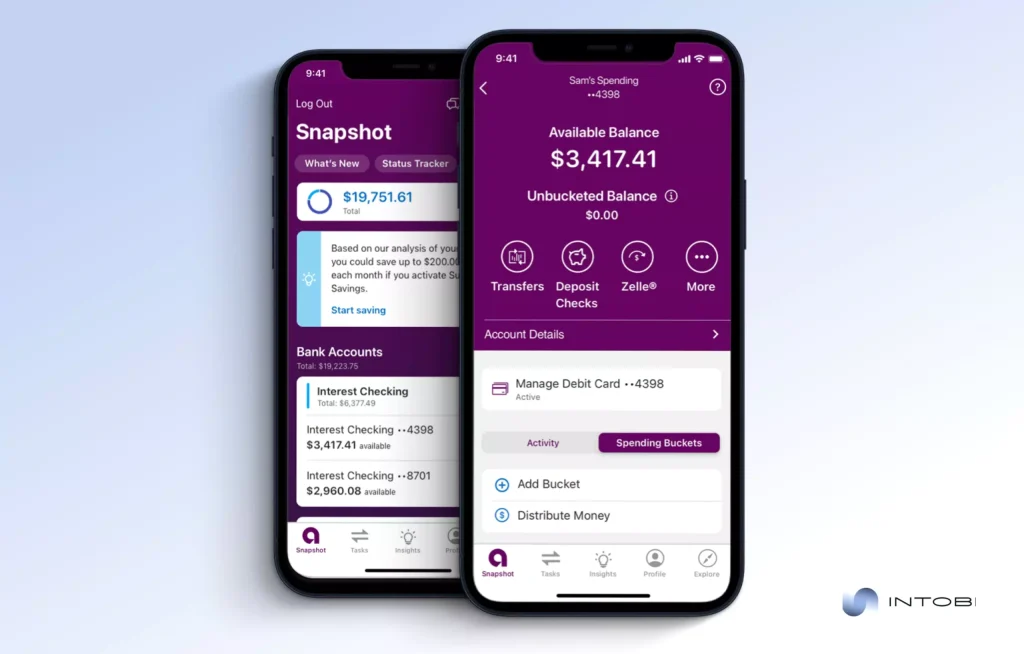
Ally app account

Transaction history

Detailed transaction history helps users track their spending, review past activities, and reconcile their accounts.

Account statements

Access to digital statements for various periods enables users to monitor their financial status without the need for physical paperwork.

So, this feature ensures that users have a comprehensive view of their financial health at their fingertips.

Funds transfer

Funds transfer capabilities are essential for mobile banking app development, providing users with the flexibility to manage their finances seamlessly. Key features include the following:

  • Internal transfers: Users can transfer funds between their own accounts, such as moving money from a checking account to a savings account.
  • External transfers: Users can send money to other bank accounts, whether within the same bank or to accounts at different banks. This includes features like adding new payees and scheduling recurring transfers.
  • Peer-to-peer (P2P) payments: Integration with payment services allows users to send money to friends and family using just their phone numbers or email addresses.

These functionalities offer convenience and flexibility for managing personal finances and making payments.

Bill payment

These features enable users to pay bills directly from their mobile banking application, streamlining the process and reducing the need for physical checks or cash. Fundamental elements include:

Bill pay setup

Users can set up and manage bill payments for recurring expenses such as utilities, mortgages, and subscriptions.

Payment scheduling

The ability to schedule one-time or recurring payments ensures bills are paid on time without manual intervention.

Payment history

Users can track and review their payment history to ensure accuracy and manage their budgeting.

This feature simplifies financial management and helps users avoid late fees and missed payments.

Mobile check deposit

This mobile check deposit allows users to deposit checks directly from their smartphones, offering a convenient alternative to visiting a bank branch. Main features include:

  • Check capture: Users can take photos of the front and back of their checks using their phone’s camera.
  • Deposit confirmation: The app instantly confirms the deposit and updates the account balance once the check is processed.
  • Deposit limits: Some apps may limit the amount that can be deposited via mobile check, with options to request higher limits if needed.

This feature enhances convenience and accelerates access to deposited funds.

Security features

Security is vital in mobile banking applications, given the sensitivity of financial data. Essential security features cover:

Biometric authentication

Using fingerprint or facial recognition to log in and authorize transactions securely.
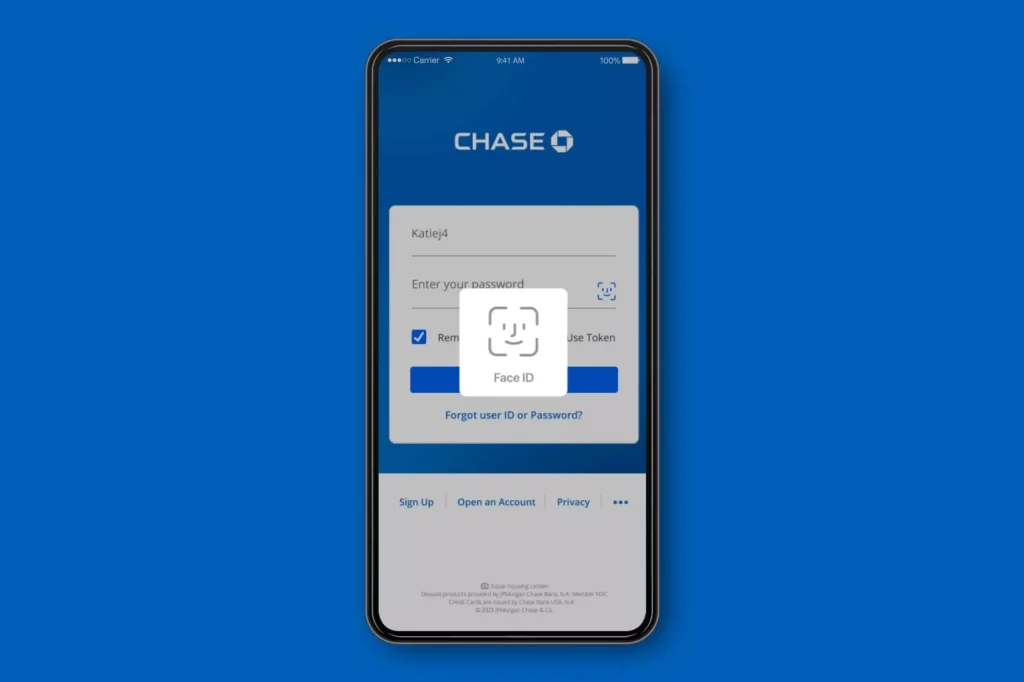
Facial recognition in Chase Mobile

Encryption

Data encryption protects sensitive information during transmission between the app and banking servers.

Fraud alerts

Real-time alerts for suspicious activities or unusual transactions help users monitor their accounts and prevent fraud.

Thus, robust security measures ensure that users’ financial information remains protected and secure.

Customer support

Integrated customer support features enhance the user experience by assisting and resolving issues promptly. Key components include:

In-app messaging

Users can quickly communicate with customer service representatives through the mobile banking application to resolve queries or issues.

Chatbots

AI-powered chatbots offer immediate assistance for common questions and tasks, improving response times.

Branch locator

Users can find nearby bank branches or ATMs (automated teller machines) using the app’s built-in locator feature.

Compelling customer support features improve user satisfaction and streamline problem resolution.

Personal finance management tools

Many mobile banking applications include personal finance management tools to help users budget and plan their finances. Features may include:

  • Expense tracking: Categorization of spending to help users understand their spending patterns and manage their budget.
  • Savings goals: Tools to set and track progress towards savings goals, such as building an emergency fund or saving for a major purchase.
  • Financial insights: Personalized insights and recommendations based on users’ spending habits and financial goals.

These valuable tools provide users with valuable insights into their financial health and assist in effective money management.

What innovative features will enhance your app?

Contact us

Common types of banking apps

These mobile banking applications satisfy various needs, from traditional banking to modern fintech solutions. Understanding the main types of banking apps provides insights into their specific functionalities and how they serve diverse financial needs.
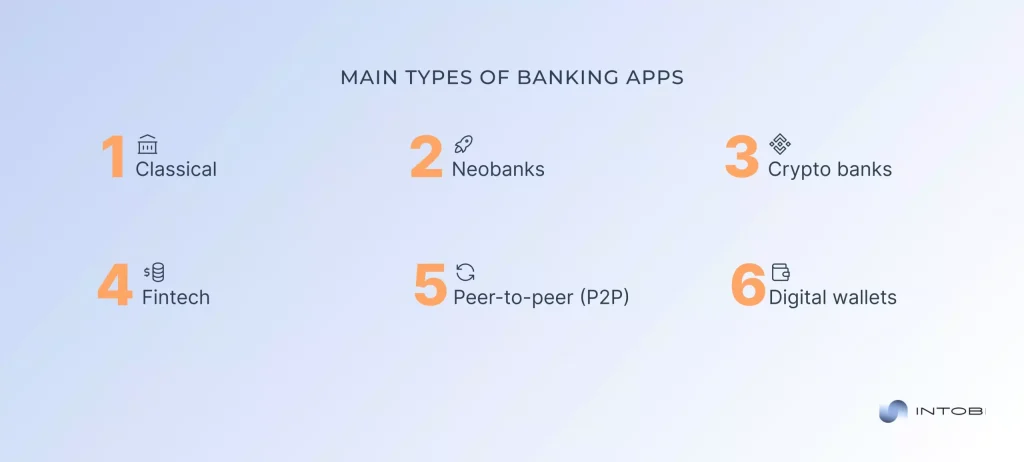
The primary types of banking apps

Classical

These mobile banking applications are the digital counterparts of traditional banks, providing users with a familiar and comprehensive banking experience. 

Users can access various services, including account management, funds transfer, bill payments, loan applications, and more. These apps aim to replicate the physical branch experience through digital means.

Classical apps are tightly integrated with the bank’s core systems, ensuring real-time updates and consistency across digital and physical channels. These apps emphasize robust security measures and regulatory compliance to protect user data.

Neobanks

Digital-only banks, or neobanks, represent a modern approach to banking app development by operating exclusively online.

Neobanks prioritize simplicity and ease of use, offering streamlined interfaces and intuitive features that enhance user experience. They focus on delivering a clean, efficient banking solution without the complexities of traditional banking.

These neobanks often include instant account setup, real-time notifications, expense tracking, and personalized financial insights. They employ advanced technology to provide a seamless and engaging user experience.

By operating without physical branches, neobanks reduce overhead costs and can offer lower fees or higher interest rates on savings accounts. This makes them an attractive option for cost-conscious users.

Crypto banks

In fact, сrypto banks integrate traditional mobile banking app development services with cryptocurrency functionalities, catering to the growing interest in digital assets.

These crypto banks allow users to buy, sell, and store cryptocurrencies like Bitcoin and Ethereum. They often provide secure wallet integration and facilitate crypto-to-fiat conversions.

Besides crypto services, these apps offer conventional banking features such as checking and savings accounts, blending traditional and digital asset management.

Crypto banks utilize blockchain technology and advanced encryption to ensure the security of users’ digital assets and transactions.

Fintech 

These fintech apps cover various financial technology solutions designed to enhance multiple aspects of financial management.

They may focus on financial activities such as investment management, budgeting, tax preparation, or financial planning. The digital banking applications often provide specialized tools and resources tailored to particular financial needs.

Moreover, these apps frequently integrate with other financial services and platforms. They offer users a comprehensive view of their finances and innovative solutions for managing them. 

Peer-to-peer (P2P)

Peer-to-peer payment apps facilitate direct money transfers between individuals, making personal transactions quick and easy.

Users can send and receive money instantly using a phone number or email address, simplifying transactions between friends and family.

Many P2P apps include social features, allowing users to request or split payments, add notes, and manage transactions within a social context. These mobile banking applications often integrate with bank accounts to enable seamless transfers and fund management.

Digital wallets

These wallets store payment information securely and facilitate transactions using mobile devices.

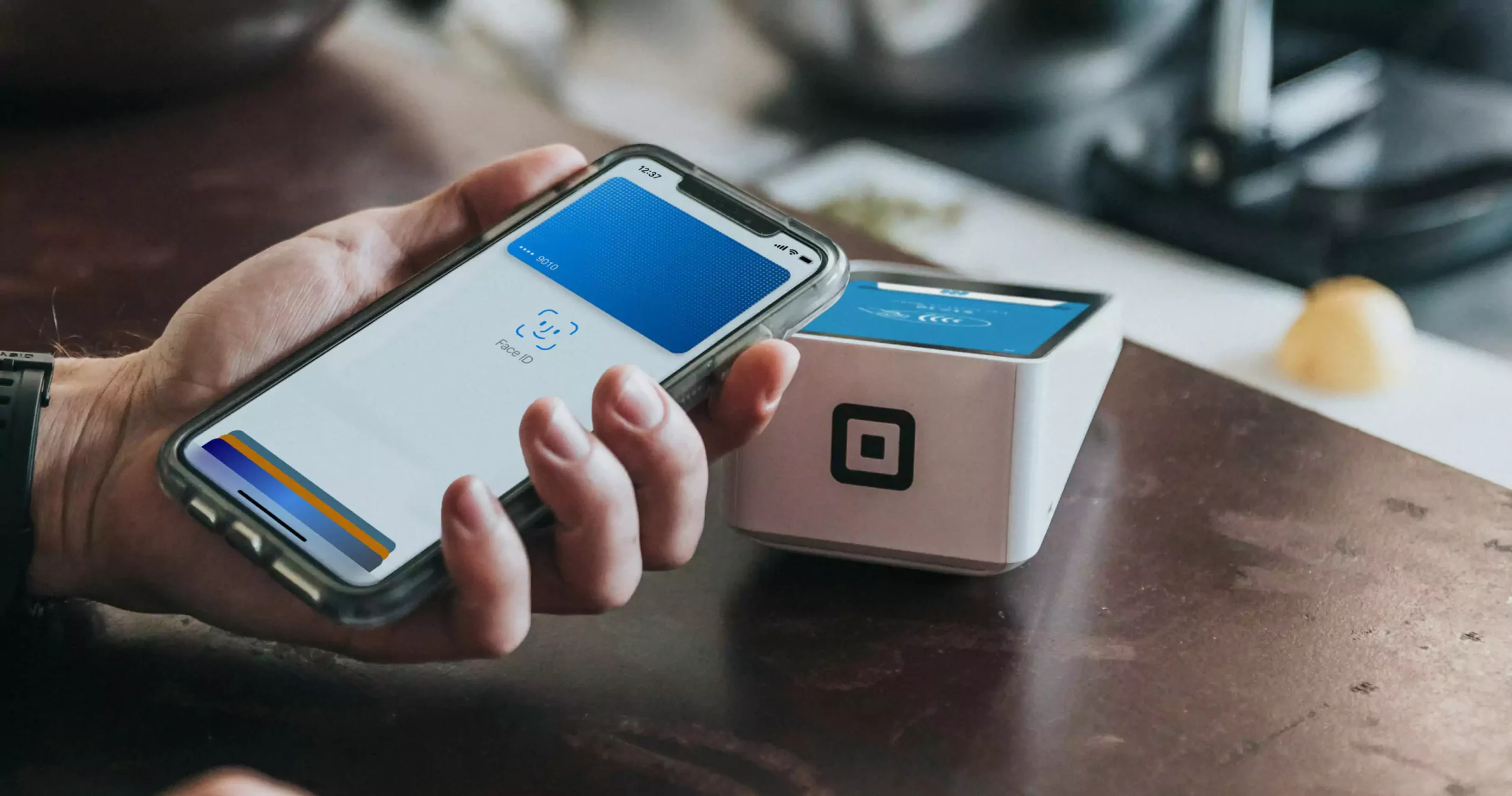
Digital wallets keep payment information, such as credit/debit card details, securely encrypted on the device, allowing for easy and secure transactions. Many digital wallets support contactless payment options, enabling users to make payments by simply tapping their phones at compatible terminals.

Moreover, digital banking applications often integrate with other financial services, such as loyalty programs and online stores, enhancing functionality.

Top mobile banking apps

Leading financial institutions and fintech companies have created mobile banking applications with robust features, intuitive user experiences, and high-security standards. Below are some well-known mobile banking apps and what makes them stand out.

Citi Mobile
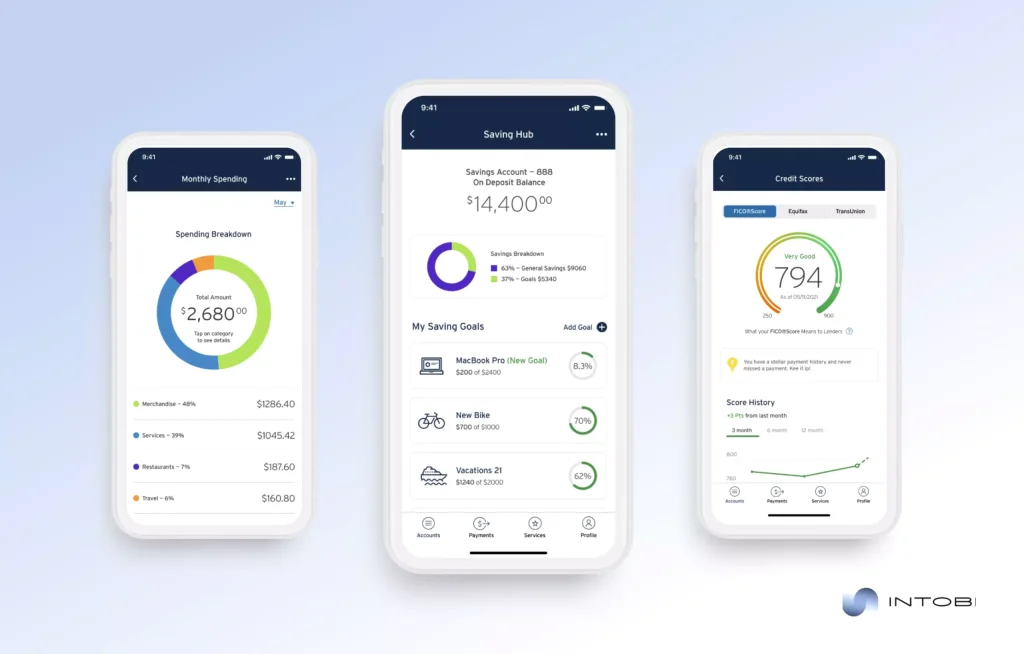
Citi Mobile app

It offers a full suite of best mobile banking app features, providing an easy way for Citi customers to manage their accounts, pay bills, and track spending. The app includes a unique “Citi Quick Lock” feature, allowing users to instantly lock their credit or debit cards if lost or stolen.

Additionally, Citi Mobile’s dashboard is designed for quick access to frequently used features, making it a user-friendly option for experienced and novice users. The app also provides detailed spending insights and financial planning tools, helping users manage their finances more effectively.

Chase Mobile
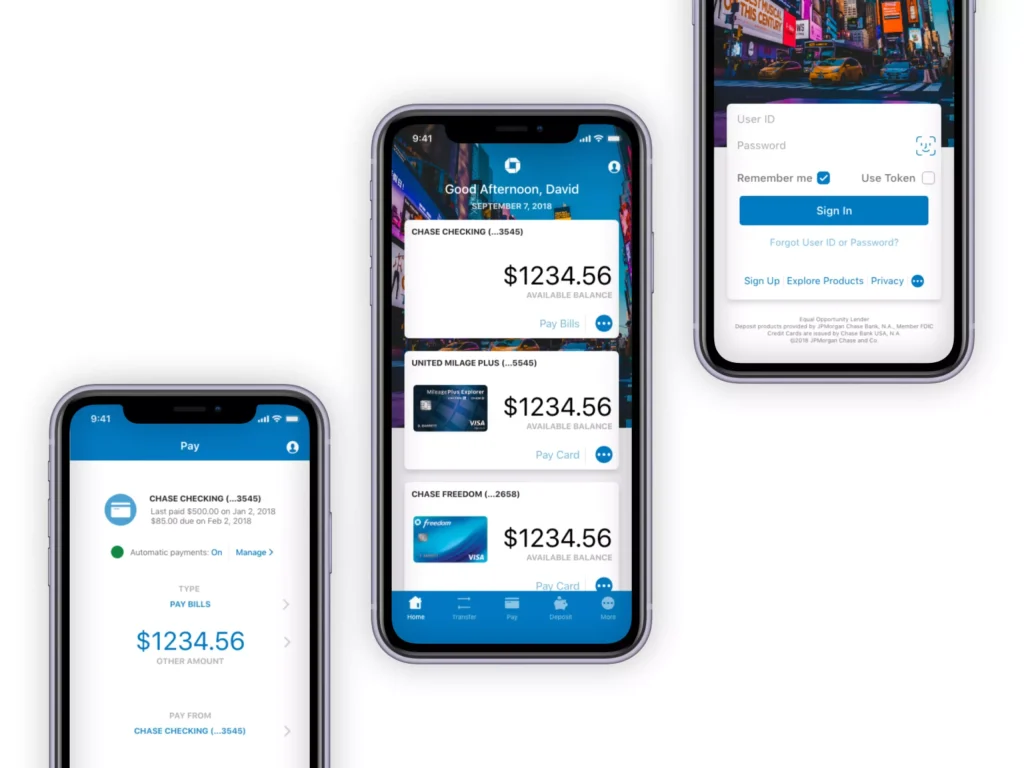
Chase Mobile app

It is a comprehensive mobile banking application that caters to personal and business banking needs. It includes features like Zelle for instant money transfers, deposit checks via mobile capture, and tools for managing multiple accounts. One of the standout features is its “Autosave” and “Budget” tools, which help users set savings goals and monitor their budgets.

Chase Mobile also provides personalized insights, alerts users about unusual transactions, and offers recommendations for financial management. The app’s seamless integration with Chase’s credit card services, mortgage accounts, and investment products makes it an all-in-one platform for various banking needs.

Discover Mobile
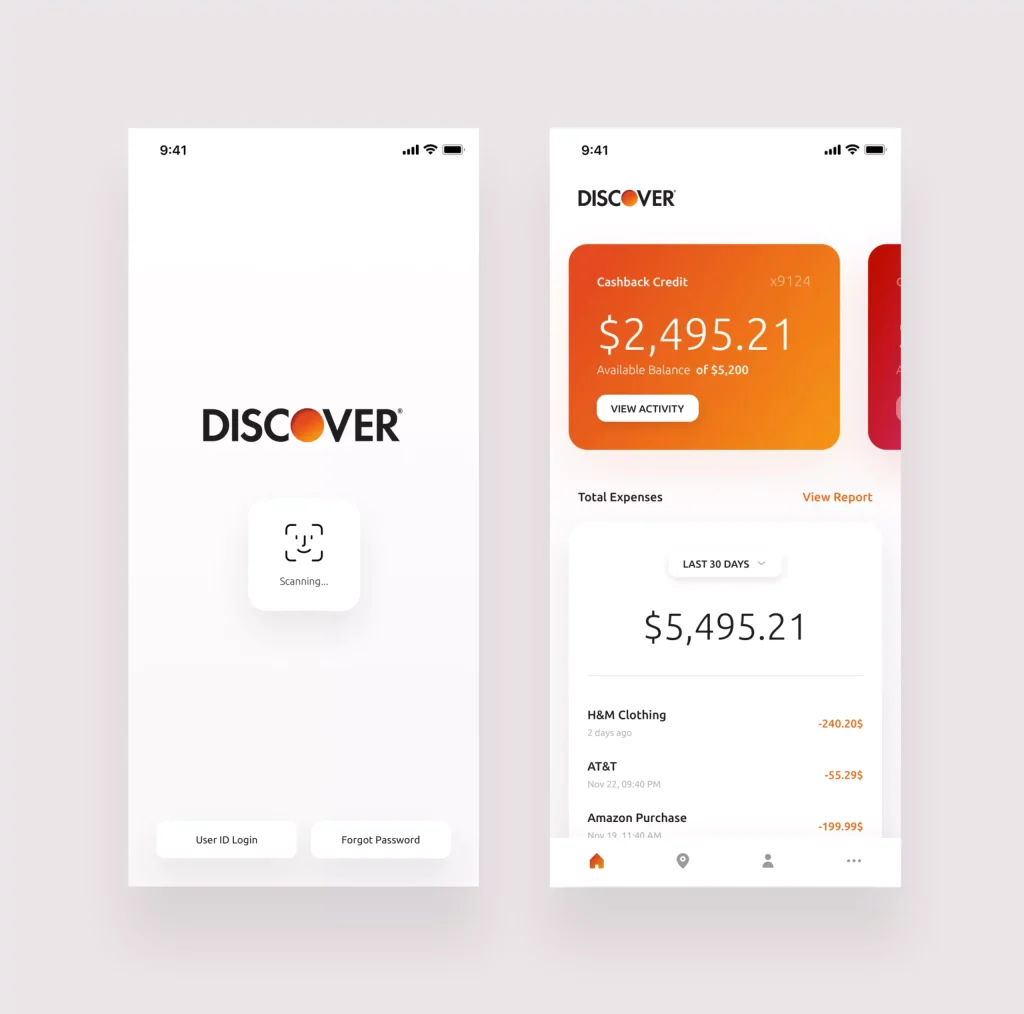
 Discover Mobile app

It is known for its simplicity and rewards-focused features. The mobile banking application offers easy access to credit card rewards, cashback offers, and FICO credit score tracking. For users focused on managing credit, Discover Mobile provides clear overviews of spending categories and real-time alerts for payments and purchases.

The app’s integration with Discover’s savings and checking accounts allows users to transfer funds, set up direct deposits, and monitor transactions in one place. The emphasis on user-friendly design and rewards management makes Discover Mobile an attractive option for those who prioritize rewards and credit management.

Chime Mobile
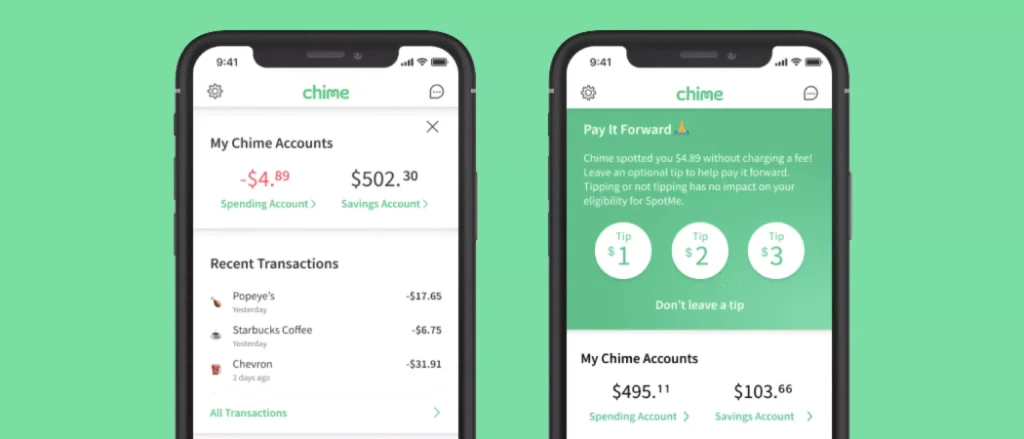
Chime Mobile app

This is a neobank app that simplifies banking with a user-friendly interface and fee-free services. It’s trendy among younger users and those looking to avoid traditional banking fees. Chime offers early direct deposit, allowing users to receive their paychecks up to two days early, and an automated savings feature rounds up purchases and saves the difference.

The mobile banking application also offers overdraft protection without fees through its “SpotMe” feature, making it a favored option for users seeking a more flexible banking experience. Chime’s focus on transparency and minimal fees has made it one of the most popular neobanking apps in the market.

Ally Mobile
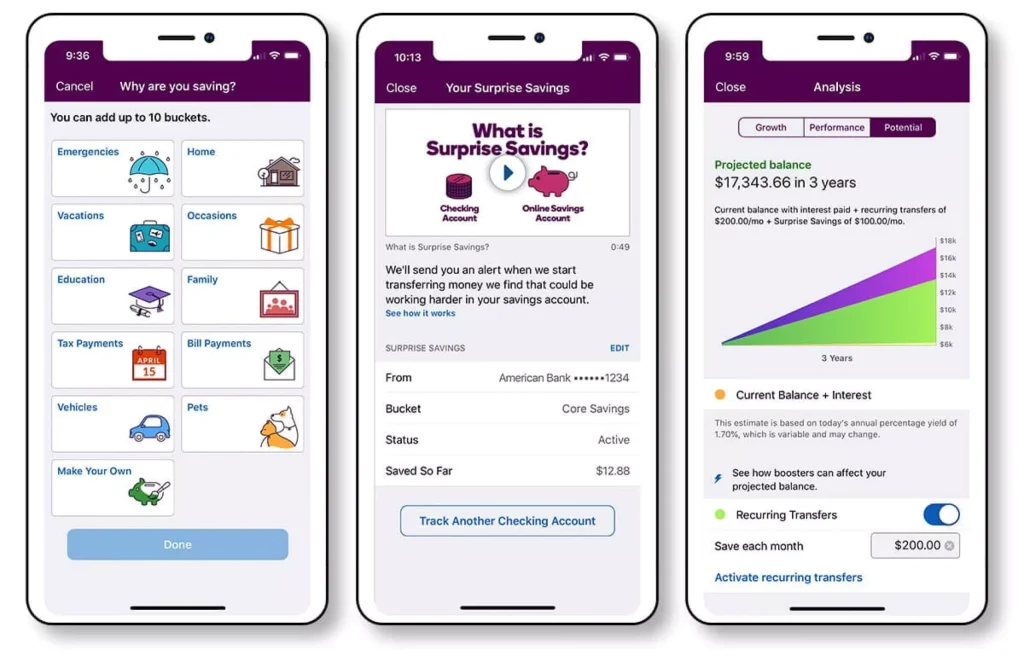
Ally Mobile app

This is a digital banking application that stands out for its competitive savings rates and robust investment options. It offers various services, from traditional banking features like checking and savings accounts to more advanced offerings like robo-advisors and self-directed trading.

Ally Mobile’s budgeting tools and spending analysis features help users keep track of their finances with detailed insights. Moreover, the app integrates well with Ally’s auto financing services, providing users with a comprehensive view of their financial health. Ally’s combination of banking and investment tools makes it a versatile app for saving and growing wealth.

Bank of America Mobile 
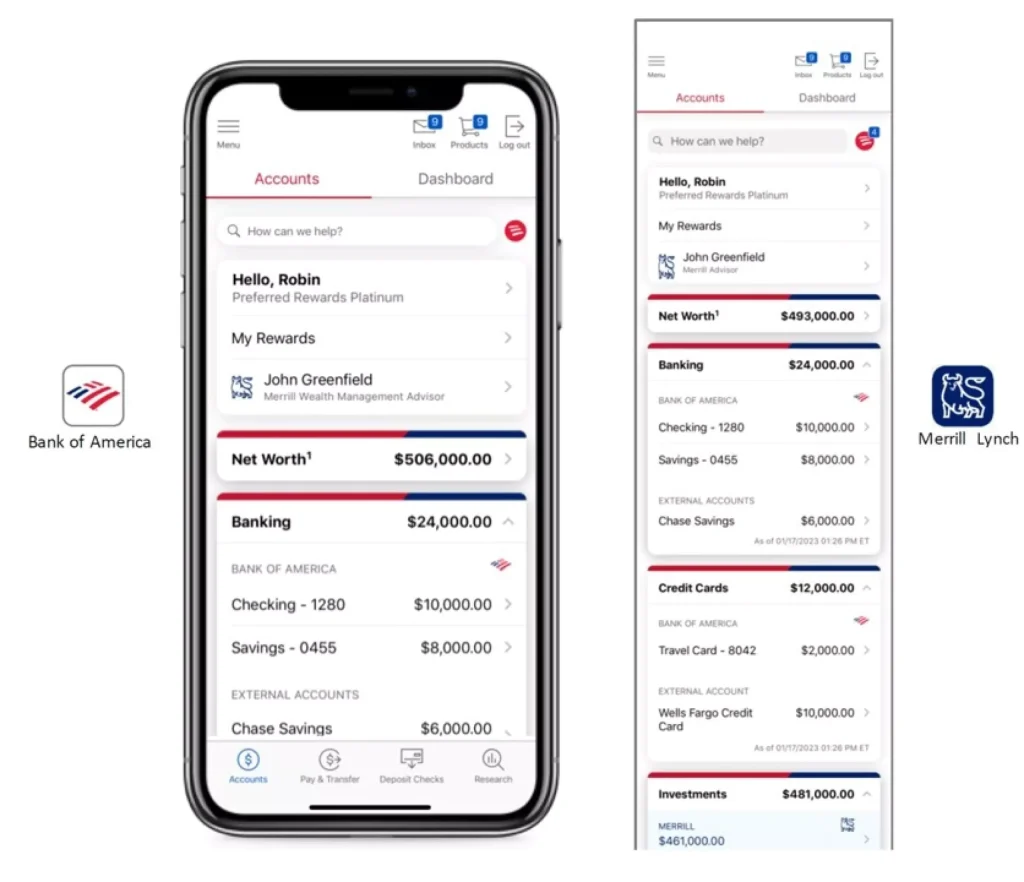
 Bank of America Mobile app

In fact, Bank of America Mobile is one of the most feature-rich mobile banking applications designed for users needing comprehensive banking solutions. It includes Erica, an AI-powered virtual assistant that helps users with everything from transaction searches to financial advice. The app offers spending and budgeting tools, investment account management, and real-time fraud alerts. 

Bank of America Mobile supports Zelle for instant transfers and allows users to lock and unlock debit and credit cards in emergencies. Its wide range of features makes it a robust solution for personal and business banking needs.

Want to develop a banking app?

Contact us

5 steps on how to create a mobile banking application

Developing a mobile banking application is a complex process that involves multiple stages, from initial planning to post-launch support. We prepared a detailed guide to this procedure, highlighting the critical phases.
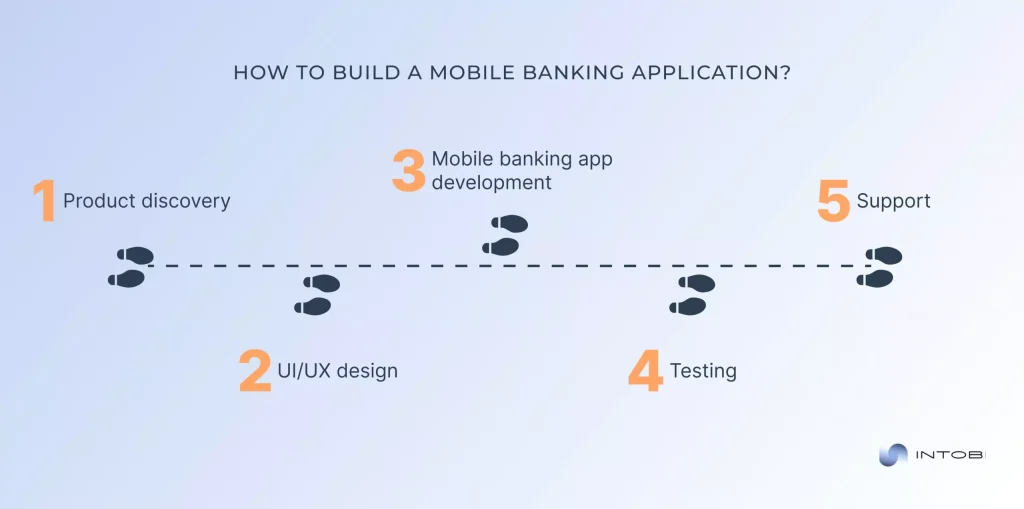
Guide to creating a mobile banking app

1. Product discovery

The product discovery phase is the first step in developing a mobile banking application. This is where you define the app’s objectives, target audience, core features, and overall vision. During this phase, it’s essential to conduct thorough market research to understand the competition and identify your target users’ specific needs and preferences. 

Key activities during product discovery include:

  • Market analysis: Research the existing mobile banking applications, studying their strengths, weaknesses, and user reviews. Identify gaps in the market that your app can fill.
  • User personas: Create detailed profiles of your ideal users, outlining their demographics, behaviors, goals, and pain points. This will help you design features that cater to real user needs.
  • Feature prioritization: Based on your research, define the core features your app should include. This might involve basic functions like account management, money transfers, and bill payments and more advanced features like investment tracking or AI-powered financial insights.

2. UI/UX design

The design phase focuses on creating an intuitive and engaging user interface and user experience. UI/UX design services are crucial for mobile banking app development as it directly impacts user satisfaction, trust, and engagement.

Critical steps in the design process include:

  • Wireframing and prototyping: Begin by creating wireframes, which are simple sketches that outline the app’s structure and layout. Once approved, move on to prototypes, which are more detailed and interactive versions that simulate the app’s functionality.
  • User-centric design: The design should prioritize ease of use, especially for critical actions like checking balances, transferring money, and accessing support. Implement a clean layout, straightforward navigation, and accessible elements that enhance usability.
  • Visual design: Choose a consistent color scheme, typography, and branding elements that reflect your brand’s identity. The design should be visually appealing but not cluttered, focusing on functionality and user convenience.
  • Designing for security: Incorporate biometric authentication (fingerprint or face recognition) and Multi-Factor Authentication (MFA) into the design. These elements must be seamlessly integrated into the user experience without compromising security.

3. Mobile banking app development

Once the design is finalized, the mobile banking app development phase begins. This phase involves turning the design into a fully functional application, focusing on both front-end (user interface) and back-end (server, database) development.

Essential considerations during banking app development include:

  • Selecting the right tech stack: The choice of programming languages, frameworks, and tools depends on the platform, app complexity, and scalability requirements. Standard technologies include Swift or Objective-C for iOS and Kotlin or Java for Android. Cross-platform frameworks like Flutter or React Native can also be used to simultaneously build apps for both platforms.
  • APIs and integrations: Mobile banking applications must often integrate with core banking systems, payment gateways, and third-party services. Secure APIs should facilitate smooth data exchange while ensuring security and regulatory standards compliance.
  • Building core features: Implement best mobile banking app features like account management, transaction history, bill payments, and notifications. Depending on user needs, advanced features like AI-driven insights, budgeting tools, and investment management can also be added.
  • Security measures: During development, implement advanced security protocols like data encryption, secure communication channels, and tokenization. Regular security audits should be conducted to identify and fix potential vulnerabilities.

For banking products that require strong performance, security, and platform-specific functionality, native app development can help build reliable iOS and Android applications tailored to financial workflows.

4. Testing

It is critical to ensure the mobile banking application functions smoothly, securely, and reliably across different devices and operating systems. This involves multiple levels of testing to identify and resolve issues before the app is released.

Main testing stages include:

  • Functional testing: Test the app’s core features to ensure they work as intended. This includes verifying that transactions are processed correctly, notifications are triggered, and account management tools are functional.
  • Usability testing: Evaluate the user experience by gathering feedback from real users. This helps identify usability issues, such as confusing navigation or unclear instructions, that could hinder adoption.
  • Security testing: Conduct penetration testing and vulnerability assessments to identify security risks. Ensure all data is encrypted, transactions are secure, and the app complies with relevant regulations.
  • Performance testing: Test the app’s performance under different conditions, including high traffic, low connectivity, and varying device specifications. This ensures that the mobile banking application remains stable and responsive even under stress.

5. Support

After the digital banking application is launched, ongoing support and maintenance are necessary to keep the app up-to-date and secure. This phase involves monitoring the app’s performance, addressing user feedback, and rolling out updates to enhance features or fix issues.

Necessary aspects of support include:

  • Bug fixes and updates: Regularly monitor user reviews and analytics to identify bugs or performance issues. Provide timely updates that address these problems and improve user satisfaction.
  • Security patches: Continuously update the app to address emerging security threats. This includes releasing patches for known vulnerabilities and updating encryption protocols as needed.
  • Feature enhancements: As user needs evolve, introduce new features that enhance the app’s functionality. Regular updates keep the app relevant and competitive in the fast-paced financial technology market.

Thus, by following a structured banking app development approach, you can create a mobile banking application that meets regulatory standards and delivers a seamless, secure, and engaging experience for your users.

Let's discuss

Contact Us

Best tech stack for mobile banking app

The tech stack chosen for a mobile banking app is critical in its performance, security, scalability, and user experience. Our experts employ the advanced tech stack for mobile banking app development, covering front-end/back-end technologies, databases, security measures, and integration tools.

1. Front-end development

The front-end is responsible for user interaction and the overall experience. The primary technologies include:

  • Languages and frameworks: Swift and Objective-C are standard choices for iOS, while Java and Kotlin dominate Android development. For cross-platform apps, Flutter and React Native are popular for building a single-codebase mobile banking application compatible with both platforms.
  • Design tools: Figma, Sketch, and Adobe XD are commonly used for UI/UX design, enabling seamless prototyping and collaboration.

2. Back-end development

The back-end handles data processing, transactions, and communication with external systems. Main components include:

  • Languages and frameworks: Python, Java, Node.js, and their respective frameworks (Django, Spring Boot, Express.js) power robust back-end systems.
  • Databases: MySQL and PostgreSQL (relational) are standard for complex querying and data integrity, while MongoDB and Cassandra (NoSQL) offer scalability and flexibility.
  • APIs and microservices: RESTful APIs (application programming interfaces) and microservices architecture ensure smooth data exchange and scalable app architecture.

3. Security measures

Security is crucial in mobile banking application development. Key technologies include:

  • Encryption and authentication: SSL/TLS encryption, multi-factor authentication (biometrics, OTP), and tokenization protect sensitive data.
  • Payment gateways: Integrating secure payment gateways like Stripe, PayPal, or bank-specific APIs ensures PCI-DSS compliance.

4. Integration and middleware

Seamless integration with external systems is vital for a banking app’s functionality:

  • API management: Tools like Postman and Apigee manage and secure API integrations.
  • Payment SDKs and banking integrations: These enable secure transaction handling and synchronization with core banking systems.

5. DevOps and cloud solutions

Scalability and reliability depend on robust cloud infrastructure and DevOps practices:

  • Cloud platforms: AWS, Google Cloud, and Microsoft Azure offer scalable infrastructure and high availability.
  • CI/CD and containerization: Jenkins and Kubernetes streamline deployment, allowing continuous integration and consistent app performance.

Looking for a reliable development team?

Let’s chat

Main challenges in mobile banking application development

Developing a mobile banking app is a complex task that presents several challenges. Below is an overview of the common challenges faced during the development of mobile banking apps:
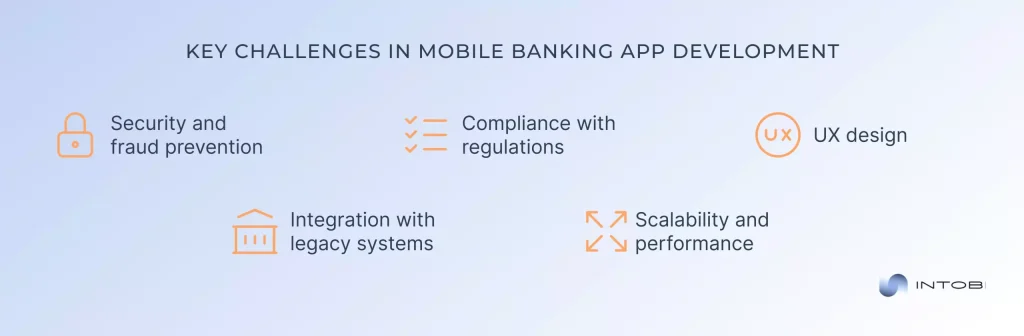
Top challenges in Banking app development

Security and fraud prevention

Ensuring robust protection against cyber threats is a significant challenge. Developers must implement advanced security measures such as end-to-end encryption, multi-factor authentication (MFA), and secure coding practices to protect user data from unauthorized access and fraud.

Additionally, the mobile banking application must be resilient against phishing attacks, malware, and data breaches. Regular security audits and vulnerability assessments are crucial to maintaining the app’s integrity and user trust.

Compliance with regulations

Mobile banking applications are subject to stringent regulatory requirements that vary by region and country. Compliance with standards such as the General Data Protection Regulation (GDPR) in Europe, the Payment Card Industry Data Security Standard (PCI-DSS), and various local banking regulations is essential. Meeting these requirements involves:

  • Implementing data protection measures.
  • Ensuring transparent user consent processes.
  • Adhering to financial rules that govern transactions and data handling.

Failure to comply with these regulations can lead to legal penalties and damage the app’s reputation.

UX design

Creating an intuitive and seamless user experience is crucial for mobile banking applications. Users expect a high level of functionality combined with ease of use. Designing a feature-rich and user-friendly interface can be challenging, especially when balancing security features with usability.

A complex or poorly designed interface can lead to user frustration and decreased engagement. Conducting user research, usability testing, and incorporating feedback throughout the development process helps ensure the app meets user expectations and provides a smooth banking experience.

Integration with legacy systems

Many traditional banks rely on legacy systems that can pose significant challenges when integrating with modern mobile banking applications. These legacy systems were often not designed to interact with new technologies or accommodate the demands of contemporary mobile applications.

Integrating legacy systems with modern mobile banking solutions involves several complexities:

  • Data synchronization
    Ensuring data flows seamlessly between the legacy system and the new mobile application can be challenging. Legacy systems may use outdated data formats or protocols that require conversion or adaptation to work with modern systems.
  • Performance maintenance
    Legacy systems often struggle to keep up with modern applications’ performance requirements. Balancing the load and maintaining application speed while interfacing with these systems requires careful engineering and optimization.
  • Update management
    Legacy systems may be fragile or sensitive to changes. Updating or modifying these systems to improve compatibility with new apps can potentially disrupt existing functionality, requiring meticulous testing and planning.

Scalability and performance

As user bases grow, the mobile banking application must handle increasing transaction volumes and data loads without compromising performance. Scalability is a critical challenge involving designing an architecture capable of efficiently handling high traffic and transaction spikes. This includes optimizing the app’s back-end infrastructure, implementing load balancing, and ensuring that the app can scale horizontally to accommodate future growth.

Let's discuss

Contact Us

Understanding the banking app development cost

The cost of app development is not solely determined by its complexity. Other factors that can impact the budget include:

  • Location of the development team: Banking app development costs vary depending on where the team is based. Developers in North America and Western Europe typically charge higher rates than those in Eastern Europe, Asia, or Latin America.
  • Technology stack: The choice of technology, frameworks, and programming languages directly affects costs. Advanced technologies, like AI or blockchain, can increase overall expenses.
  • Ongoing maintenance: Post-launch support, updates, and security enhancements are essential for maintaining a banking app, adding to the long-term costs.

Below is a breakdown of the estimated costs and timelines for developing MVP for mobile banking applications.

FeaturesTimeline Estimated cost 
1. Design
UX development300 hours$4,800
UI development250 hours$3,800
2. Architecture
Project setup150 hours$2,900
DB structure200 hours$3,800
3. Integrations
Payment200 hours$3,900
Integration with wearable devices300 hours$3,800
4. Main functionality
Authorization150 hours$2,900
User profiles200 hours$3,900
KYC150 hours$2,900
Account activity150 hours$2,900
Bill payments150 hours$2,900
Transfers150 hours$1,900
Cards managements200 hours$3,900
Security200 hours$2,900
ATM & bank locator200 hours$3,900
Settings100 hours$1,900
Notifications100 hours$1,900
Support100 hours$1,900
Admin panel250 hours$4,800
5. Non development activity
Project management300 hours$5,800
Quality assurance300 hours$4,800
Code review200 hours$2,900
Total4300 hours$75,100

Intobi experience in mobile banking app development

At our mobile app development company, we have extensive experience delivering sophisticated mobile banking applications. Focusing on providing secure and innovative solutions, our team has successfully navigated the complexities of the financial technology sector to build apps that meet the high standards of modern banking.

Our skilled team brings a deep understanding of the financial technology landscape, ensuring that every mobile banking application we develop adheres to industry standards and regulatory requirements. Our specialists work with a range of clients, from emerging fintech startups to established banks, tailoring our approach to meet the unique needs of each project. This background equips us with the insights necessary to manage the intricate demands of mobile banking app development services.

For financial institutions with complex workflows and compliance requirements, custom software development can help create secure banking solutions tailored to specific business needs.

Below is an example of one of our mobile app projects.
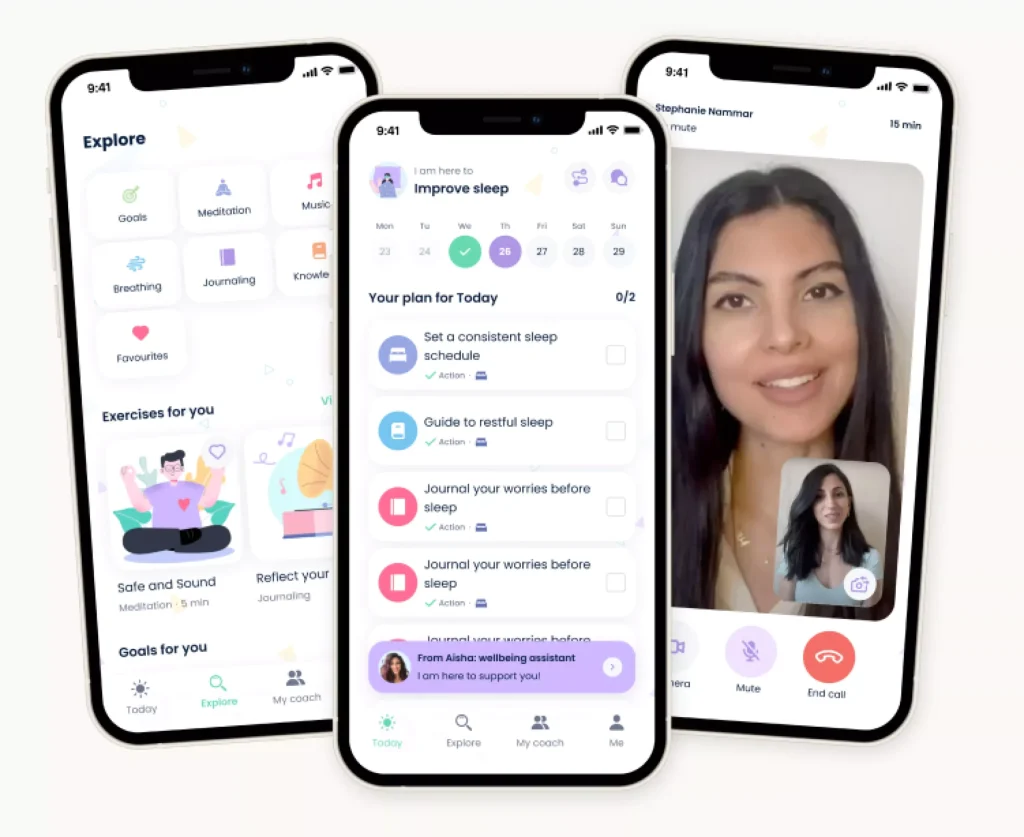
MindTales mobile app

This mobile app offers premium digital wellness courses and online counseling services to enhance users’ well-being. MindTales features tailored, bite-sized activities and in-platform sessions with counselors to support personalized care.

Our team delivered a complete design cycle, from minimum viable product development to the launch of an updated product. We applied a user-centered approach to elevate the user experience and maximize business value.

Conclusion

As financial institutions increasingly adopt mobile solutions, it is essential to have a deep understanding of user needs, continuous innovation, and a commitment to safeguarding sensitive information. Skilled developers can create mobile banking applications that meet and exceed user expectations by focusing on intuitive interfaces, robust functionality, and seamless integration.

At Intobi, we deliver tailored mobile banking applications that provide exceptional user experiences and meet the highest standards of security. Contact us to discuss how we can help bring your vision to life and revolutionize your banking services!

FAQ

What is a mobile banking app?

A mobile banking app is a digital platform provided by financial institutions that allows users to perform banking transactions and manage their finances from their smartphones and tablets. This app lets users check their account balances, transfer funds, pay bills, etc.

How to develop a mobile banking application?

Developing a mobile banking app involves defining core features, designing a secure and user-friendly interface, coding the app, and integrating it with banking systems. It is also about ensuring robust security, testing, and maintaining the app with updates.

How do mobile banking apps work?

Mobile banking apps connect users’ devices to their bank’s servers through a secure internet connection. When users act, such as transferring money or checking their balance, the app communicates with the bank’s backend systems via encrypted data channels.

How to start mobile banking?

Download your bank’s app from your device’s store to start mobile banking. Install and login with your online banking credentials. If needed, register through the bank’s website or visit a branch. Once logged in, explore features and set up additional security measures like biometric authentication.

Which 3 mobile banking features do consumers consider to be critical?

First, security (ensure that personal and financial information remains protected). Second, convenience (features that boost financial management and reduce the need for in-person banking). Third, real-time notifications (help users stay informed and monitor their financial status proactively).

Detailed Guide to Travel Mobile App Development

TL;DR

Travelers now rely on apps rather than guidebooks and paper maps to plan, navigate, and explore. This guide explains what travel app development involves, its main benefits, and examples of top travel apps. It then walks through how to create a travel app step by step, how travel apps make money, the fundamental features to include, the right tech stack, and what tourism app development costs.

Make a summary of this article with AI:

Regarding mobility and the digital connectivity era, the journey has experienced a deep transformation. No longer limited to guidebooks and paper maps, today’s travelers rely on the power of technology to navigate, explore, and enhance their experiences.

At the heart of this revolution lies the development of travel apps, where innovation meets wanderlust to create seamless journeys and unforgettable adventures. From itinerary planning to real-time updates, travel applications have become essential companions for modern explorers, offering a gateway to the world at their fingertips.

In this article, we launch a journey through the landscape of travel app development, exploring the benefits, examples, and opportunities shaping the future of travel technology. Let’s uncover the secrets behind creating user-centric travel experiences that inspire, inform, and delight adventurers around the globe.

Understanding of travel application development

Travel apps offer exceptional convenience and efficiency when booking flights, finding accommodations, discovering local attractions, or navigating unfamiliar territories. So, travel application development involves creating software solutions tailored to meet the diverse needs of travelers worldwide. These travel applications use cutting-edge technologies such as mobile platforms, GPS navigation, augmented reality (AR), and data analytics to enhance the travel experience from planning to execution.

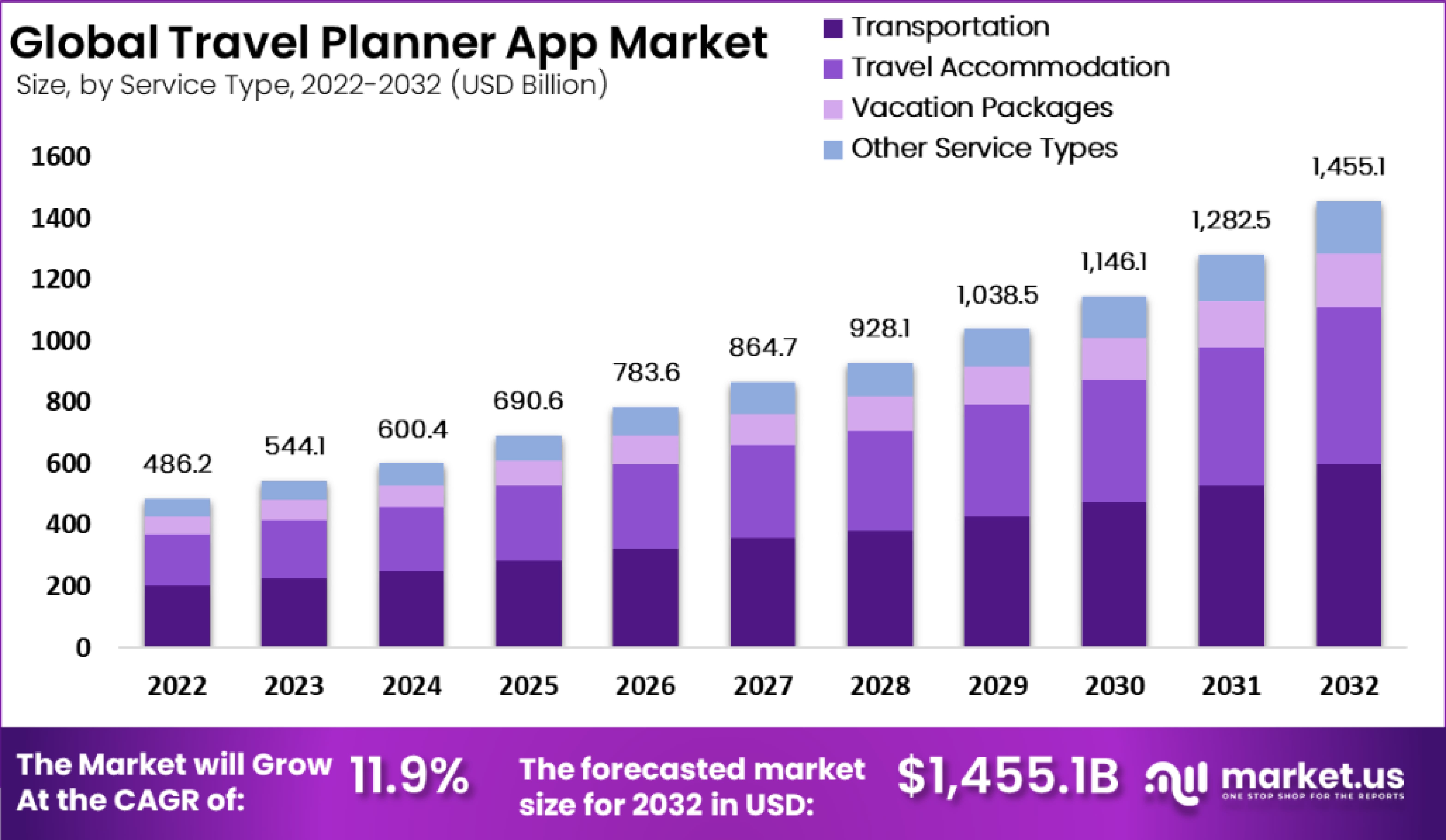
The future of travel application development holds immense promise, driven by advancements in artificial intelligence (AI), machine learning (ML), virtual reality (VR), and blockchain technology. Anticipated trends include personalized travel recommendations based on user preferences and behavior analysis, immersive virtual tours and experiences, blockchain-based solutions for secure and transparent transactions, and AI-powered chatbots for customized customer support and assistance.The global travel app market size is expected to be worth around USD 1,445.1 billion by 2032 from USD 544.1 billion in 2023, growing at a CAGR (compound annual growth rate) of 11.90% during the forecast period from 2023 to 2032.

Travel app market

Main benefits of tourism app development

In fact, tourism app development offers a myriad of benefits, revolutionizing the way travelers plan, book, and experience their journeys. Below are the primary advantages of travel app development, highlighting its transformative impact on travelers, businesses, and destinations.

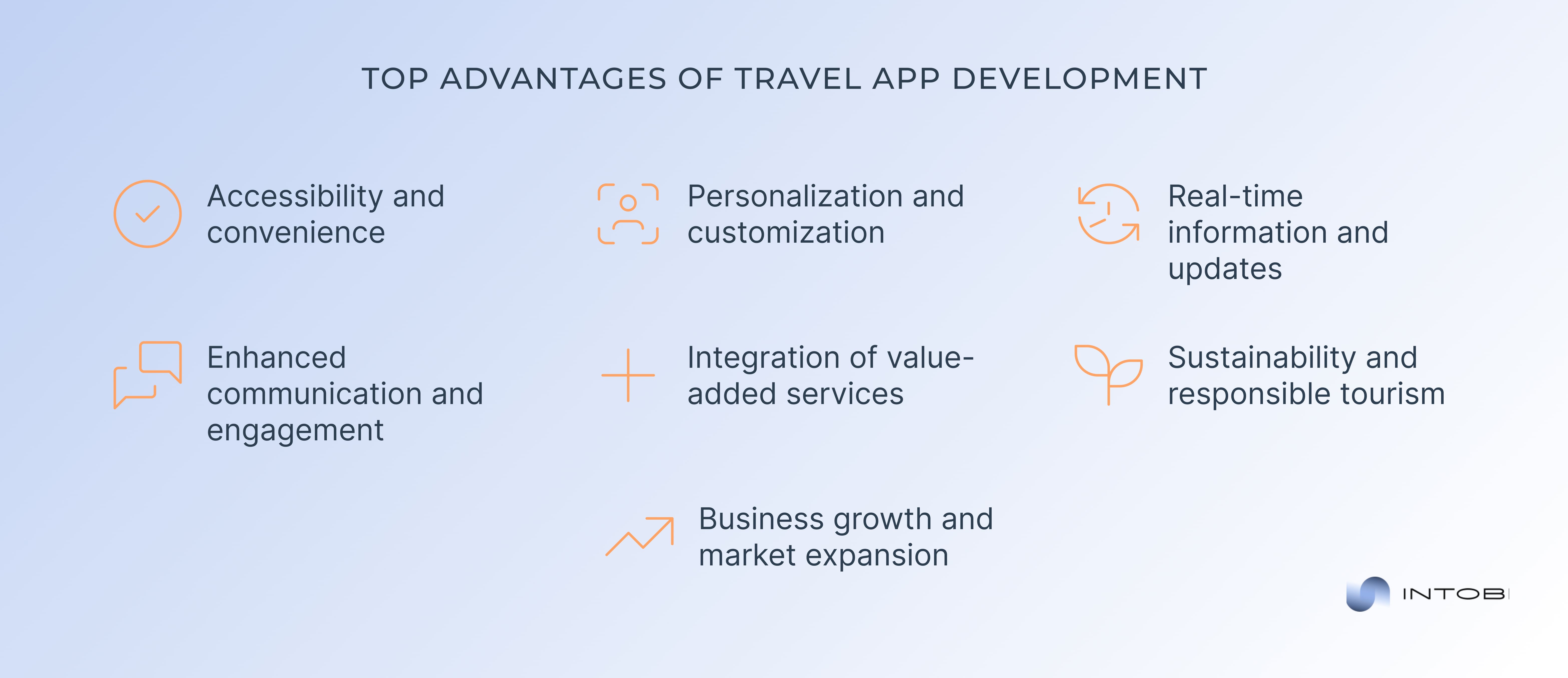
Avantages of tourism app development

Accessibility and convenience

Travel applications provide travelers with outstanding accessibility and convenience, empowering them to plan and manage every aspect of their journey from the palm of their hand. With just a few taps, users can explore destinations and book flights, accommodations, tours, and activities, all in real-time. This seamless accessibility eliminates the need for traditional offline methods, such as visiting travel agencies or making phone calls, streamlining the entire travel planning process.

Personalization and customization

Another key benefit of tourism app development is the ability to deliver personalized and tailored travel experiences. By using data analytics, machine learning algorithms, and user profiling techniques, travel apps can understand individual preferences, interests, and behavior patterns. With this insight, they can offer personalized recommendations, curated itineraries, and targeted promotions, ensuring each traveler receives a tailored experience aligned with their unique preferences and desires.

Real-time information and updates

Travel apps provide travelers with real-time information and updates, allowing them to make informed decisions and adapt to changing circumstances. Whether it’s flight delays, weather forecasts, traffic conditions, or local events, users can stay informed and prepared for any eventuality, enhancing their overall travel experience. Additionally, push notifications and alerts keep users updated with timely reminders, ensuring a seamless and stress-free journey from start to finish.

Enhanced communication and engagement

These travel apps facilitate enhanced communication and engagement between travelers and service providers, fostering greater transparency, trust, and satisfaction. Through built-in messaging features, chatbots, and customer support channels, users can seek assistance, resolve queries, and provide real-time feedback, improving the overall quality of service delivery. Moreover, social sharing functionalities enable users to share their travel experiences, recommendations, and photos with friends and fellow travelers.

Integration of value-added services

Travel applications integrate value-added services and features that enhance the overall travel experience and add significant user value. From language translation tools and currency converters to virtual tour guides and augmented reality overlays, these innovative functionalities enrich the journey, providing users with immersive and interactive experiences beyond traditional travel offerings. Additionally, integration with third-party services such as ride-sharing platforms, restaurant reservations, and local experiences further enhances the app’s utility and convenience.

Sustainability and responsible tourism

Tourism apps promote sustainability and responsible tourism practices by providing users with information and resources to make environmentally conscious choices. From eco-friendly accommodations and carbon offset programs to responsible tour operators and community-based initiatives, these apps allow travelers to minimize their environmental footprint and support local communities and conservation efforts. 

Interesting

By promoting sustainable travel practices, travel apps contribute to preserving natural and cultural heritage while ensuring the long-term viability of tourism destinations.

Business growth and market expansion

For businesses in the travel and hospitality industry, travel app development offers remarkable opportunities for growth and market expansion. By adopting digital channels and mobile technology, companies can reach a broader audience, engage customers more effectively, and drive sales and bookings. Moreover, travel applications enable businesses to gather valuable customer insights and feedback, optimize their marketing strategies, and adapt to evolving market trends, enhancing their competitiveness and profitability in the long run.

Thus, by employing the power of technology and innovation, travel apps have the potential to transform the travel industry, making it more inclusive, immersive, and sustainable for future generations to enjoy.

Top travel applications examples

From booking accommodations and flights to discovering local attractions and managing itineraries, travel apps offer convenience, inspiration, and personalized experiences at users’ fingertips. Below, you can explore some leading travel applications that have revolutionized the industry and set new standards for user experience.

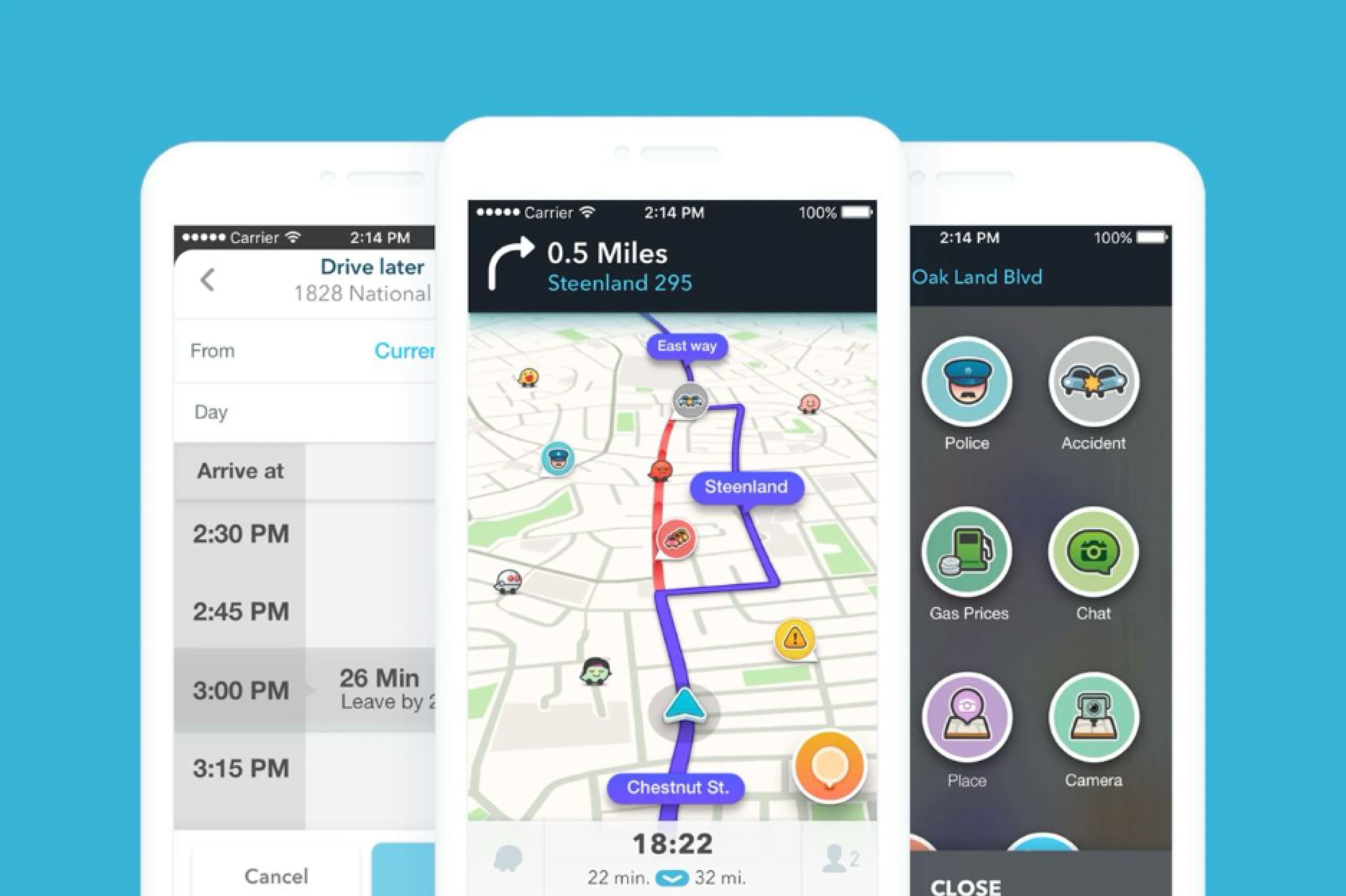
Waze

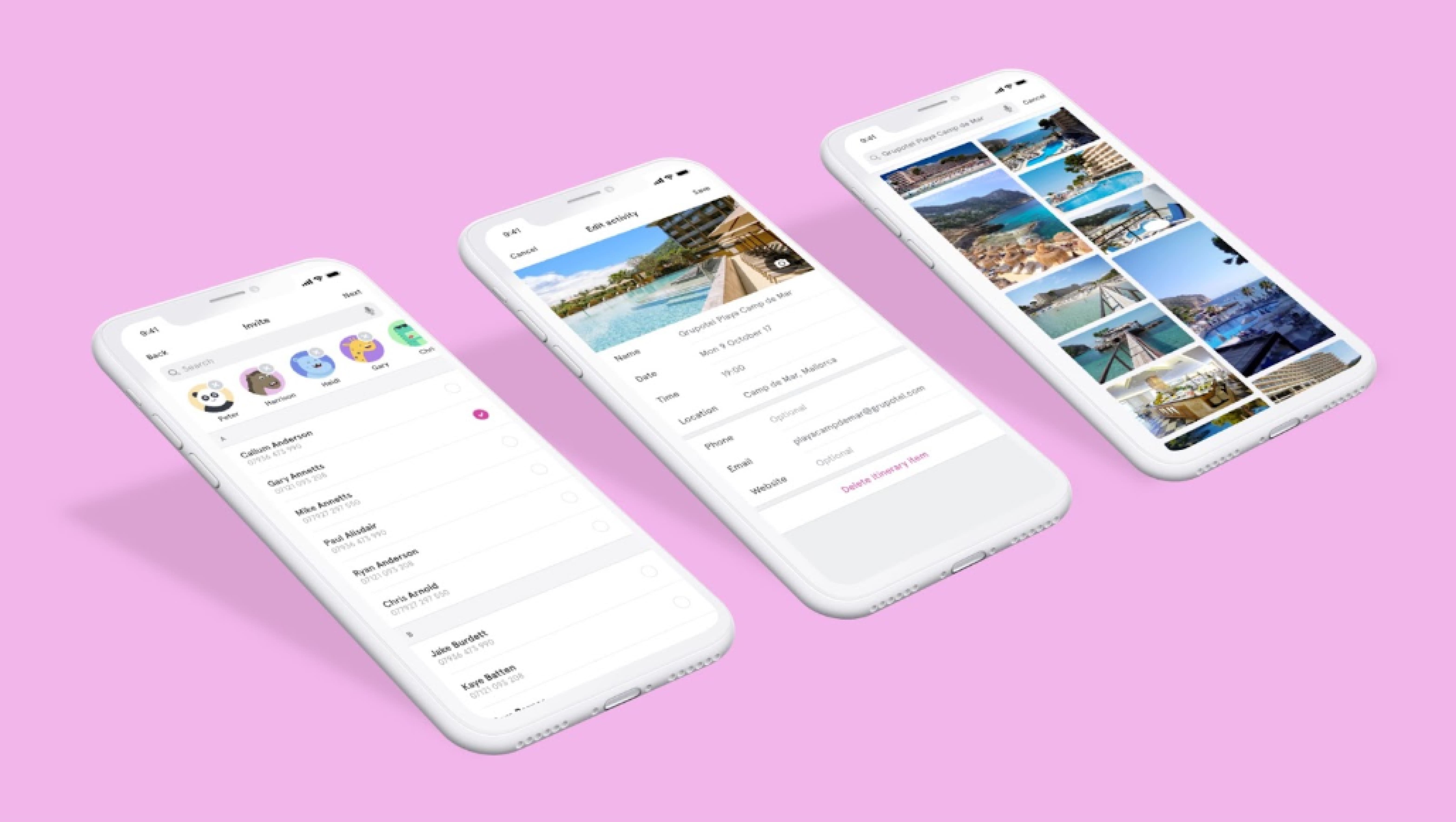
Wase travel app

It is a community-driven navigation travel app that provides real-time traffic updates, route suggestions, and turn-by-turn directions to help users navigate busy streets and highways efficiently. What sets Waze apart is its crowd-sourced data, which allows users to report accidents, hazards, police checkpoints, and road closures in real time, providing accurate and up-to-date information to fellow drivers. Waze also offers features such as voice-guided navigation, ETA (estimated time of arrival) sharing, and points of interest (POI) recommendations, making it a must-have companion for road trips and daily commutes.

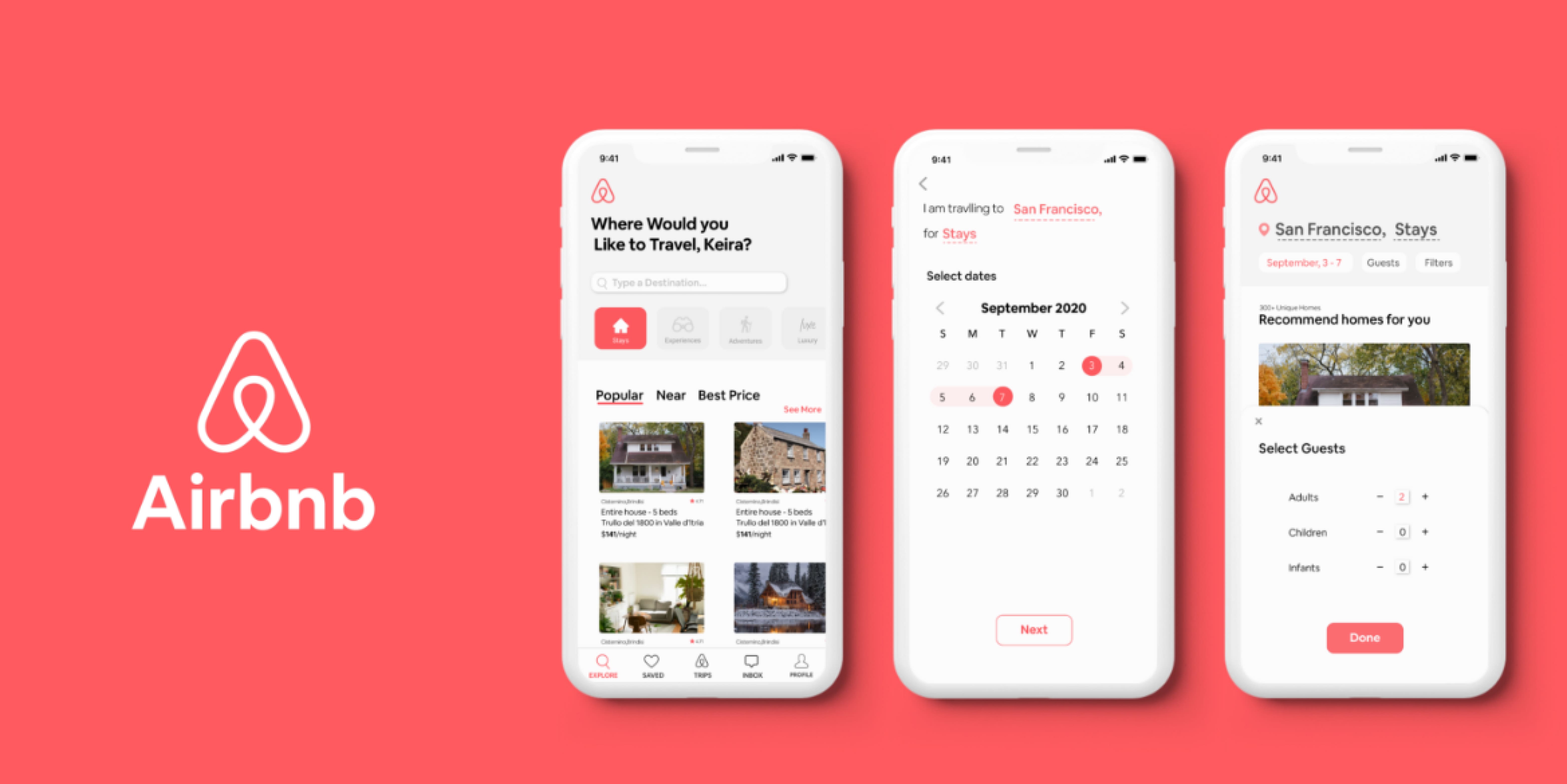
Airbnb

Airbnb travel app

This travel app revolutionized the travel accommodation industry by offering users a platform to book unique and affordable lodging options worldwide, from apartments and vacation homes to treehouses and castles. With Airbnb, travelers can discover and reserve accommodations that suit their preferences, budget, and travel style while also allowing hosts to monetize their properties. The platform also offers features such as user reviews, verified profiles, and secure payment processing, ensuring trust and transparency for both hosts and guests.

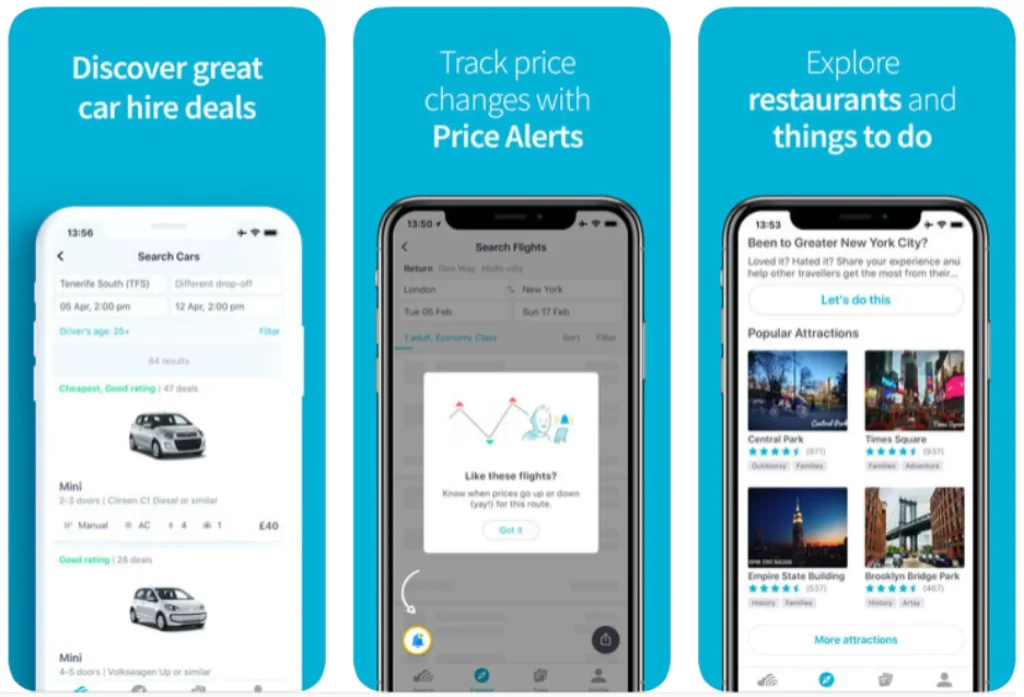
Skyscanner

Skyscanner travel app

Skyscanner is a comprehensive travel app that allows users to compare prices, routes, and availability for flights, hotels, and car rentals from various providers worldwide. With its intuitive interface and powerful search algorithms, Skyscanner helps users find the best deals and options for their travel needs, whether looking for a last-minute flight or planning vacation months. The app also offers price alerts, flexible date searches, and multi-city itineraries, making it a valuable tool for budget-conscious travelers and frequent flyers.

HEHA! Holiday Extras

HEHA! travel app

It is a travel app that offers services and amenities to enhance users’ travel experiences, from airport parking and lounge access to travel insurance and car rentals. With HEHA!, users can conveniently book and manage various travel extras and services directly from their mobile devices, saving time and hassle during their journeys. The app also provides personalized recommendations and discounts based on users’ preferences and travel history, ensuring a seamless and enjoyable travel experience from start to finish.

Hopper

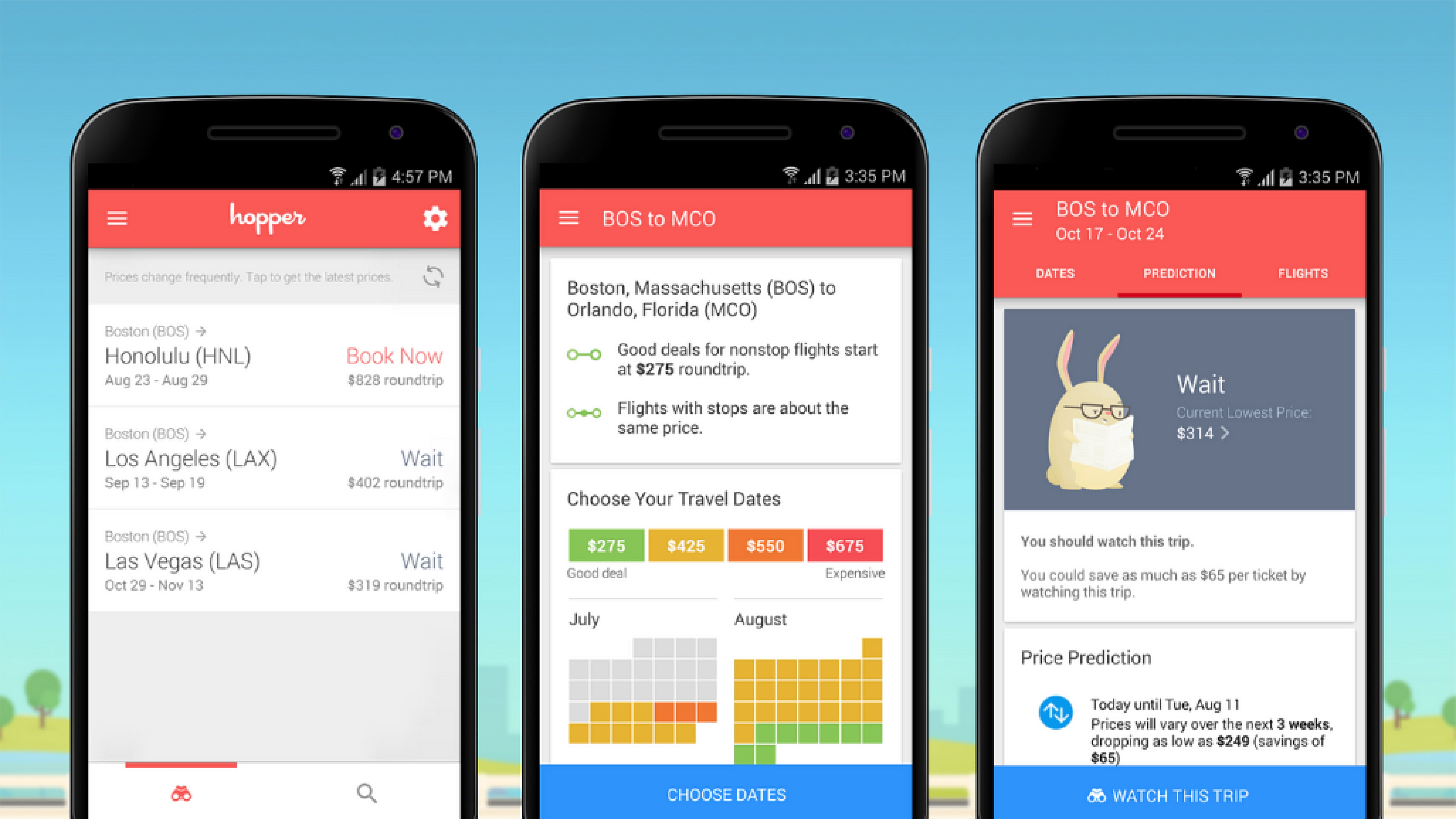
Hopper travel app

Hopper is an innovative travel app that uses data analytics and machine learning algorithms to predict future flight prices and recommend the optimal time to book tickets for maximum savings. By analyzing historical flight data and pricing trends, Hopper provides users with insights and recommendations on when to buy tickets and wait for better deals. The app also offers features such as price alerts, fare tracking, and flexible date search, helping users confidently find the cheapest flights and plan their trips.

Tripadvisor

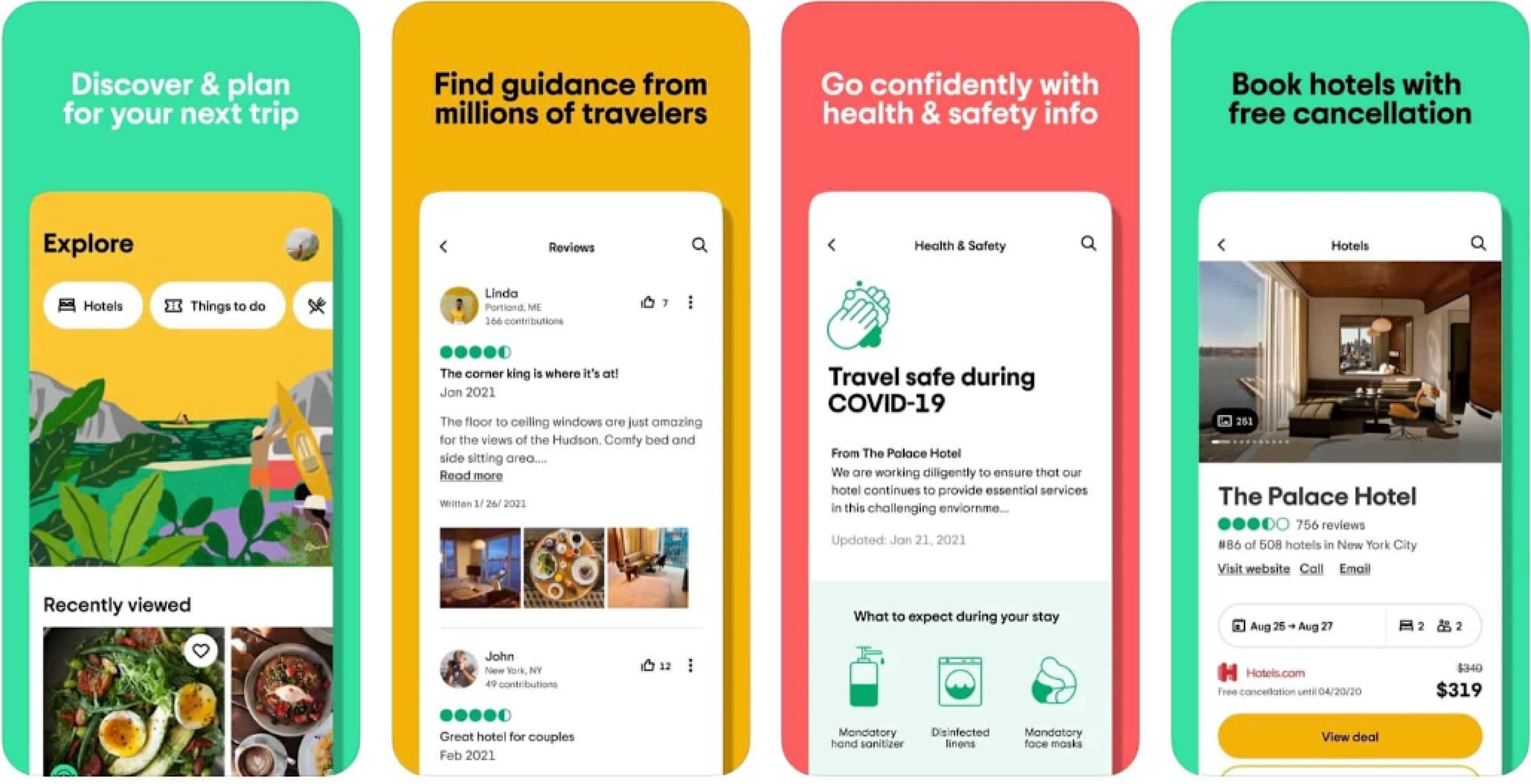
Tripadvisor travel app

It is a leading travel app that offers user-generated reviews, ratings, and recommendations for hotels, restaurants, attractions, and activities worldwide. With Tripadvisor, travelers can research destinations, read reviews, and plan their trips based on the experiences of fellow travelers. The app also provides booking options for accommodations, tours, and restaurants and features such as travel forums, city guides, and travel maps, making it a one-stop destination for trip planning and inspiration.

PackPoint

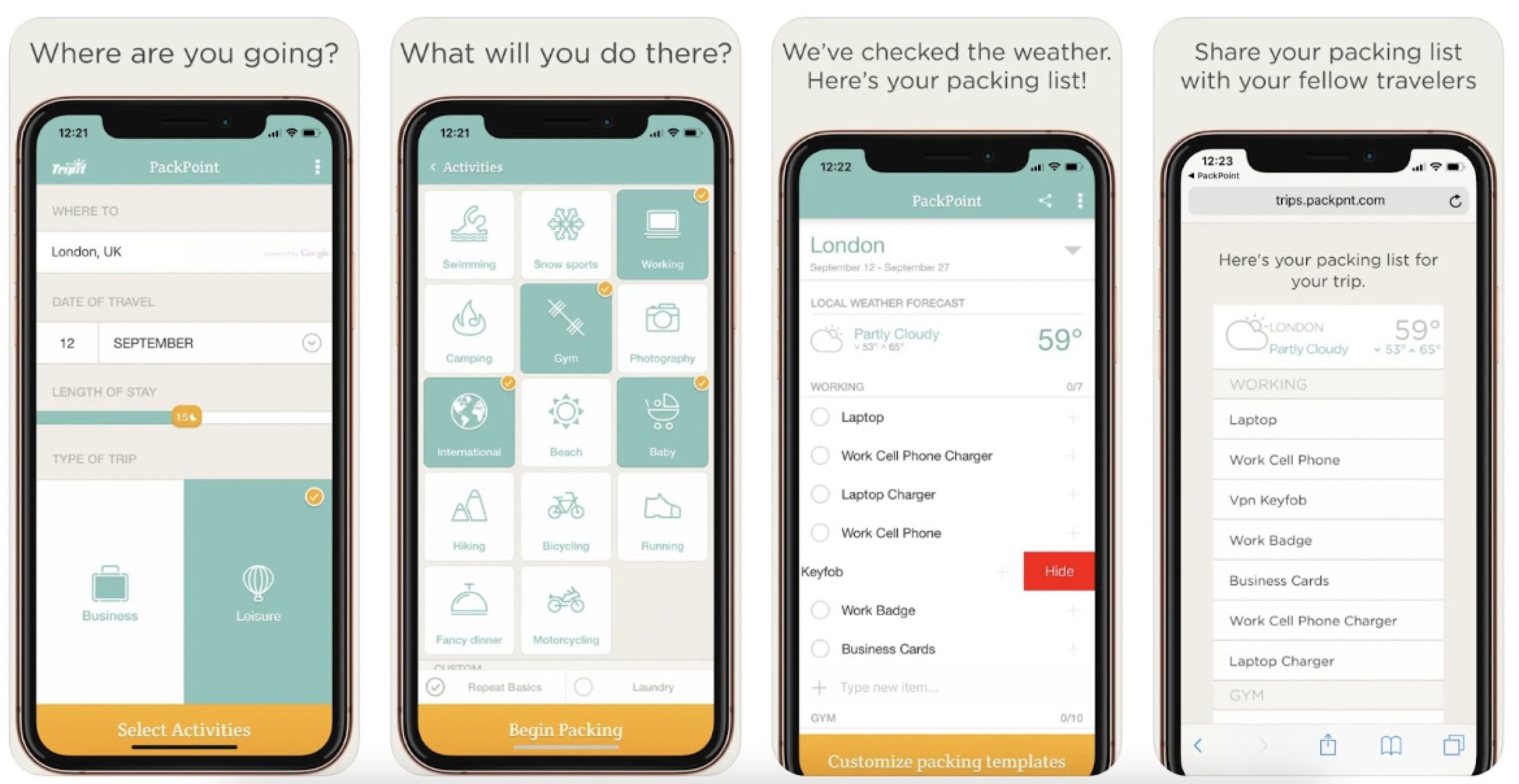
PackPoint travel app

PackPoint is an intelligent packing list travel app that helps users prepare for their trips by generating customized lists based on destination, travel dates, and planned activities. By considering factors such as weather forecasts, trip duration, and personal preferences, PackPoint ensures that users pack everything they need for a comfortable and enjoyable journey. 

The app also offers features such as sharing packing lists with travel companions, adding custom items, and syncing data across devices, making it an indispensable tool for organized and stress-free travel.

Want to create your travel app?

Contact us

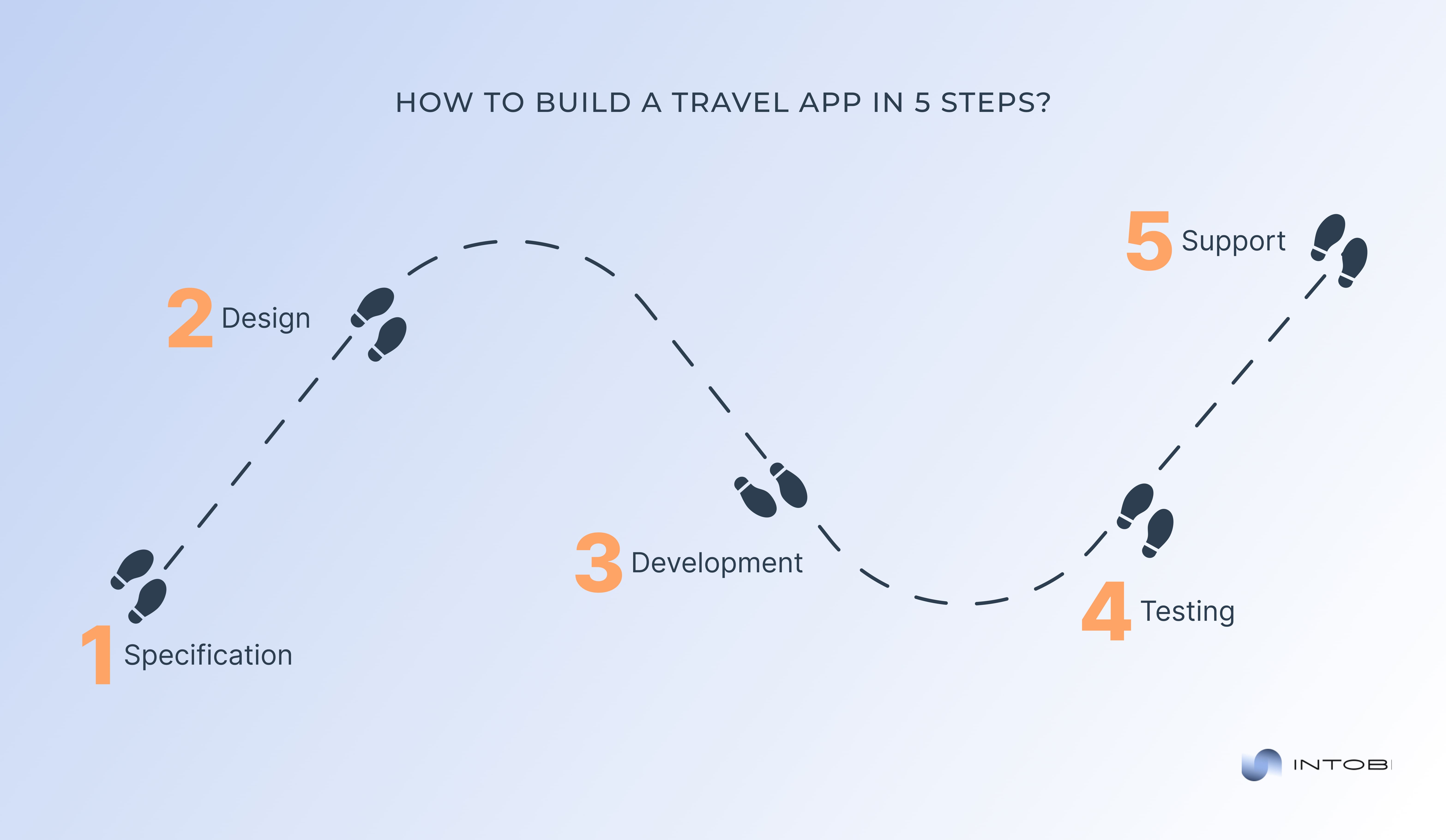
How to create a travel app: step-by-step guide

Creating a successful travel app requires careful planning, design, development, testing, and ongoing support. So, we’ll move you through the step-by-step process of creating a travel app, from initial concept to launch and beyond.

Steps to creating a travel app

Step 1. Specification

The first step in creating a travel app is defining its specifications and requirements. This involves conducting market research, identifying target users, understanding their needs and pain points, and defining the app’s core features and functionalities. Key considerations during this phase include:

  • Defining the app’s purpose and value proposition;
  • Identifying target platforms (iOS, Android, or both);
  • Determining the app’s monetization strategy (e.g., subscription, in-app purchases);
  • Creating user personas and user stories to guide development;
  • Drafting wireframes or mockups to visualize the app’s layout and user interface.

Step 2. Design

Once the specifications are finalized, the next step is to design the app’s user interface (UI) and user experience (UX). This phase involves transforming the app’s requirements and wireframes into visually appealing designs that are intuitive and engaging for users. Core elements of the travel app design phase include:

  • Creating high-fidelity mockups or prototypes to illustrate the app’s look and feel;
  • Designing a seamless and intuitive navigation flow;
  • Incorporating branding elements such as colors, typography, and logos;
  • Ensuring consistency and accessibility across different screen sizes and devices;
  • Soliciting feedback from stakeholders and conducting usability testing to iterate on the designs.

Step 3. Development

With the designs approved, the travel app development phase begins, where the app’s functionality is implemented according to the specifications and designs. This phase involves coding, integrating third-party APIs, and building backend infrastructure to support the app’s features. Fundamental aspects of the development phase include:

  • Choosing the appropriate technology stack (programming languages, frameworks, and tools);
  • Breaking down the development tasks into sprints or iterations;
  • Implementing core features such as search functionality, booking capabilities, itinerary management, and more;
  • Ensuring compatibility with different devices, screen sizes, and operating systems;
  • Adhering to coding best practices, security standards, and performance optimization techniques.

Step 4. Testing

Once the development is complete, the travel app undergoes rigorous testing to identify and fix any bugs, errors, or usability issues before launch. This phase involves various types of testing, including functional, usability, performance, and security. Key concerns during the testing phase include:

  • Creating test cases and scenarios to validate the app’s functionality and behavior;
  • Conducting alpha and beta testing with real users to gather feedback and identify issues;
  • Testing the app on different devices, operating systems, and network conditions;
  • Utilizing automated testing tools and frameworks to streamline the testing process;
  • Addressing any bugs or problems promptly and conducting regression testing to ensure stability.

Step 5. Support

After the app is launched, ongoing support and maintenance are essential to ensure its continued success and usability. This phase involves monitoring the app’s performance, collecting user feedback, releasing updates, and providing customer support. Critical aspects of the support phase include:

  • Monitoring app performance metrics such as user engagement, retention, and app store ratings;
  • Analyzing user feedback and feature requests to prioritize updates and enhancements;
  • Releasing regular updates to address bugs, add new features, and improve user experience;
  • Providing timely customer support through various channels such as email, chat, or helpdesk;
  • Iterating the app based on user feedback and market trends to stay competitive and relevant.

Thus, following the detailed approach outlined above and using best practices in app development, you can create a successful travel app that delights users, drives engagement, and delivers value in the competitive travel industry.

Let's discuss your product

Contact Us

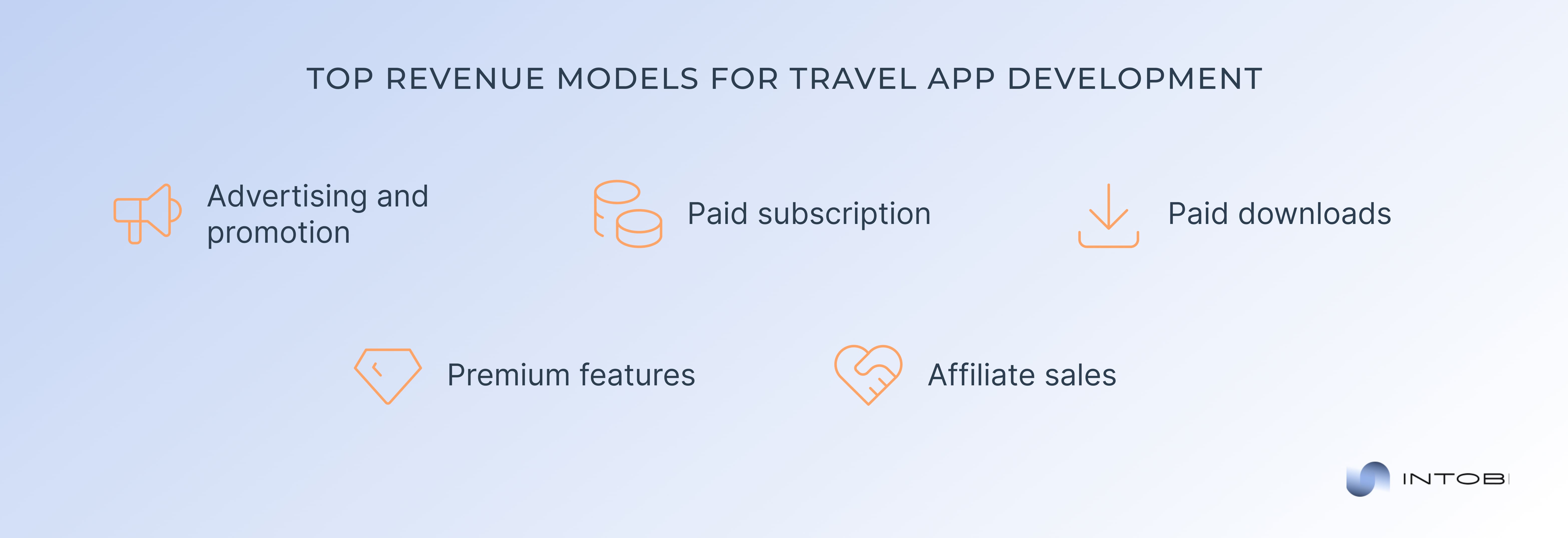
How do travel applications make money? 

In the travel mobile app development field, selecting a proper revenue model is critical for sustainable growth and profitability. So, let’s analyze the top revenue models for travel mobile apps, delving into their benefits, challenges, and suitability for different business objectives.

Revenue models for travel apps

Advertising and promotion

Advertising remains one of the most common revenue models for travel mobile apps, using targeted ads to generate income from user engagement. Travel apps can partner with advertisers, such as airlines, hotels, tour operators, and destination marketing organizations, to display relevant ads based on user preferences, search history, and demographics. Additionally, location-based advertising enables targeted promotions for local attractions, restaurants, and services, maximizing ad relevance and effectiveness.

Benefits:

  • Generates recurring revenue through ad impressions, clicks, and conversions.
  • Provides a source of revenue without directly charging users, making the app more accessible and appealing.
  • Enables monetization at scale by using the app’s user base and engagement metrics.

Challenges:

  • Balancing ad frequency and user experience to avoid overwhelming users with intrusive ads.
  • Ensuring ad relevance and quality to maintain user engagement and retention.
  • Ad blockers and user privacy concerns may impact ad visibility and effectiveness.

Paid subscription

These revenue models offer users access to premium features, content, or services in exchange for a recurring fee. Travel apps can offer subscription tiers with varying access levels, such as exclusive deals, personalized recommendations, ad-free browsing, or advanced booking options. Subscriptions provide a predictable revenue stream and foster a sense of loyalty among users who value the app’s premium offerings.

Benefits:

  • Generates steady and predictable revenue through recurring subscription fees.
  • Encourages user engagement and retention by offering exclusive benefits and value-added services.
  • Enables continuous monetization and revenue growth through upselling, cross-selling, and retention strategies.

Challenges:

  • Convincing users to pay for premium features in a competitive market with many free alternatives.
  • Balancing subscription pricing to maximize revenue while remaining competitive and attractive to users.
  • Providing sufficient value and differentiation to justify the recurring subscription fee and minimize churn.

Paid downloads

The paid download model charges users a one-time fee to download and access the app’s full functionality. Travel applications can monetize their offerings by setting an upfront price for app installation, providing users with immediate access to features such as itinerary planning, booking, navigation, and offline access. Paid downloads offer a straightforward monetization strategy, especially for apps with niche or specialized features that justify the upfront cost.

Benefits:

  • Generates immediate revenue from each app installation without relying on ongoing user engagement.
  • Provides a clear value proposition to users willing to pay for premium features or content.
  • Enables developers to recoup development costs and generate profit from the initial app launch.

Challenges:

  • Facing resistance from users accustomed to free app downloads, especially in markets where free alternatives are prevalent.
  • Balancing pricing to maximize revenue while remaining competitive and appealing to potential users.
  • Limited revenue potential compared to recurring revenue models such as subscriptions or in-app purchases.

Premium features

The premium features model offers a combination of free and paid features within the app, allowing users to access basic functionality for free while charging for advanced or exclusive features. Travel apps can monetize premium features such as advanced search filters, offline maps, priority support, premium content, or enhanced customization options. This model satisfies users with diverse needs and preferences, providing flexibility and choice in interacting with the app.

Benefits:

  • Provides a scalable revenue model that provides users with varying willingness to pay for premium features.
  • Allows developers to monetize specific features or functionalities without gating access to the entire app.
  • Enables continuous revenue growth through feature updates, expansions, and new premium offerings.

Challenges:

  • Striking the right balance between free and premium features to encourage user adoption while incentivizing upgrades.
  • Ensuring that premium features provide sufficient value and differentiation to justify the additional cost to users.
  • Managing user expectations and perceptions regarding the availability and pricing of premium features.

Affiliate sales

This revenue model involves partnering with third-party providers, such as airlines, hotels, rental car agencies, and tour operators, to promote their products or services within the app and earn commissions on successful referrals or transactions. Travel applications can integrate affiliate marketing programs to monetize bookings, reservations, ticket sales, and other travel-related transactions made through the app. This model aligns the app’s revenue with user engagement and transactional activity, creating a win-win scenario for developers and affiliate partners.

Benefits:

  • Generates revenue through commissions on successful referrals or transactions without directly charging users.
  • Expands revenue opportunities beyond traditional advertising or subscription models by monetizing actual transactions.
  • Aligns the app’s revenue with user engagement and transactional activity, incentivizing developers to drive conversions and bookings.

Challenges:

  • Managing affiliate partnerships and relationships to ensure transparency, accountability, and fair compensation.
  • Balancing user experience and commercial intent to avoid overwhelming users with promotional content or offers.
  • Optimizing affiliate marketing efforts to maximize conversion rates and revenue while maintaining user trust and credibility.

In general, by using the right mix of revenue models and strategies, travel app developers can maximize revenue potential, enhance user experience, and drive long-term growth and profitability.

Fundamental features of travel mobile app development

A well-designed travel app covers a range of core features tailored to meet the diverse needs of travelers worldwide. It is essential to check the crucial features of mobile app development for travel to enhance the journey and allow users to explore the world easily.

Search functionality

It lies at the heart of every travel app, allowing users to discover destinations, flights, accommodations, activities, and services based on their preferences and criteria. A robust search feature should support filters such as location, dates, price range, amenities, and user ratings, enabling users to find relevant options quickly and efficiently. Integrating predictive search suggestions and autocomplete capabilities further enhances the user experience, guiding users toward their desired destinations and offerings.

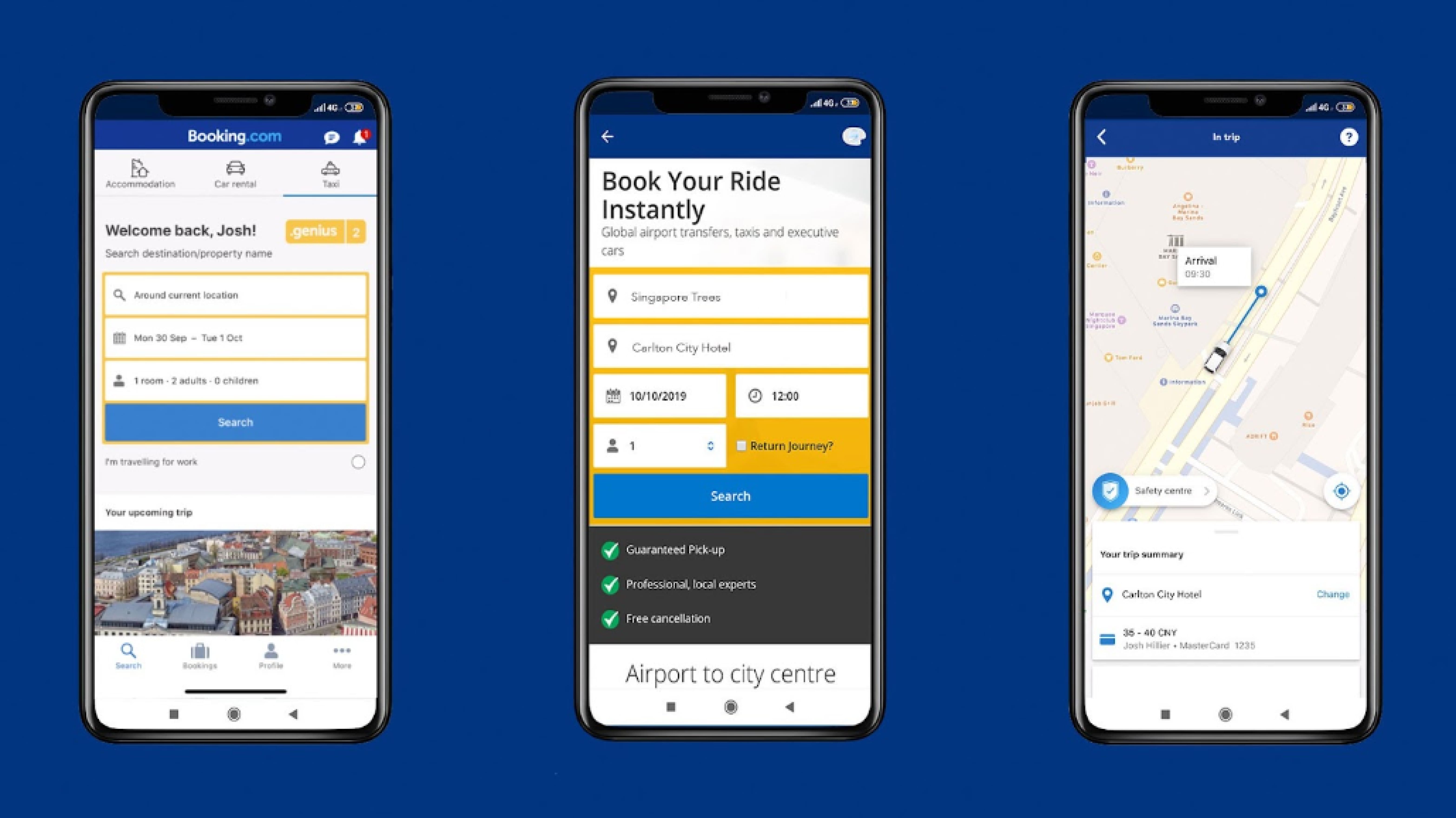
Booking capabilities

These capabilities enable users to seamlessly reserve flights, hotels, rental cars, tours, and activities directly within the app. A user-friendly booking interface should provide clear pricing information, availability status, booking confirmation details, and secure payment processing options. Integrating third-party booking APIs and payment gateways streamlines the booking process, offering users a hassle-free experience while generating revenue for the app through commissions or transaction fees.

Booking.com travel app

Travel itineraries

They empower users to plan and organize their trips effectively by creating and managing personalized schedules, activities, and bookings. An intuitive itinerary management feature should allow users to add, edit, and delete itinerary items, set reminders and notifications, and sync data across devices for seamless access. Integrating with calendar apps and social platforms enables users to share their itineraries with friends and travel companions, fostering collaboration and coordination during the trip.

Reviews and ratings

These features are crucial in helping users make informed decisions and evaluate the quality and credibility of travel-related products and services. Integrating user-generated reviews and ratings into the app allows travelers to share their experiences, insights, and recommendations with the community. Implementing rating systems, review filters, and moderation tools ensures the authenticity and relevance of user-generated content, enhancing trust and transparency within the app.

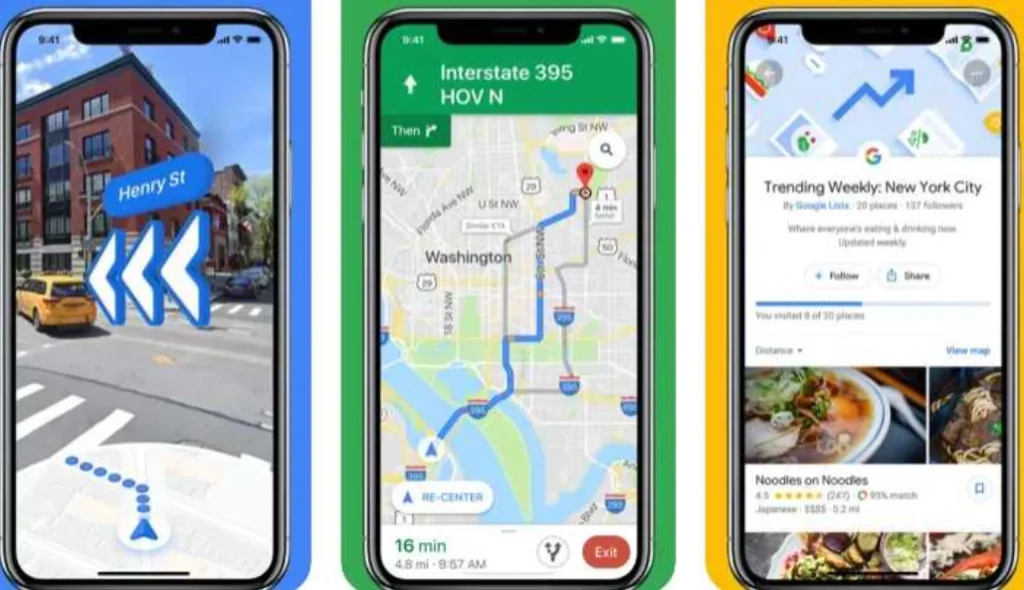
Maps and navigation

Maps and navigation features provide users with interactive maps, directions, and point-of-interest information to navigate through unfamiliar destinations with ease. Integrating map services such as Google Maps or Apple Maps enables users to explore destinations, find nearby attractions, restaurants, and amenities, and plan routes for transportation. Augmented reality overlays and offline maps enhance the navigation experience, offering users real-time guidance and orientation even without an Internet connection.

Google Maps travel app

Personalized recommendations

It uses data analytics, machine learning algorithms, and user profiling techniques to deliver tailored travel suggestions, deals, and content based on individual preferences, behavior patterns, and past interactions. By analyzing user search history, booking patterns, and demographic information, the app can recommend destinations, accommodations, activities, and experiences that align with the user’s interests and preferences, enhancing the app’s relevance and engagement.

Budget tracking

These features enable users to set, monitor, and manage travel expenses, ensuring financial transparency and accountability throughout the journey. A comprehensive budget tracking tool should allow users to create budgets for different categories such as transportation, accommodation, dining, and activities, track expenses in real time, and receive alerts and insights on spending trends and deviations. Integrating currency conversion and expense categorization functionalities enhances the accuracy and usability of the budget tracking feature. This allows users to stay within their financial limits and make informed spending decisions.

Offline access

It provides users uninterrupted access to essential app functionalities and content, even in areas with limited or no Internet connectivity. By locally caching data, maps, and resources, the app ensures that users can access critical information such as itineraries, bookings, maps, and saved content offline. This reduces reliance on constant Internet access and enhances user experience in remote or low-connectivity environments.

In general, by incorporating these core features into travel apps, developers can create compelling and competitive solutions that delight users and drive engagement and loyalty in the fiercely competitive travel industry.

How to create an engaging travel app?

Contact us

Advanced tech stack for travel app development

A robust tech stack forms the foundation of a successful travel app, enabling developers to build scalable, feature-rich, and cross-platform applications. At Intobi, our specialists employ Swift, Kotlin, Flutter, and Kotlin Multiplatform to deliver exceptional user experiences and optimize development efficiency.

For travel products that need to reach users on both iOS and Android, cross-platform app development can help deliver consistent experiences while reducing duplicate engineering work.

  • Swift It is a powerful and intuitive programming language developed by Apple for building iOS, macOS, watchOS, and tvOS applications. 
  • Kotlin This is a modern, concise, and expressive programming language developed by JetBrains for building Android applications.
  • Flutter It is an open-source UI toolkit developed by Google for building natively compiled mobile, web, and desktop applications from a single codebase. 
  • Kotlin Multiplatform This is a technology developed by JetBrains for sharing code between multiple platforms, including iOS, Android, and backend servers, using a single codebase. 

When building native iOS and Android apps or cross-platform solutions, adopting an advanced tech stack including Swift and Kotlin Multiplatform allows travel app developers to stay ahead of the curve and create innovative travel experiences that delight users and drive business growth.

Let's discuss

Contact Us

Tourism app development cost

Travel mobile app development costs can vary significantly depending on core features, complexity, design, development team location, timeframes, and more. It’s essential to conduct thorough research, define your requirements clearly, and work closely with your development team to estimate costs accurately and ensure a successful app development process within your budget constraints.

Below is a table with approximate travel mobile app development costs.

Type of appTotal costTimeline
Basic app (core features)$30,000- $80,0003-5 months
Full product (complex features, supports single platform)$80,000- $150,0004-9 months
Large app (complex design, support cross platforms)$150,000+9 months+

Progressive travel mobile app development at Intobi

We specialize in creating advanced mobile applications tailored to the unique needs of various industries, including travel and tourism. With a team of experienced developers, designers, and strategists, Intobi is committed to delivering innovative solutions that upgrade user experiences and drive business growth.

As a travel app development company, our development goes beyond mere functionality to contain creativity, usability, and scalability. Here’s how Intobi approaches travel app development to create exceptional solutions for its clients:

  • Comprehensive understanding of client needs;
  • User-centric design;
  • Customized features and functionality;
  • Integration of advanced technologies;
  • Cross-platform compatibility;
  • Robust backend infrastructure;
  • Continuous support and maintenance.

Our case study: Masons Tours

Intobi's project: Masons Tours

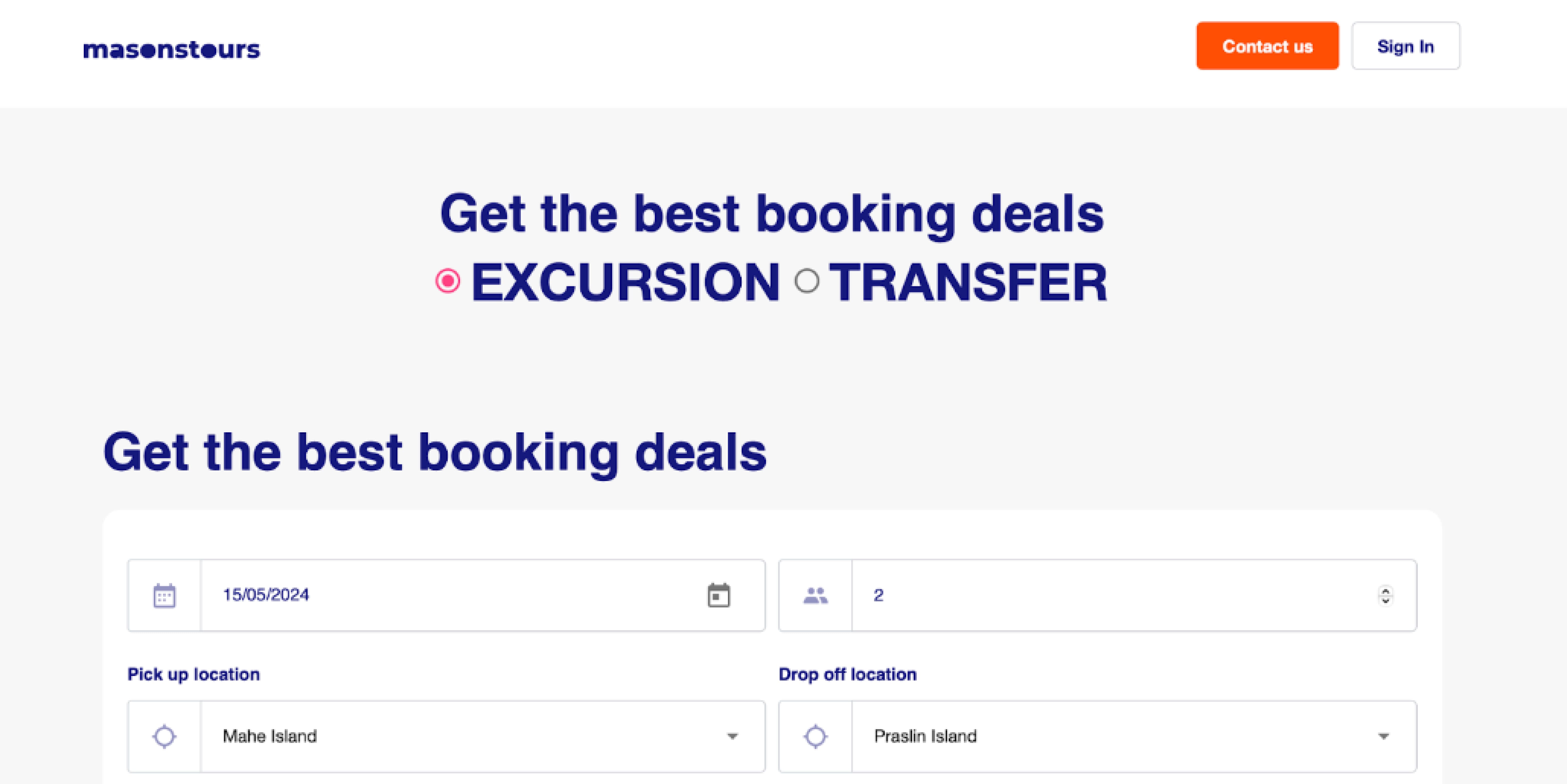
This public booking platform allows customers to make efficient and smooth tour bookings for all the family. The platform contacts three applications in a list: a customer-facing app, an admin portal, and a mobile application.

Conclusion

Summarizing, it becomes clear that the future of travel lies in the hands of innovation and creativity. As technology continues to evolve and shape how we explore the world, one thing remains certain: the journey itself is as important as the destination. By employing travel apps, we can simplify the logistics of our adventures and enrich our experiences in previously unimaginable ways.

At Intobi, we specialize in turning dreams into reality. Let’s collaborate to revolutionize how the world travels. Contact us today to start delivering travel app development services!

FAQ

How to create a travel app?

Creating a travel app involves several key steps: market research, features defining, UI/UX design, development, testing, launch and marketing, and feedback gathering.

How to make money selling travel itineraries?

Selling travel itineraries can be a profitable experience if done strategically: curate unique itineraries, monetize content and subscription models, collaborate with influencers, provide additional services, offer customization, utilize ad revenue, and offer membership programs.

How to Create a Dating App: Key Stages, Features, and Costs

TL;DR

Dating apps have become a gateway to meaningful relationships in an increasingly digital world. This guide explores the popularity of dating apps and the main types – from traditional and niche-based to geolocation, friendship, and LGBTQ+ apps. It also covers the benefits of dating app development, the key stages of building a successful app, the essential features, monetization, and costs.

Make a summary of this article with AI:

Creating a dating app has become a gateway to fostering meaningful relationships in a world where connections are increasingly digital. Whether you’re an entrepreneur launching into the app development realm or a business looking to expand your digital offerings, understanding the crucial steps, main features, and costs involved is vital.

Delivering a successful dating app goes beyond coding – it’s about making a platform that resonates with users, offers seamless experiences, and facilitates genuine connections. This guide shows the landscape of dating app development, breaking down the process into actionable steps, exploring essential features that enhance user engagement, and shedding light on budgetary considerations.

As we undertake this journey, we’ll expose the complexities, making the path to creating your dating app possible and an exciting experience in modern-day matchmaking.

Ready to discover the basics of dating app development? Let’s find something unique together!

Exploring the popularity of dating app development

Is there at least one person in your environment who does not use a smartphone? Unlikely. Sales of smartphones are growing at lightning speed, and manufacturing companies are investing considerable costs in mobile technologies, their development, and popularization in the market. Therefore, mobile development is a rapidly growing programming field because the number of mobile devices significantly exceeds that of personal computers. So, this trend will only grow.
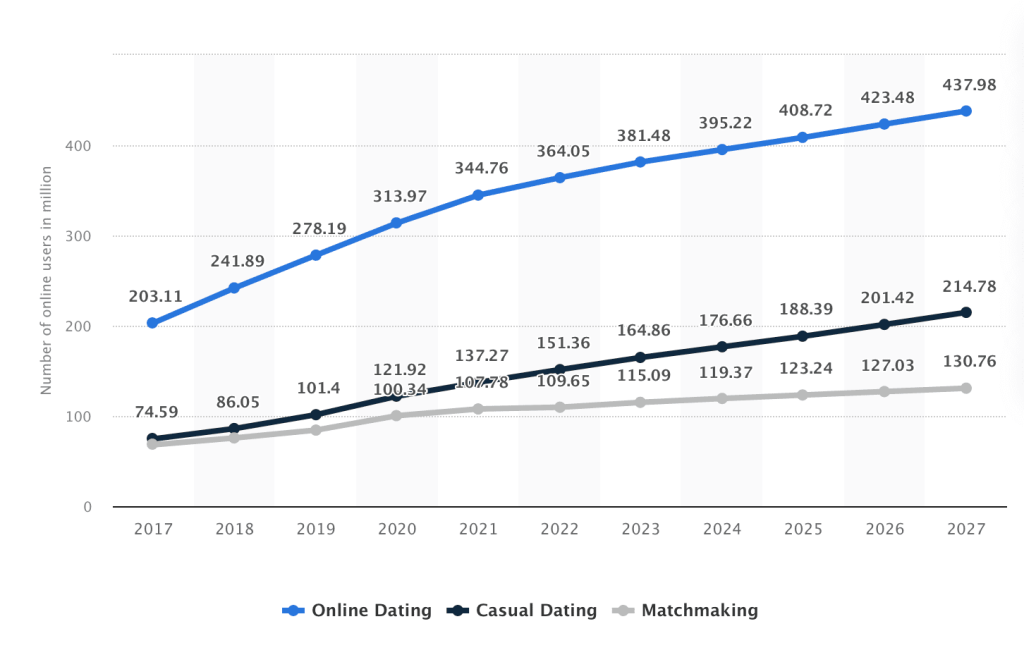
As for the growth of dating app development, there are also only optimistic forecasts. In 2027, more people are expected to use online services, and this growth is predicted across all areas. This pattern has been consistent from 2017 to 2027. The number of users is expected to keep increasing in every category. Specifically, in 2027, the Online Dating section is projected to have the most users, reaching 437.98 million.

Dating service users worldwide 2017-2027, by segment

Dating app development is the process of creating digital platforms that connect people to foster romantic relationships, friendships, or companionship. These applications employ advanced technology to facilitate interactions, helping users discover potential matches based on shared interests, preferences, and geographic proximity.

At its core, dating app development revolves around providing a user-friendly interface that encourages meaningful connections. Developers focus on designing features that enhance user experience (UX), such as profile creation, swiping mechanisms to express interest, and chat functionalities. The essence lies in creating a virtual space where individuals can engage authentically and explore the possibilities of romance or companionship.

Dating apps typically have three main components: a user interface (UI), a server, and a database. The UI is what users interact with, including profiles, swiping features, and messaging. The server manages the app’s logic, processes user actions, and facilitates communication. The database stores user information, preferences, and interactions. Security and privacy measures are integral, ensuring user data remains confidential and secure.

Do you know any types of dating apps? Let’s check them in detail.

Varieties in the world of dating mobile app development solutions

Dating apps have become the modern Cupids, helping people connect, develop relationships, and find companionship with just a tap. So, let’s dive into the fascinating world of dating apps, each designed to cater to specific needs and preferences.

Traditional

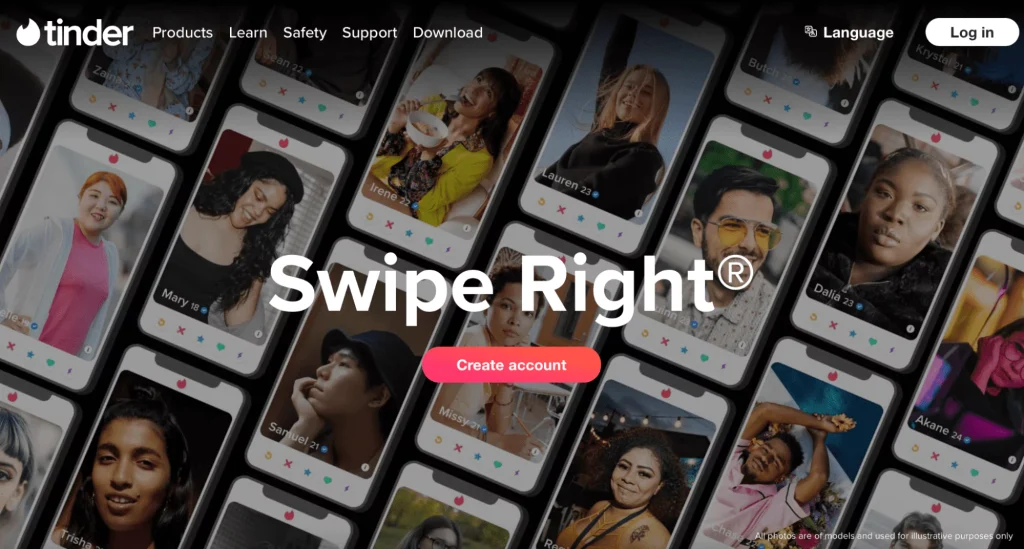
These dating apps, exemplified by Tinder, encapsulate the essence of simplicity and spontaneity. Users create profiles, showcase their best selves through pictures, and engage in the age-old ritual of swiping. It’s a playful and efficient approach to discovering mutual interest and kickstarting conversations.

Tinder home page

Niche-based

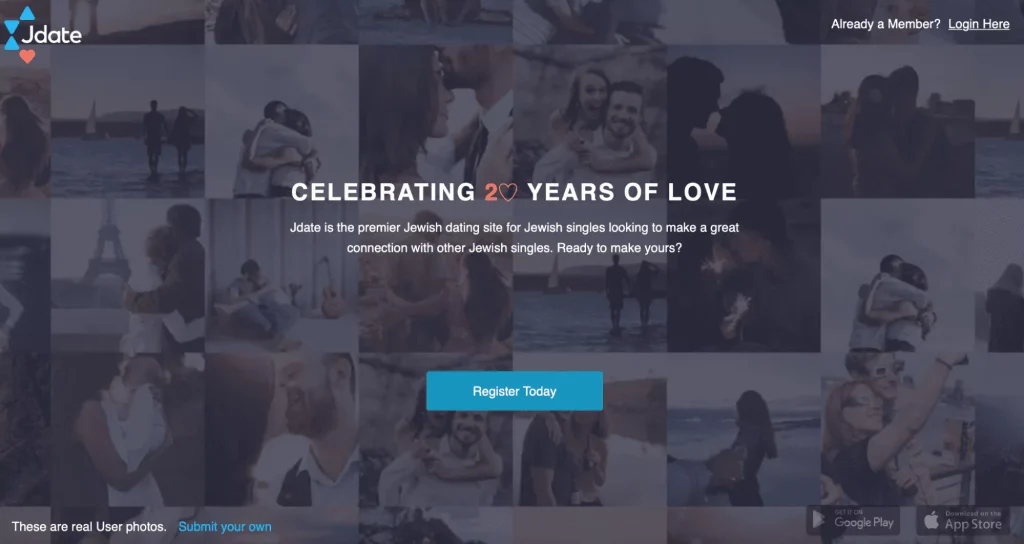
For those seeking a more tailored experience, niche-based dating apps enter the scene. Take Jdate, for instance, which caters exclusively to Jewish singles. These platforms create digital spaces where individuals with shared backgrounds, interests, or values can connect, fostering a sense of community within the vast landscape of online dating.

Jdate home page

Geolocation

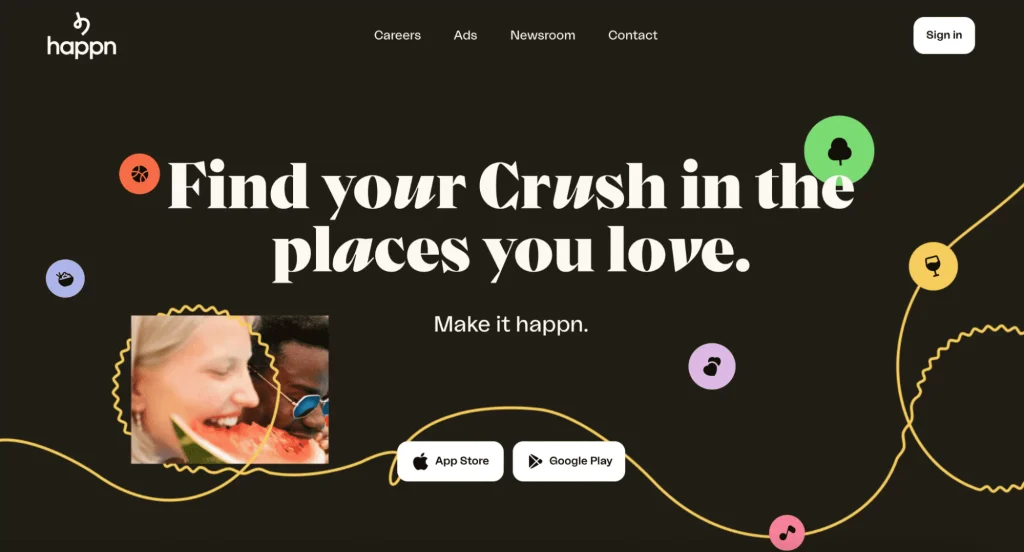
In a world where digital connections intersect with real-life encounters, geolocation dating apps like Happn come into play. These apps employ location services to connect users who have crossed paths physically, transforming chance encounters into potential romantic connections.

Happn home page

Relationship-focused

For those ready to guide the journey toward commitment and companionship, relationship-focused dating apps offer a purpose-driven approach.

Interesting

With advanced algorithms, these platforms seek to align individuals with similar values, fostering connections that exceed the casual dating realm. eHarmony is a prime example.

eHarmony home page

Friendship

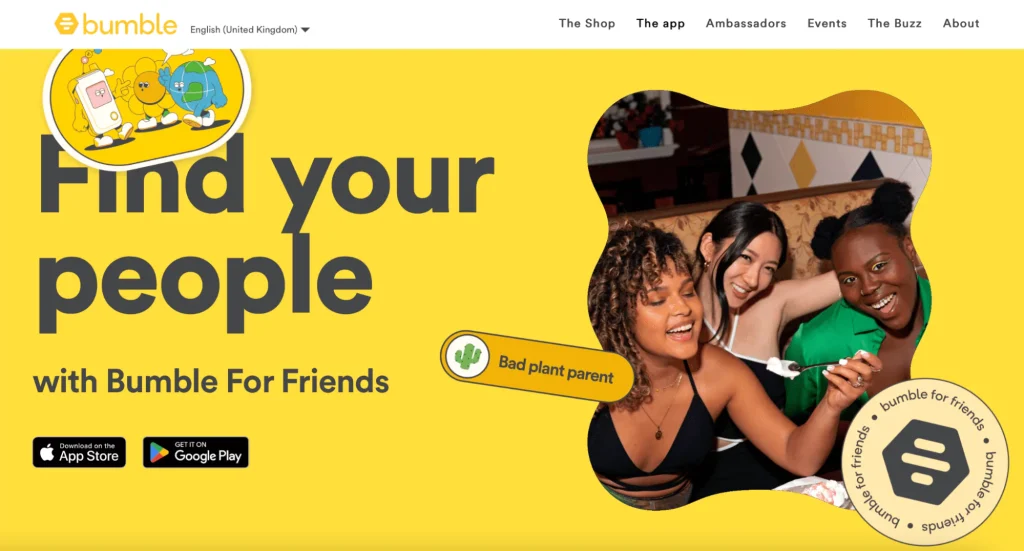
Beyond pursuing romantic connections, some apps recognize the value of expanding social circles. Bumble, a friendship-focused app, introduces a refreshing dynamic, facilitating platonic relationships and enriching users’ lives with like-minded companionship.

Bumble home page

LGBTQ+

Creating inclusive spaces for the LGBTQ+ community, apps like HER provide a haven for queer women, nonbinary, and trans individuals. These platforms prioritize understanding and acceptance, fostering connections that celebrate the diversity within the spectrum of romantic and social relationships.

HER home page

In the vast landscape of dating apps, each type offers a unique experience. So, which one will you choose on your quest for love or friendship in the digital age?

Top benefits of dating mobile app development 

Where technology is crucial in connecting people, dating app development has become a significant trend. These digital platforms have revolutionized the way individuals meet and form connections. Let’s analyze the various benefits of dating app development in simple words.

Wider reach and accessibility

Dating apps break down geographical barriers, allowing individuals to connect with potential partners beyond their immediate surroundings. This widens the pool of possible matches, giving users a greater chance of finding someone compatible.

Time-efficiency

In fact, dating app development saves time by providing a streamlined platform for meeting new people. Users can browse through profiles and initiate conversations with potential matches, eliminating the need for prolonged interactions before discovering compatibility.

Diverse interactions

Dating apps cater to diverse preferences and interests. Users can specify their preferences, such as age range, interests, and location, ensuring they connect with individuals with common ground. This diversity enhances the chances of meaningful connections.

Increased confidence

For many, approaching someone in person can be intimidating. Dating apps offer a more comfortable environment for individuals to express themselves without fearing immediate face-to-face interactions. This can boost confidence and encourage users to be more open about their feelings and desires.

Enhanced safety measures

Reputable dating apps prioritize user safety by implementing security features. These include profile verification, reporting mechanisms, and privacy settings. Such measures create a safer space for users, reducing the risks associated with online interactions.

Compatibility matching

Advanced algorithms used in dating app development analyze user data to suggest compatible matches. This technology considers factors like interests, values, and preferences, increasing the likelihood of meaningful connections.

Cost-effectiveness

Traditional dating methods often involve expenses, such as dining out or attending events. Dating apps provide a cost-effective alternative, allowing individuals to explore potential matches without breaking the bank.

Real-time communication

Dating app development enables real-time communication through messaging features. This instant connection fosters quicker and more direct contact between individuals, facilitating the development of relationships.

Convenience and flexibility

Dating apps offer the convenience of connecting with others at any time, making them suitable for individuals with busy schedules. This flexibility ensures that users can engage in dating without disrupting their daily lives.

Continuous evolution and updates

Dating app developers regularly update their platforms to enhance user experience and security. This commitment to improvement ensures that users benefit from the latest features and technologies, keeping the dating app environment fresh and engaging.

Thus, dating app development has transformed the dating landscape by making it more accessible, efficient, and secure. These platforms empower individuals to connect with potential partners based on shared interests and values, ultimately fostering meaningful relationships. As technology advances, the benefits of dating app development will likely evolve, providing even more opportunities for people to find love and companionship in the digital age.

Looking to revolutionize dating?

Contact us

Crucial steps how to create a successful dating app

Creating a successful dating app involves several key steps, each crucial to its overall performance and user satisfaction. Let’s break down the process into manageable stages.

Product discovery: understanding user needs

The first step in creating a successful dating app is understanding the needs of your users. Start by identifying your target audience. Are you catering to a specific age group, location, or interest? Conduct surveys and interviews to gather valuable insights into user preferences and expectations.

Additionally, analyze competitors in the dating app market. Identify what works well for them and areas where you can innovate. Moreover, consider unique features that can set your app apart, whether it’s a different matching algorithm, enhanced privacy settings, or innovative communication tools.

Thus, successful product discovery lays the foundation for a dating app that resonates with users and meets their expectations.

Advanced tech stack: building a solid foundation

Choosing the right technology stack is crucial for the success of your dating app. Start with a reliable backend framework that can handle the app’s functionality and potential scalability. Select a robust database to manage user data efficiently.

You can consider whether to develop the app natively for specific platforms (iOS and Android) or cross-platform development. Evaluate the pros and cons based on your target audience and budget.

It is important to implement stringent security measures to protect user data. Encryption, secure authentication processes, and regular security audits should be part of your strategy to ensure user privacy.

A cutting-edge tech stack forms the backbone of your dating app, enabling it to perform seamlessly and adapt to evolving user needs. Below is a table of cutting-edge tools needed for your dating app development.

App architecture partsTools & Technologies
Programming languagesKotlin, Swift, React Native
FrameworksNode.js, Next.js, React
DatabasePostgreSQL, MongoDB, Redis
Cloud storageAWS
Web serversNginx
Payment gatewayStripe, PayPal
Other integrationsOptimizely, Elasticsearch, Google Maps, Google Analytics, Twillio

UI/UX design: creating an intuitive and appealing interface

The success of a dating app often hinges on its user interface (UI) and user experience (UX). So, keep the design simple, intuitive, and visually appealing. Prioritize a clean layout that guides users effortlessly through the app.

It is also a great idea to choose a color scheme and fonts that align with your app’s brand and create a positive user experience. Then, implement clear iconography for easy navigation. Moreover, consider user psychology when designing features like profiles, swiping gestures, and messaging to enhance overall usability.

Usability testing is crucial during the design phase. Gather feedback from potential users to identify areas for improvement and refine the UI/UX accordingly.

Dating app development: bringing the concept to life

With a solid foundation in place, it’s time to bring your dating app to life through development. In general, divide the development process into sprints, prioritizing core functionalities. Start with user registration, profile creation, and basic matching algorithms.

Implement features that encourage user engagement, such as real-time updates on matches and activities. Consider incorporating location-based services for more accurate matching in proximity-based dating apps.

On the other hand, collaborate with experienced developers who understand the nuances of dating app development. Regular communication and feedback loops between designers and developers are essential to ensure the app aligns with the initial vision.

Testing: ensuring functionality and security

Thorough testing is critical to identify and rectify any issues before the app goes live. Conduct functional testing to ensure that all features work as intended. Next, test your app’s matching algorithm, messaging system, and unique features.

Security testing is paramount to protect user data and privacy. Regularly perform vulnerability assessments and address any potential threats promptly. Usability testing helps assess the overall user experience and identify areas for improvement. Continuous testing throughout the development process ensures a high-quality, reliable dating app that users can trust and enjoy.

Maintenance and support: sustaining long-term success

In fact, launching the app is just the beginning. Long-term success requires ongoing maintenance and support. Regularly update the app to introduce new features, enhance security, and fix potential bugs. Moreover, stay informed about technological advancements and user preferences to keep the app relevant.

You can provide excellent customer support to address user concerns and feedback promptly. Establish communication channels to assist users with issues, such as in-app support or a dedicated customer service team.

Also, monitor app performance, server stability, and scalability to ensure a seamless experience for users. A well-maintained and supported dating app will likely retain users and stay competitive in the dynamic market.

In conclusion, developing a dating app involves a comprehensive approach, from understanding user needs to ongoing maintenance and support. By prioritizing all these crucial development steps, you can discover how to create a successful dating app that attracts users and keeps them engaged for the long term.

Essential features for your dating app development

In the exciting world of dating apps, creating a stand-out platform involves incorporating a tapestry of features that make the user experience memorable, secure, and enjoyable. Let’s delve into the essential aspects that can set your dating app apart.

Verification process

Ensuring trust and authenticity is the cornerstone of any successful dating app. A robust verification process adds a layer of security, assuring users that the people they connect with are genuine. Utilize methods like phone number verification or photo confirmation to establish trust. This enhances user confidence and creates a safer environment for meaningful connections to succeed.

User profiles

These profiles are the heart and soul of your dating app. Keep the profile creation process simple and intuitive, allowing users to showcase their personalities. Include sections for basic information, interests, and preferences. To add an extra layer of authenticity, consider enabling users to link their social media accounts for verification. A well-crafted profile is the gateway to better matches and more meaningful connections.

For example, we can see how to create a good dating app profile.

Example of dating app profile

Geolocation

Bring people closer together by incorporating geolocation features into your dating app. Users can discover potential matches nearby, making the dating experience more exciting and convenient. Whether suggesting nearby date spots or enabling location-based searches, geolocation adds a dynamic and real-world dimension to the virtual dating landscape.

Matching algorithm

Fuel the heart of your dating app with an innovative and intuitive matching algorithm. By understanding user preferences, interests, and behaviors, your app can provide more accurate and compatible matches. Consider incorporating machine learning to refine and enhance the matching process continually. A robust algorithm is a magic wand that transforms casual swipes into meaningful connections, keeping users engaged and satisfied.

Messaging system

Communication is the lifeblood of any relationship. Implement a real-time messaging system that fosters seamless and meaningful interactions between users. Features like read receipts and typing indicators enhance the messaging experience, making conversations more dynamic. Allow users to share multimedia content, such as photos and videos, to add a personal touch to their conversations and create a deeper connection.

Example of dating app messaging system

Video profiles and calls

Elevate the dating experience by introducing video profiles and calls. Video adds a personal touch, allowing users to see and hear each other before deciding to meet in person. It enhances the authenticity of profiles and opens up new avenues for virtual connections, making the dating journey more engaging and interactive.

Push notifications

Keep the spark alive with push notifications that alert users about matches, messages, and activity updates. Timely reminders and prompts ensure users stay engaged with the app, fostering a vibrant community. Whether it’s a new match or a message from a potential connection, push notifications create a sense of excitement and anticipation.

Example of dating app push notifications

Integration with social media

Bring social connectivity into the dating realm by allowing users to integrate their social media accounts seamlessly. This simplifies the profile creation process and enables users to share their activities and interests effortlessly. Integration with social media adds a layer of authenticity and provides a glimpse into users’ real lives, creating more genuine connections.

Feedback and support

Empower users with a direct line to support and feedback. A user-friendly support system ensures that any issues or concerns are addressed promptly. In-app FAQs and tutorials offer solutions to common problems, creating a smooth and hassle-free user experience and reinforcing their trust in your platform.

Privacy and security

Creating a safe and secure environment is paramount for any dating app. Robust privacy settings give users control over the visibility of their profiles, ensuring they share only what they are comfortable with. So, implement encryption measures for secure messaging and employ features to prevent harassment and abuse. Also, prioritize user safety and transparently communicate the steps to safeguard their personal information, fostering trust and confidence in your platform.

In conclusion, weaving together these key features creates a dating app that goes beyond mere matchmaking. It becomes a platform where genuine connections flourish, backed by security, authenticity, and an enriching user experience.

Dating app development takes a lot of time, effort, and resources. So, it’s essential to follow a solid strategy to ensure that all investments pay off. But how to do it? Let’s explore together further!

Monetization strategies for dating mobile app development

The emergence of tools for delivering Tinder-like app development opened up new opportunities for such services. Despite a sufficient number of existing options, most users still need to find a suitable platform. You must find an entry point and create the highest-grossing app to succeed in this industry.

How do apps like Tinder make money?

Tinder has garnered over 340 million downloads and is accessible in more than 190 countries, supporting 40+ languages. Its basic plan with limited features is free. Still, there are also paid Tinder Plus, Tinder Gold, and Tinder Platinum, which expand the subscriber’s capabilities and give him access to other users. These tariff plans bring most of the revenue to the app.

Tinder subscription tiers

In fact, Tinder clone app development has changed the way people find love. But have you ever wondered how these dating apps make money? Let’s explore some standard business models in dating app development and how they impact your experience.

Premium subscriptions

One of dating apps’ most common and successful monetization strategies is offering premium subscriptions. Users can access exclusive features, such as advanced search filters, unlimited likes, and the ability to see who viewed their profiles. By providing a superior user experience to paying subscribers, you generate revenue and create a tiered system that encourages users to upgrade for enhanced functionality and a more enjoyable dating experience.

Grindr

It is a popular dating app for the LGBTQ+ community, offering a premium subscription service called Grindr XTRA. Subscribers enjoy an ad-free experience, increased profile visibility, and advanced filters to enhance their matching preferences. Grindr successfully monetizes these premium features, providing a more tailored experience for users willing to invest in the upgraded subscription.

Grindr home page

In-app purchases

They can be an exciting addition to your dating app’s revenue stream. Allow users to buy virtual gifts or boosts to help them stand out and express interest more engagingly. These virtual items add a fun element to the app and provide a way for users to support the platform financially while interacting with others.

Coffee Meets Bagel

It introduces in-app purchases through a virtual currency called “Beans.” Users can purchase Beans to unlock additional features, such as seeing mutual friends or accessing detailed activity reports on their profiles. This strategy adds a layer of engagement and personalization while generating revenue from users looking to enhance their dating experience.

Coffee Meets Bagel home page

Ads

Integrating advertisements into your dating app is a common way to generate revenue. However, it’s crucial to balance ad placement and user experience. Implement non-intrusive banner ads or interstitial ads strategically to avoid disrupting the user’s journey. Consider offering an ad-free premium subscription to cater to users who prefer an ad-free experience, providing options that suit different preferences.

OkCupid

It is a dating app renowned for its extensive questionnaire-based matching system, which incorporates ads in a non-intrusive manner. Users encounter banner ads and sponsored profiles while navigating the app. OkCupid’s ad strategy ensures that advertisements do not disrupt the overall user experience, striking a balance between ad revenue and user satisfaction.

OkCupid home page

Social media and content partnerships

Develop partnerships with social media platforms to increase your app’s visibility and user base. Additionally, collaborating with content creators, influencers, and relationship experts can bring valuable content to your app, enhancing user engagement. Monetize these partnerships by offering sponsored content, featured profiles, or exclusive events. By combining entertainment and informative content, you can create a more comprehensive dating app experience and open up new revenue streams.

Hinge

This dating app focused on creating meaningful connections has successfully leveraged social media and content partnerships. The app collaborated with influencers and relationship experts to provide insightful and engaging content on its platform. This content enhances user experience and opens avenues for sponsored content and partnerships, contributing to the app’s overall revenue.

Hinge home page

Affiliate marketing

Explore affiliate marketing opportunities by partnering with relevant businesses, such as florists, gift shops, or restaurants. Implement an affiliate program where users can earn rewards for making purchases through your app. This adds value to the user and creates a mutually beneficial relationship with external businesses, expanding your monetization avenues beyond the app itself.

Match.com

In fact, Match.com has launched into affiliate marketing by partnering with Groupon to offer users special dating-related deals. Through this collaboration, Match.com promotes discounted experiences, such as restaurant dinners or activities, enhancing the overall dating experience for users. This affiliate marketing approach benefits the users and creates a revenue-sharing opportunity between the dating platform and Groupon.

Example of dating app: Hinge

Games and quizzes

Integrate interactive games and quizzes within your dating app to keep users entertained and engaged. Consider monetizing these features by offering in-app purchases for power-ups, additional game rounds, or premium quiz content. This approach diversifies the user experience and provides opportunities for users to spend within the app, contributing to overall revenue.

Zoosk

It is a playful dating app that integrates interactive games and quizzes as part of its user experience. Users can earn or purchase “coins” to unlock special features within these games, adding a gamified element to the dating process. Zoosk effectively monetizes this feature by offering in-app purchases for virtual currency, contributing to its overall revenue.

Example of dating app: Zoosk

Thus, a successful dating mobile app is not just about connecting people; it’s also about implementing effective monetization strategies. So, you should  create a well-rounded monetization approach that ensures the long-term success of your dating app. Keep in mind that balancing revenue generation with a positive user experience is critical to building a thriving community of users who find value in your app.

Ready to help people connect?

Contact us

Understanding the investment: how much does it cost to create a dating app

Finally, it’s time to discuss the dating app development cost. Building a dating app involves several factors contributing to the overall cost, and it’s crucial to consider various aspects to develop a successful and user-friendly platform. The price can vary widely depending on the complexity of features, design preferences, and the development team’s hourly rates.

The primary factors of dating app development cost include the following:

  • Features and functionality: the more features you want, the higher the cost. Basic features like user profiles, messaging, and search functionality are standard. Advanced features such as geolocation, video calls, and personalized algorithms for matching increase the development time and cost.
  • Design: a visually appealing and intuitive design is crucial for user engagement. Investing in a professional UI/UX design can enhance the user experience and add to the overall cost.
  • Platform (iOS, Android, or cross-platform): developing for multiple platforms increases costs. Cross-platform development tools might be an option to save money, but they may have limitations compared to native development.
  • Security: given the sensitive nature of dating apps, robust security features are essential. Implementing encryption, secure authentication, and data protection measures contribute to the overall cost.
  • Backend development: server-side development, including database management, user authentication, and server hosting, is a significant part of the cost.
  • Quality assurance: rigorous testing ensures a bug-free and smooth user experience. Testing across different devices and scenarios adds to the development timeline and cost.
  • Maintenance and updates: post-launch, ongoing maintenance and updates are necessary to address issues, introduce new features, and keep the app compatible with the latest operating systems.

Below is a table regarding the dating app development cost.

Estimated cost to build a dating app
FeaturesTime, hoursCost, $50/hour
Design
UX Development84$4,200
UI Development112$5,600
Architecture
Project setup48$2,400
DB structure32$1,600
Integrations
Payment (Stripe or PayPal)80$4,000
Main functionality
Authorization and Security72$3,600
User Profiles64$3,200
Account settings64$3,200
Main app page84$4,200
Video and audio calls120$6,000
Location sharing64$3,200
Uploading pictures and videos64$3,200
Embedded messenger120$6,000
Adding friends40$2,000
Push notifications40$2,000
Non-development activity
Project management120$6,000
Quality assurance192$9,600
Code review48$2,400
Publication of app64$3,200
Total1512$75,600

It’s essential to prioritize features based on your target audience and budget, working closely with a development team to balance functionality and cost-effectiveness.

Our extended experience in dating mobile app development 

Intobi brings a wealth of experience when developing dating mobile apps. With a proven track record, we’ve successfully crafted engaging and user-friendly platforms that connect people meaningfully. Our team understands the unique challenges and intricacies of the dating app landscape, ensuring that every project we undertake is tailored to meet the specific needs of our clients.

Our team has consistently demonstrated its ability to combine creativity with functionality in dating app development. We focus on delivering user-centric experiences, incorporating cutting-edge features, and maintaining a keen eye on security and privacy. Our extended expertise enables us to navigate the challenges of this dynamic industry, ensuring that our clients receive top-notch solutions that stand out in the competitive market.

At Intobi, we take pride in our commitment to excellence, and our dating app development portfolio reflects our dedication to creating digital spaces where connections flourish. Whether building from the ground up or enhancing existing platforms, our team is equipped with the skills and insights to transform ideas into successful, user-friendly dating apps that leave a lasting impression.

Case study: WAMessages

One notable project showcasing our expertise is the software development of WAMessages – a Bulk Messaging Chrome Extension. This innovative tool allows users to streamline their communication efforts by sending bulk messages conveniently through the popular platform – WhatsApp. Our specialists worked diligently to create a seamless and efficient extension that enhances user productivity and simplifies messaging.

Intobi's case study: WAMessages

Concluding insights on dating app development

Making a dating app is an exciting journey that requires careful planning and consideration of various factors. From defining your target audience to selecting the right features and ensuring top-notch security, every step plays a crucial role in the app’s success. The user experience is critical, so investing in a user-friendly design and seamless functionality is necessary.

It is important to remember to stay abreast of industry trends and continuously adapt your app to meet user expectations for long-term success. Building a dating app is not just about coding; it’s about creating a platform where people can connect authentically and enjoy a positive experience.

If you’re ready to create your own dating app or need assistance with any software development project, consider partnering with Intobi. Our experienced team is well-versed in the nuances of app development, ensuring that your vision is brought to life with expertise and precision. Contact us to make your app stand out in the competitive digital landscape.

FAQ

How to create a dating app for free?

To build a dating app for free, you can use online app builders or platforms that offer free app development tools. Keep in mind that while these options might have limitations, they can be a good starting point for beginners.

How much does it cost to create a dating app?

The cost of developing a dating app can vary based on features, design, and development time. Simple apps may cost less, while more complex ones with advanced features can be expensive. It’s best to outline your app’s specifics and get quotes from developers for accurate cost estimates.

How to create a successful dating app?

Creating a successful dating app involves understanding your target audience, offering unique features, ensuring user-friendly design, and implementing effective marketing strategies. Also, focus on user engagement and security, and continuously gather feedback to enhance your app.

How to make a dating app using custom development?

Making a dating app with custom development involves hiring experienced developers or a development team. Outline your app’s features, design, and functionality, and collaborate closely with the developers throughout the process. This allows for tailored solutions to meet your specific needs.

What software does the Hinge dating app use for development tools?

App and data: Python, NGINX, MongoDB, Google Drive, Redis, Amazon S3, Django, Heroku, Dropbox, DigitalOcean, Neo4j, MongoLab, PubNub. Utilities: Mixpanel, Mandrill, Urban Airship, Layer. DevOps: GitHub, New Relic, Papertrail, Graphite, StatsD, Crittercism. Business tools: Mailchimp, Asana, HipChat.