

Interface design that makes complex sales workflows feel simple, quick, and intuitive.
ScaleFlow360
A powerful CRM platform helps businesses automate sales processes and turn routine interactions into a measurable revenue boost.
Project overview
ScaleFlow360 set out to fix a costly problem: sales and customer success teams spending more time managing tools than building relationships. Disconnected systems, manual data entry, and poor pipeline visibility meant missed opportunities and unpredictable revenue. The goal was one centralized, intelligent CRM that streamlines workflows, sharpens decision-making, and frees teams to focus on what really drives growth, meaningful customer engagement.
boost in lead conversion rate
32%
Client Context
Domain: Sales Automation
Location: Denmark
Timeline: January 2025 – December 2025
Team: Project Manager, UX/UI Designer, Frontend Developer, Backend Developer

Challenges
- Scattered customer data – Sales and support teams spent excessive time manually consolidating data, resulting in errors, duplicate records, and missed opportunities.
- Low sales visibility – Forecasting was often inaccurate, making it challenging to plan resources, set realistic targets, and identify underperforming areas.
- Manual, repetitive tasks – Sales reps and customer success teams spent up to 40% of their time on administrative tasks such as data entry, logging interactions, and updating deal stages.
- Slow lead response times – Delays in follow-up often caused high-value leads to slip through the cracks, lowering conversion rates and revenue potential.
- Limited performance analytics – Reporting was often delayed, static, or not detailed enough, hindering effective decision-making.
Tech stack
Backend

Frontend

Database

Integrations & Infrastructure

Delivery Approach
Intobi built ScaleFlow360 as a centralized CRM to replace disconnected tools that slowed sales teams down, with a React front end, a Node.js backend, and AWS infrastructure.
Discovery & mapping
We traced how leads, deals, and customer data actually moved between the team’s scattered tools, and pinpointed where time and opportunities were leaking.
O
Oleksandr
Project Manager
Architecture
Node.js backend on AWS with PostgreSQL was structured to unify customer records, pipeline logic, and automation in one source of truth.
S
Sviatoslav
Backend Developer
Backend & automation
Pipeline progression, lead scoring and routing, and workflow triggers were built server-side so routine admin runs on its own.
R
Rostyslav
Backend Developer
Frontend
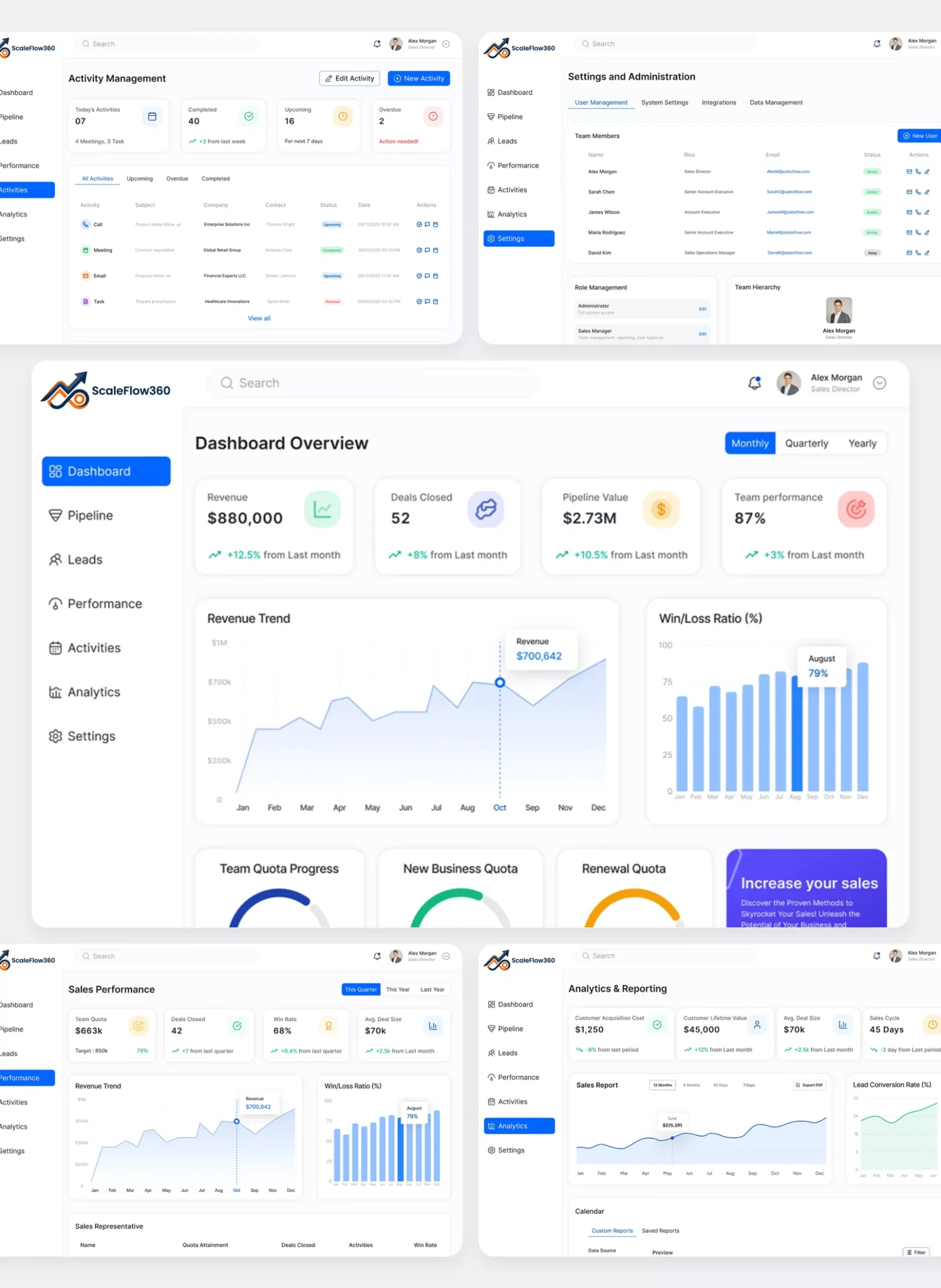
React interface turned that data into real-time dashboards, pipelines, and forecasting views sales managers could act on at a glance.
I
Ivan
Frontend Developer
QA & rollout
We validated automation rules, data accuracy, and reporting before launch, then refined them once real pipelines ran through the system.
O
Oleksandr
Project Manager
Ready to give your sales team a CRM that runs itself?
Contact usKey features
Unified customer database
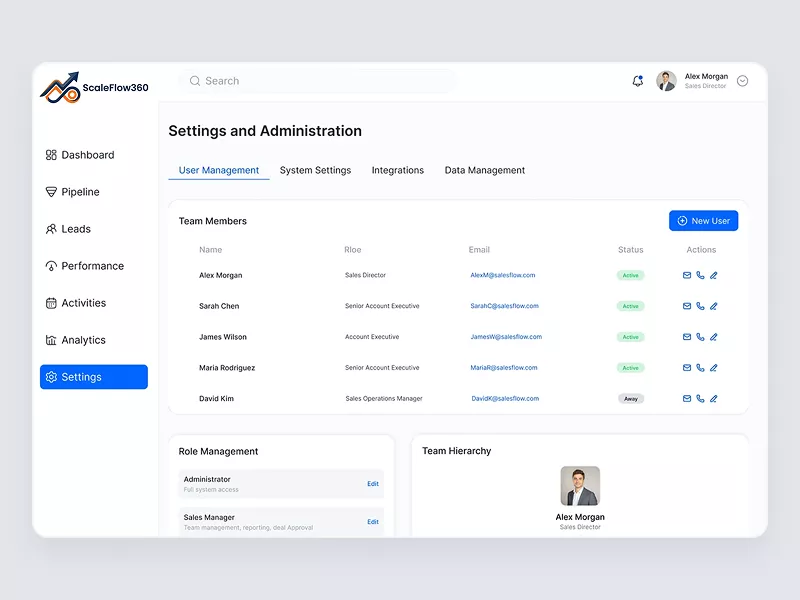
All customer interactions — emails, calls, deals, support tickets, and notes are stored in a single, structured timeline for complete visibility. No more hunting across tools, every rep sees the full customer story in one place.
Sales pipeline automation
Customizable pipelines automate deal-stage progression, reminders, and follow-ups, ensuring no opportunity falls through the cracks.
Smart lead management
Leads are automatically captured from forms, ads, and integrations, then scored and routed to the right sales reps based on priority and behavior.
Performance dashboards & forecasting
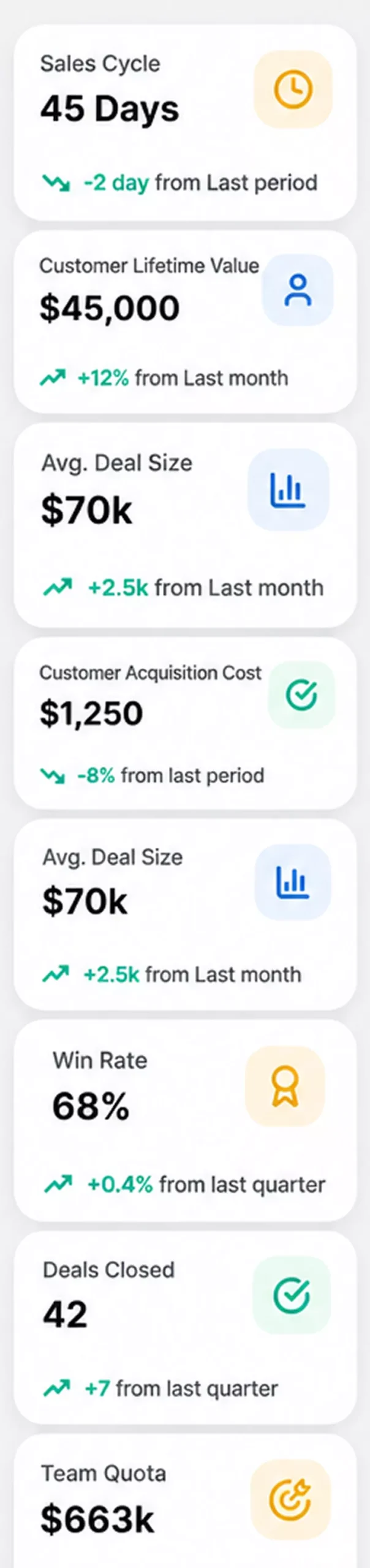
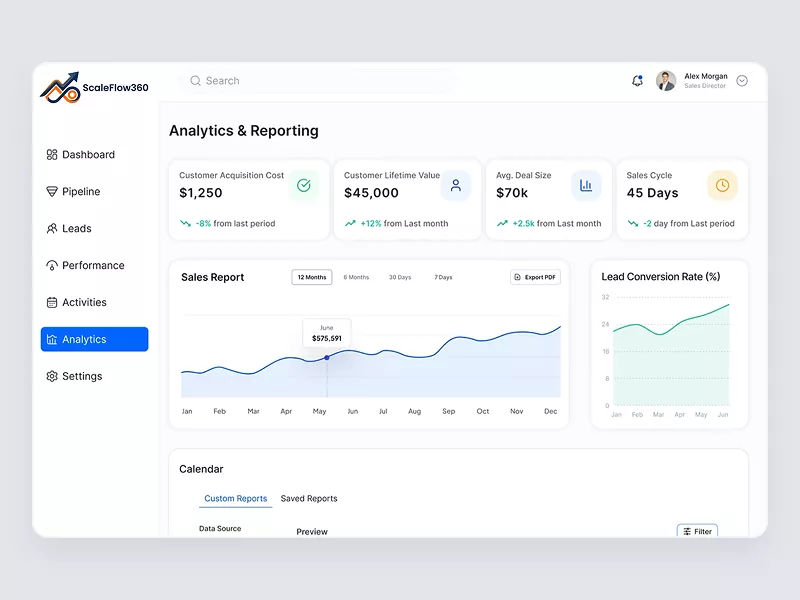
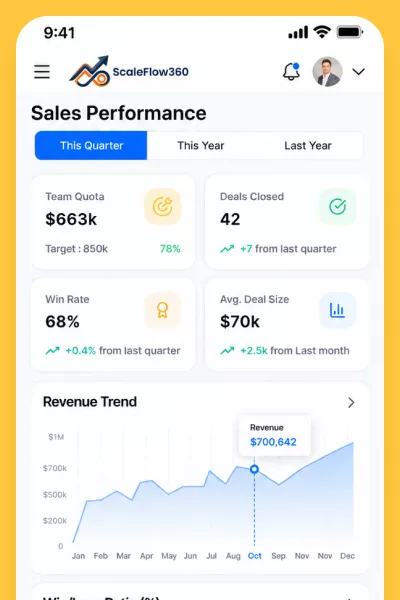
Real-time CRM dashboards give managers clear insight into pipeline value, conversion rates, and team performance, enabling more accurate revenue forecasting. Managers forecast from live pipeline data instead of stale end-of-month spreadsheets.
Workflow & task automation
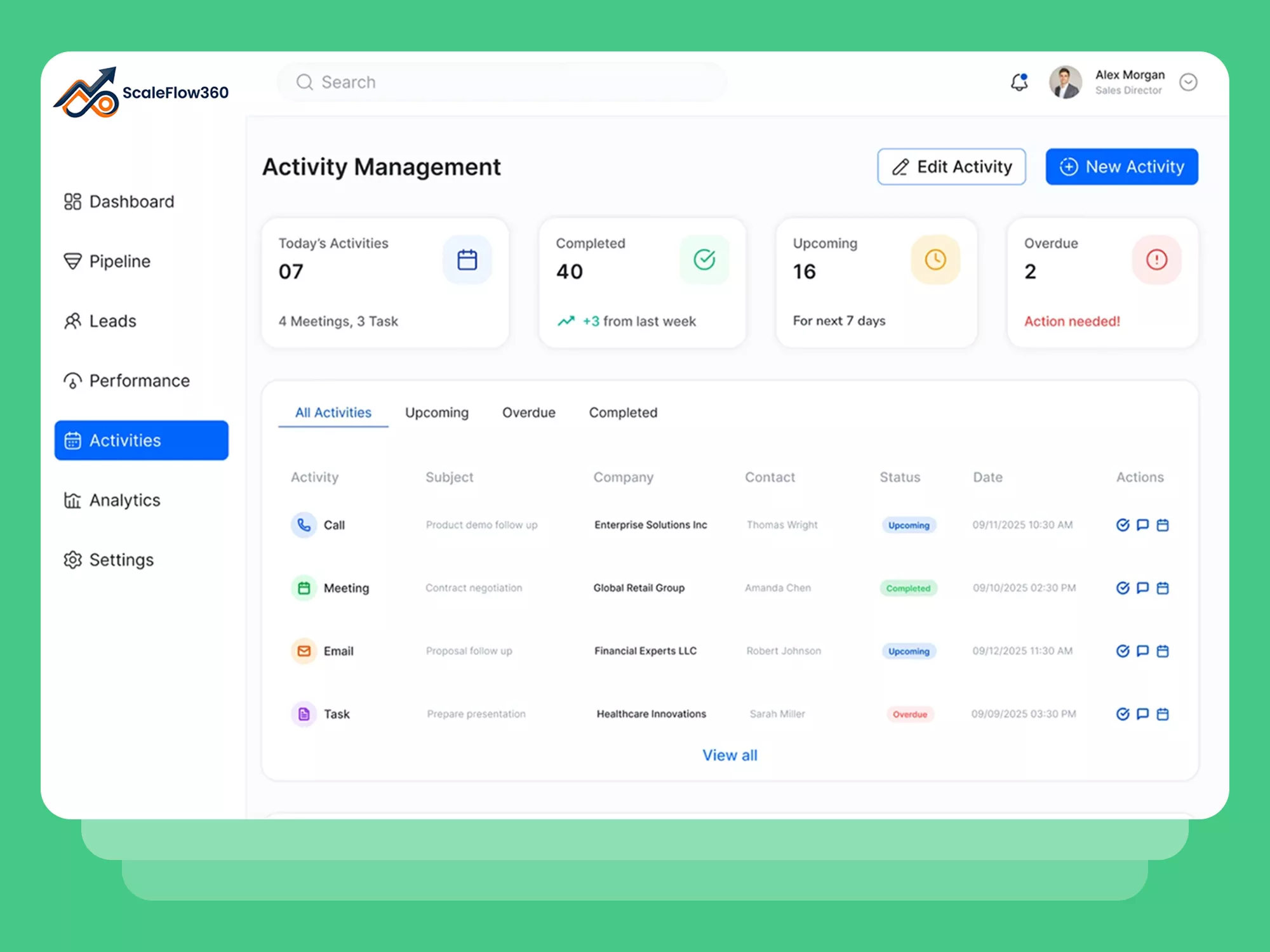
Routine tasks such as follow-up emails, meeting scheduling, and status updates are automated, freeing sales teams to focus on selling.

Results
The new CRM delivered gains across conversion, admin time, and forecasting, while complete interaction histories helped teams build stronger, more personal customer relationships.
higher lead conversion
32%
less manual admin
40%
better forecast accuracy
25%+
What client said

Karen Carter, COO
Dow Chemical Company
“We partnered on a complicated project that involved a cloud migration, new backend architecture, and deploying 7 new enterprise apps.
Intobi excelled in all areas, they were supportive, and diligent in understanding each detail before decisions. I'd highly recommend Intobi to take on any challenge.”
Related Services
A CRM shaped around how your teams actually sell – automation, pipeline visibility, and integrations built to your process.

Does ScaleFlow360 replace a company's existing sales tools?
The case frames it as a centralized replacement for scattered, disconnected systems — unifying customer data, pipeline management, and reporting into one CRM rather than adding another disconnected tool.
What kind of teams is ScaleFlow360 built for?
Based on the challenges it addresses — lead response times, pipeline visibility, and admin overhead — it’s aimed at sales and customer success teams handling an active pipeline of leads and deals.
What does ScaleFlow360 run on?
The case lists AWS, Node.js, React, and PostgreSQL as its core stack, covering hosting, backend, frontend, and database.
How does automation actually lift conversion instead of just saving time?
By routing and scoring leads the moment they arrive, ScaleFlow360 gets reps to high-value prospects while intent is fresh – faster response is what drove the 32% conversion lift, not just less admin.
Can the CRM's pipelines and automation be tailored to our sales process?
Yes, pipelines, deal stages, scoring rules, and workflow triggers are customizable, so the CRM maps to how your team actually sells rather than forcing a fixed template.