
Guide to Patient Portal Development for Healthcare Providers

TL;DR

Patient portals let patients check lab results, book appointments, and message their doctors without visiting a clinic. This guide explains what a patient portal is and how it works, the value it creates, the main types of portals, and how they differ from a PHR. It also covers portal requirements, top vendors, engagement metrics, the right tech stack, and what it costs to build a custom patient portal.

Make a summary of this article with AI:

A patient logs into a secure platform, checks their lab results, books a follow-up appointment, and messages their doctor—all without stepping foot into a clinic. Patient portals are redefining how patients and providers connect, streamlining communication and access to care. If you’re in healthcare, patient portal development  is essential today to lighten a patient’s journey and attract attention to your service.

In this guide, we unpack everything you need to know about patient portal development. From understanding what makes these platforms tick to exploring their transformative impact on patient engagement. You’ll learn how to design features that patients actually use, integrate portals seamlessly into your systems, and even estimate the cost of building a custom solution. This is your manual to create a patient portal that people will enjoy, regardless of whether you’re a digital innovator or a healthcare professional. 

Let’s start!

What is a patient portal? 

A patient portal is a safe online platform that enables patients to manage appointments, interact with healthcare professionals, and access their medical records—all in one place. It is a personal hub for healthcare, offering convenience and transparency that traditional systems often lack.

These portals are typically designed as web-based platforms or patient portal apps, making them accessible from any device, anytime. Whether it’s reviewing lab results, refilling prescriptions, or checking vaccination records, a well-built patient portal empowers users to take control of their health journey. Healthcare providers also gain from more efficient workflows and improved communication, creating a win-win scenario.

What makes these systems truly revolutionary is their ability to integrate seamlessly with existing healthcare software, such as electronic health records (EHRs). This integration ensures that patients receive up-to-date, accurate information while enabling providers to deliver personalized care more efficiently. For developers involved in patient portal software development, the challenge lies in creating user-friendly designs and maintaining high levels of security to protect sensitive health data.

How does a patient portal work

Functionally, patient portals integrate directly with healthcare systems such as (EHRs). This integration enables real-time updates to a patient’s medical data, ensuring accuracy and reliability. Patients can securely:

  • Message their care team
  • Get appointment reminders
  • Pay bills online
  • Access their health data

All of these reduce the necessity for phone calls or in-person meetings. For mobile users, patient portal apps enhance convenience by offering notifications and access to all features on the go.

At their core, patient portals focus on simplifying the patient’s experience while improving engagement. By bringing scheduling, communication, and health record access into one platform, these tools reduce administrative friction and empower patients to take charge of their care. Whether through a browser or a mobile app, the functionality of patient portals supports a more connected and proactive approach to healthcare.

How patient portals create value for patients

Patient portal solutions foster direct interactions and simplify access to health-related services. They are an important step toward a more connected, patient-focused approach to modern medicine. Here are the main patient portal features which bring great value to the the patients:
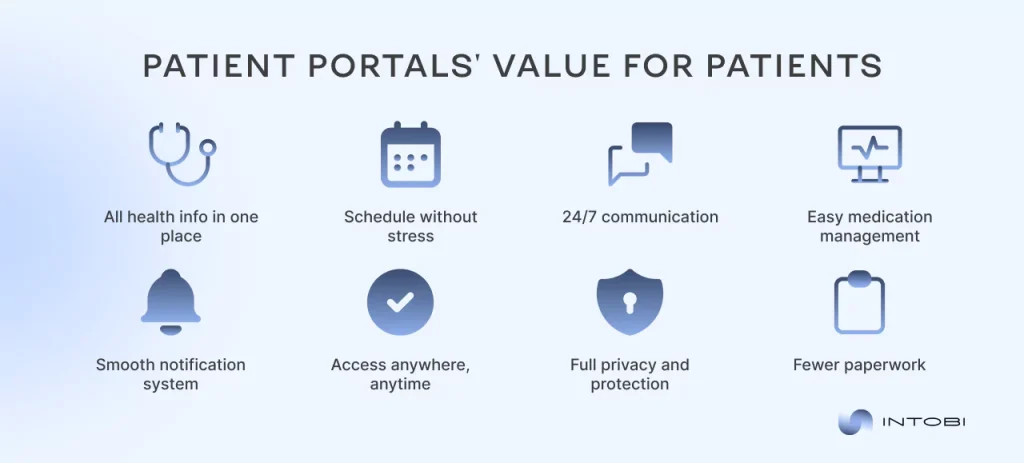
How patient portals create value for patients
  • All health info in one place
    Get access to test results, treatment recommendations, and medical records anytime, anywhere with easy-to-use patient portal apps. It’s like having your medical history on speed dial.
  • Schedule without stress
    Book appointments online without waiting on hold. Modern patient portal solutions let you choose dates, times, and even providers with just a few clicks.
  • 24/7 communication
    Securely message your healthcare provider to ask questions, clarify prescriptions, or follow up on treatments. No chasing callbacks.
  • Easy medication management
    Refill prescriptions with a tap and track your medication history seamlessly through your portal—simplifying a task that used to feel daunting.
  • Smooth notification system
    Get reminders for checkups, vaccines, or upcoming procedures. With patient portal solutions, staying on top of your health has never been so convenient.
  • Access anywhere, anytime
    Whether on a desktop or through patient portal apps, patients have instant access to their data, giving them full control over their healthcare journey.
  • Full privacy and protection
    Robust security measures ensure your personal health information stays confidential, letting you engage with your care worry-free.
  • Fewer paperwork
    Stacks of paperwork are not a headache anymore—portals digitize forms, simplifying administrative tasks for both patients and providers.

This way, patient portals reshape how care is provided and experienced. They encourage people to take responsibility for their own health, stronger connections with healthcare providers.

Need a reliable patient portal solution?

Contact us

Types of patient portals

Not all patient portals are created equal, and the right solution depends on the goals of your healthcare organization. Let’s explore the key types of patient portals and how they cater to different needs, with patient portals examples.

1. Standalone portals

These are independent platforms built specifically for patient engagement. Designed by specialized patient portal software companies, they offer features like appointment scheduling, secure messaging, and access to medical records. Standalone portals are ideal for practices that want to enhance patient interaction without overhauling their entire IT infrastructure.

Example: A private clinic offering an app for patients to book appointments and view lab results.

2. Integrated portals

Built directly into existing EHR systems, integrated portals provide a seamless experience for both patients and dental staff. These portals synchronize patient data across systems, enabling real-time updates and eliminating duplicate records. Thus, they ensure that all information is precise and simple to access, lowering the possibility of mistakes and eliminating redundant records. 

Example: A hospital’s patient portal linked to its EHR system for streamlined care coordination.

3. Custom-built portals

Adapted to a healthcare organization’s particular requirements, custom portals are developed from the ground up. This type of portal ensures maximum flexibility and scalability, being the perfect solution for providers with specific requirements.

Interesting

A custom portal can integrate advanced tools, specialized workflows, and even third-party systems.

Example: A large healthcare network working with portal software companies to create a portal with multilingual support and advanced telehealth features.

4. Specialized portals

These cater to niche healthcare sectors such as dental care, pediatrics, or mental health. These portals often include industry-specific tools and integrations that support the specialized nature of care, such as dental imaging for dentists, growth charts for pediatricians, or mental health assessment forms for therapists. 

Example: Patient portal solutions for a dental clinic offering appointment reminders and access to treatment plans.

5. Consumer-focused portals

Some portals focus on patient convenience above all, prioritizing features that enhance the overall patient experience and foster loyalty. These platforms provide integrated wearable devices to track fitness and health data, offer wellness tips, and provide medication trackers to help patients manage their health proactively. 

Example: A telemedicine app with a patient portal solution that includes a health dashboard for fitness tracking.

When planning to implement a patient portal, it’s essential to consider the associated costs, which can vary significantly depending on the type of portal and its features.

Portal typeCost range
Standalone portals$20,000–$50,000
Integrated portals$50,000–$100,000
Custom-built portals$100,000–$250,000+
Specialized portals$20,000–$80,000
Consumer-focused portals$30,000–$80,000

Healthcare organizations can choose a solution that aligns with their operational needs and patient expectations. The right portal is a software add-on for improving care and building lasting patient relationships. Read through to learn the cost of each separate service for the patient portal software development.

How is the patient portal different from a PHR

In health data management, both patient portals and personal health records (PHRs) play essential roles. While they could initially appear to be similar, their purposes, features, and management differ significantly. Let’s review the differences:

FeaturePatient portalPersonal health record (PHR)
DefinitionA secure platform managed by healthcare teams for patients to interact with their healthcare providers and view their medical records.A self-managed health record maintained by the patient, containing personal health data from various sources.
ManagementManaged by a healthcare provider or organization using a patient portal platform.Fully controlled and updated by the patient.
IntegrationDirectly integrated with the provider’s systems (e.g., EHRs), ensuring real-time updates.May require manual input or syncing with external devices/apps.
Access to medical recordsProvides access to provider-stored test results, medical records, and treatment plans.Can include a mix of provider data, wearable data, and self-reported health information.
Communication featuresAllows secure messaging with healthcare providers, appointment scheduling, and prescription requests.Typically lacks direct communication features with healthcare providers.
CustomizationLimited customization—designed to align with the provider’s system and care standards.Highly customizable—patients can include personal notes, fitness data, and other metrics.
PurposeFacilitates direct interaction between patients and their healthcare providers.Serves as a comprehensive health diary for personal use.
Data ownershipData is owned and managed by the healthcare provider.Data is fully owned and managed by the patient.
Examples of useChecking lab results, booking appointments, receiving reminders for follow-ups.Tracking fitness goals, recording symptoms, consolidating health data from multiple sources.
SecurityHigh-level security measures governed by healthcare compliance standards.Security varies; dependent on the platform chosen by the patient.
Who uses it?Patients accessing their provider’s systems through a patient portal platform.Patients who want a broader view of their health, beyond a single provider.

Ultimately, both patient portals and PHRs are valuable tools in today’s digital healthcare landscape. However, their value lies in how they complement each other. Together, they offer a holistic approach to health management, catering to the needs of both patients and providers in a patient-centered system.

Patient portal requirements

To successfully implement a patient portal system, certain conditions must be met to ensure functionality, security, and usability. Consider these requirements to ensure the platform’s technical and user-focused features:

  • Integration with EHR systems: A patient portal must seamlessly connect with the healthcare provider’s EHR to provide real-time data updates, ensuring patients always have access to accurate information.
  • User-friendly interface: The portal ought to be simple to use and intuitive, catering to a diverse patient demographic with varying levels of tech proficiency.
  • Security and compliance: Since sensitive health data is involved, robust security protocols like encryption, multi-factor authentication, and compliance with standards such as Health Insurance Portability and Accountability Act (HIPAA) are mandatory.
  • Mobile accessibility: A well-designed patient portal system should include mobile access, either through responsive web design or dedicated patient portal apps.
  • Core features: Must-haves include appointment scheduling, prescription management, secure messaging, bill payment, and access to medical records.
  • Scalability and customization: The system should be scalable to accommodate future growth and customizable to conform to the healthcare organization’s particular requirements.

How do you set up a patient portal

Setting up a patient portal requires careful planning, technical expertise, and a patient-first mindset. These are the necessary steps to create a patient portal:
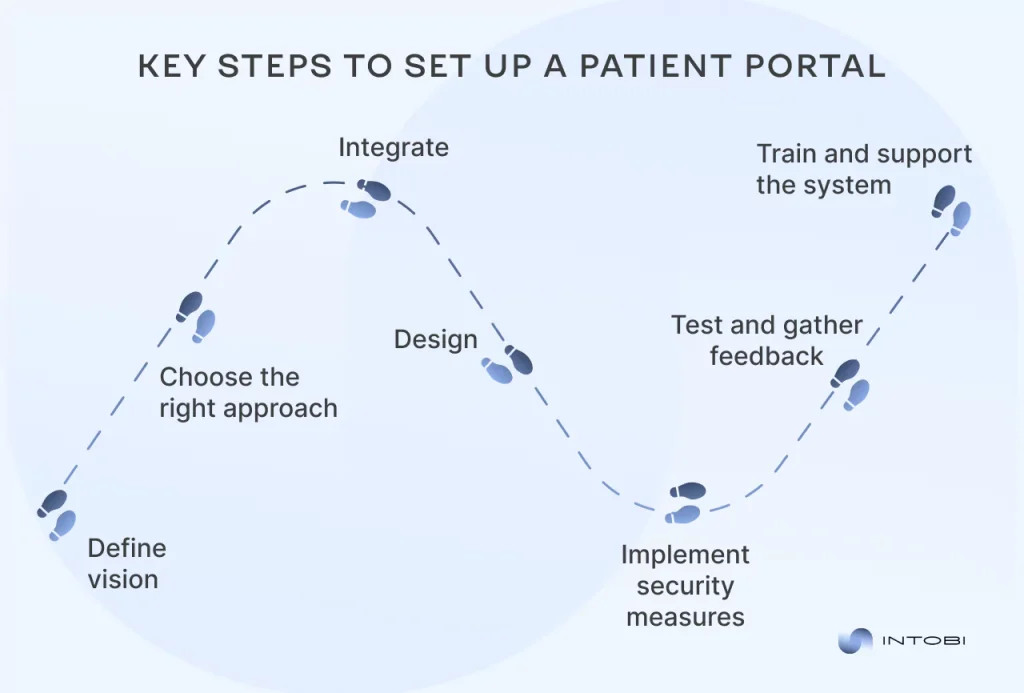
How to set up a patient portal
  1. Define objective

Identify the primary goals of the portal, such as improving patient engagement, streamlining communication, or enhancing operational efficiency.

  1. Choose the right approach

Decide between building a custom portal tailored to your needs through patient portal software development or implementing a pre-built solution from a trusted vendor.

  1. Integrate

Ensure the portal integrates seamlessly with your existing systems, especially your EHR, to enable real-time updates and data synchronization.

  1. Design 

Work on developing a user-friendly interface that meets the needs of both patients and staff. Include mobile-friendly features if launching a dedicated app.

  1. Implement security measures

Include innovative security features like role-based access restrictions, encryption, and adherence to HIPAA and other healthcare laws.

  1. Test and gather feedback

Test the portal extensively with staff and a small group of patients. Gather feedback to address usability issues before the official launch.

  1. Train and support the system 

Provide comprehensive training to staff and educational resources to patients for smooth adoption. Include ongoing technical support to address issues quickly.
These steps focus on strategic patient portal software development. By following them, your healthcare organization can ensure an integrated patient portal that meets your needs and enhances the patient experience.

Top patient portal vendors

Selecting the right patient portal system is crucial for enhancing patient engagement and streamlining healthcare operations. Here are some top patient portal software vendors to consider:

Intobi 

The first vendor stands out for its tailored patient portal solutions, offering seamless integration with existing systems and a user-friendly interface. Intobi’s commitment to customization ensures that healthcare providers receive a platform that aligns perfectly with their operational needs, enhancing both patient engagement and administrative efficiency.
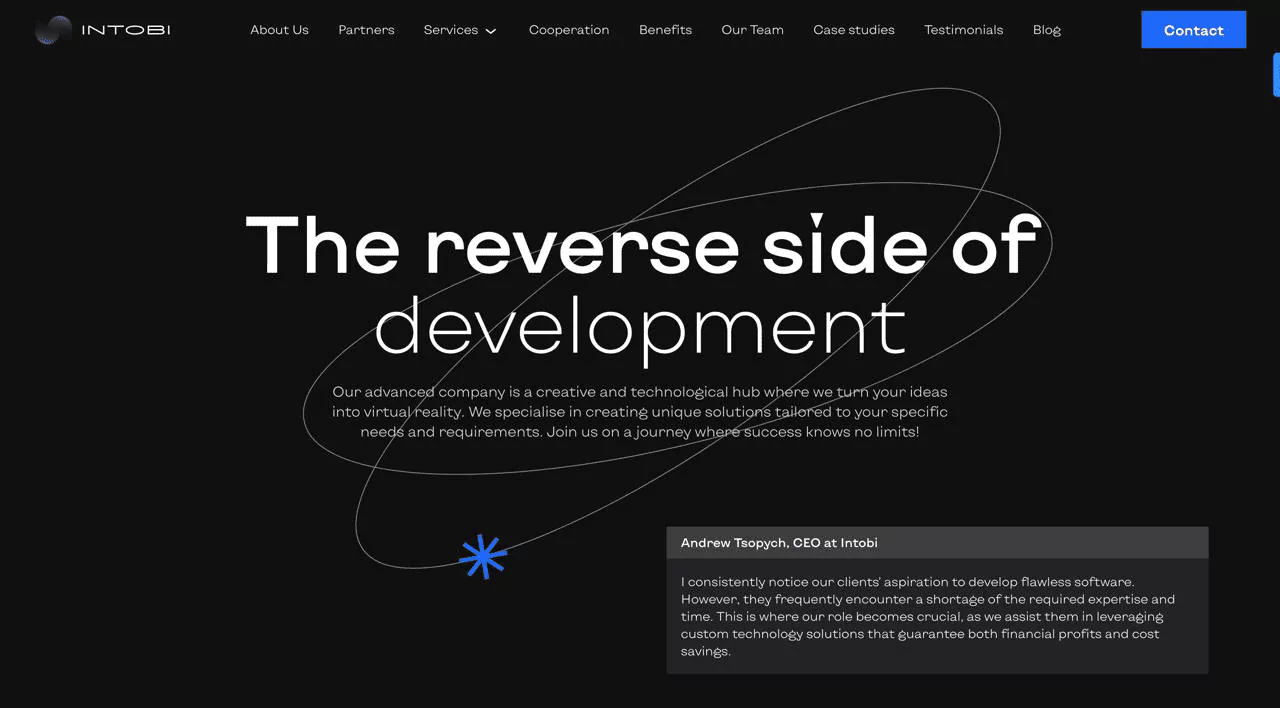
Screenshot of the Intobi's interface

Epic Systems

Known for its comprehensive electronic medical record software, Epic’s MyChart portal allows patients to contact with clinicians, make appointments, and access medical records. It’s widely adopted by leading healthcare institutions.
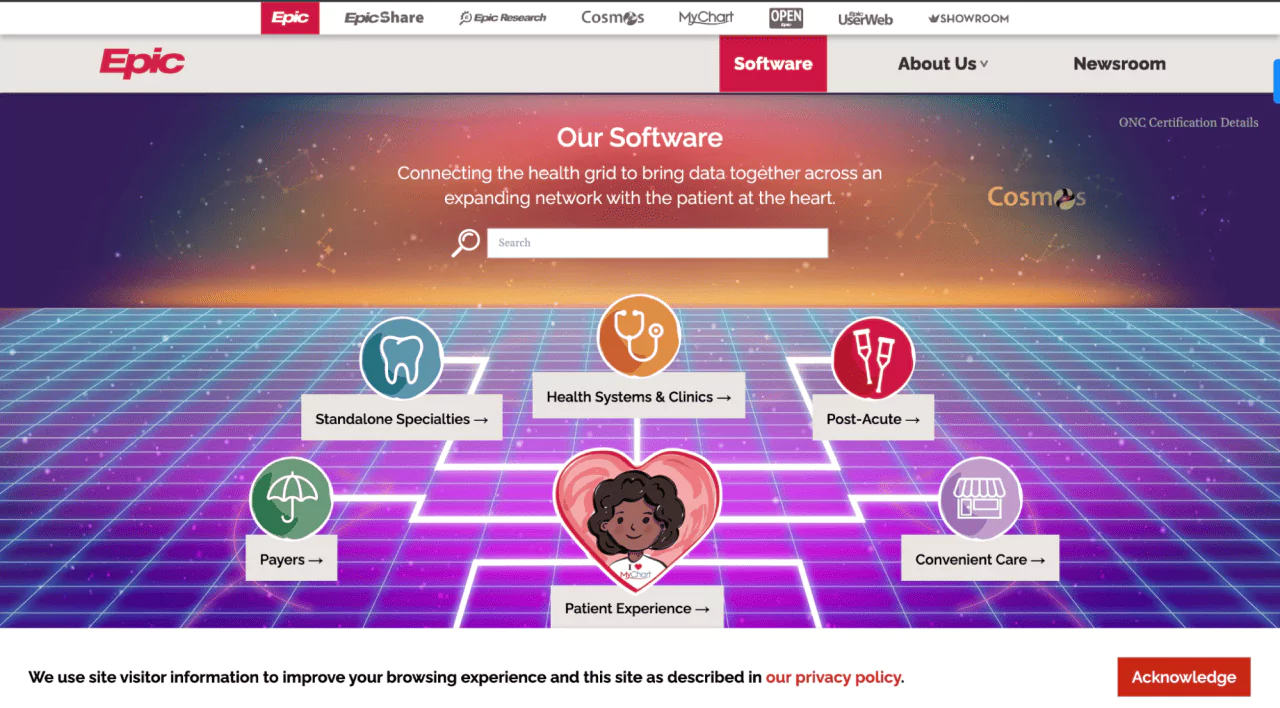
Epic Systems's screenshot of the interface

Athenahealth

It provides a patient portal as part of its athenaOne suite, offering core features like appointment management, bill payment, and secure communication. While effective for basic needs, its features may require additional customization to meet the unique workflows of different healthcare organizations.
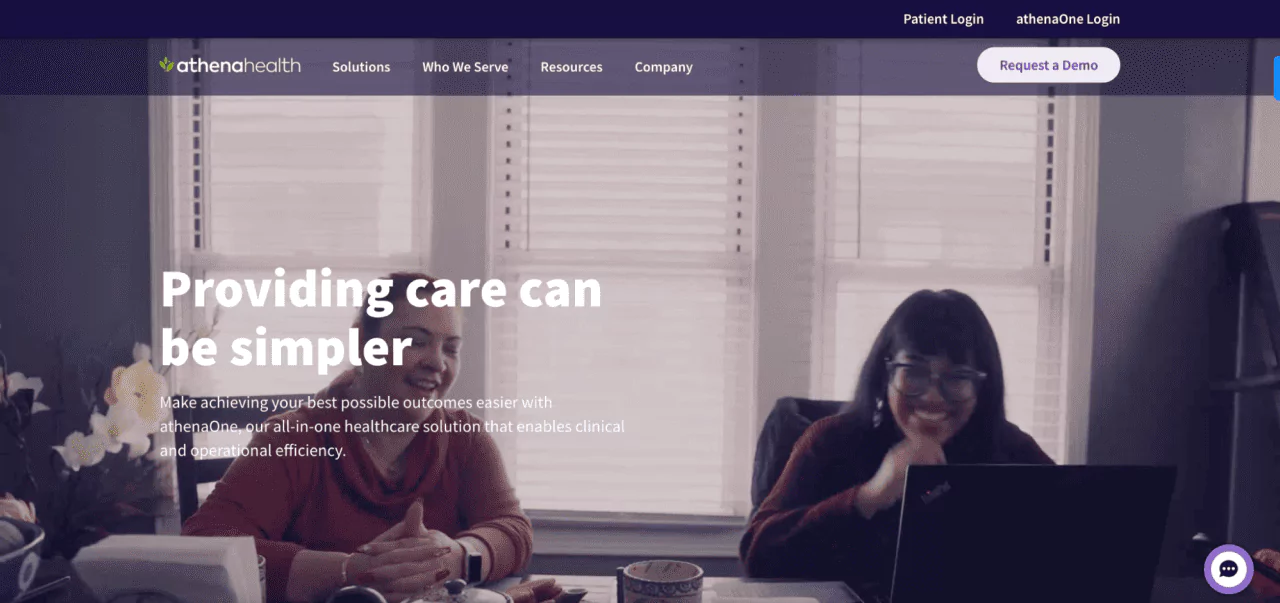
Athenahealth's screenshot of the interface

Oracle Health

Oracle’s patient portal solutions are known for facilitating basic health management tasks, such as accessing medical records and messaging providers. While functional, the user experience and advanced feature integration can fall short compared to more dynamic platforms like Intobi.
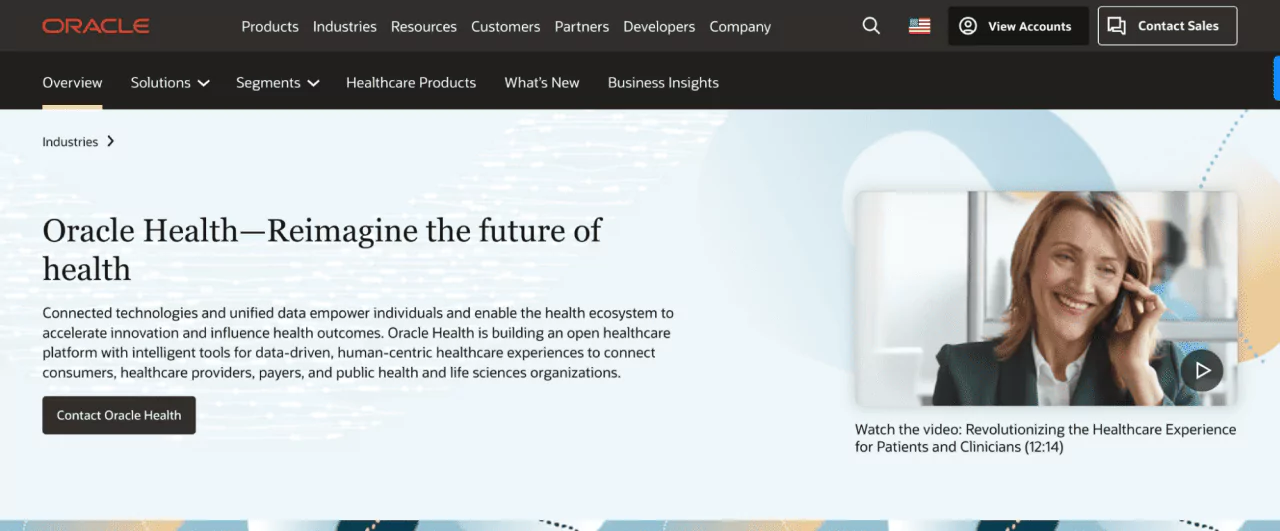
Oracle Health's screenshot of the interface

Veradigm

The service delivers dependable patient engagement tools, focusing on medical record access and appointment management. Though a solid option for organizations already using Allscripts’ EHR, its portal lacks the flexibility and innovation found in more modern solutions.
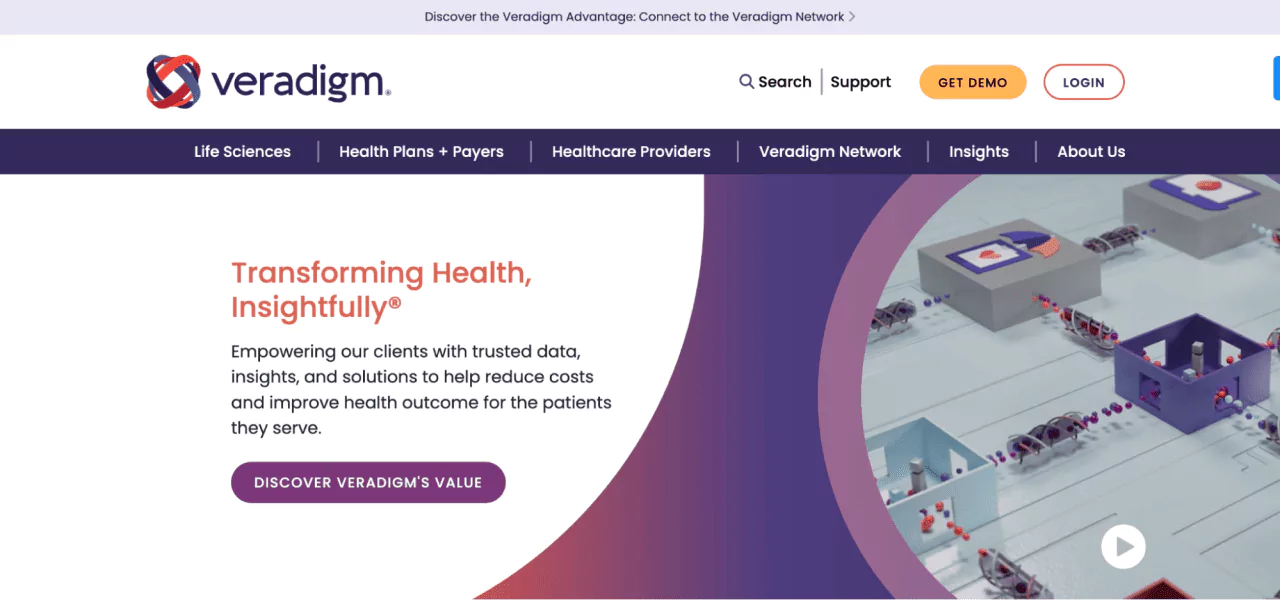
Veradigm's screenshot of the interface

NextGen Healthcare

The vendor provides a straightforward patient portal with essential tools for health management. While its features are serviceable, it’s better suited for smaller organizations looking for a simple, ready-made solution without extensive customization.
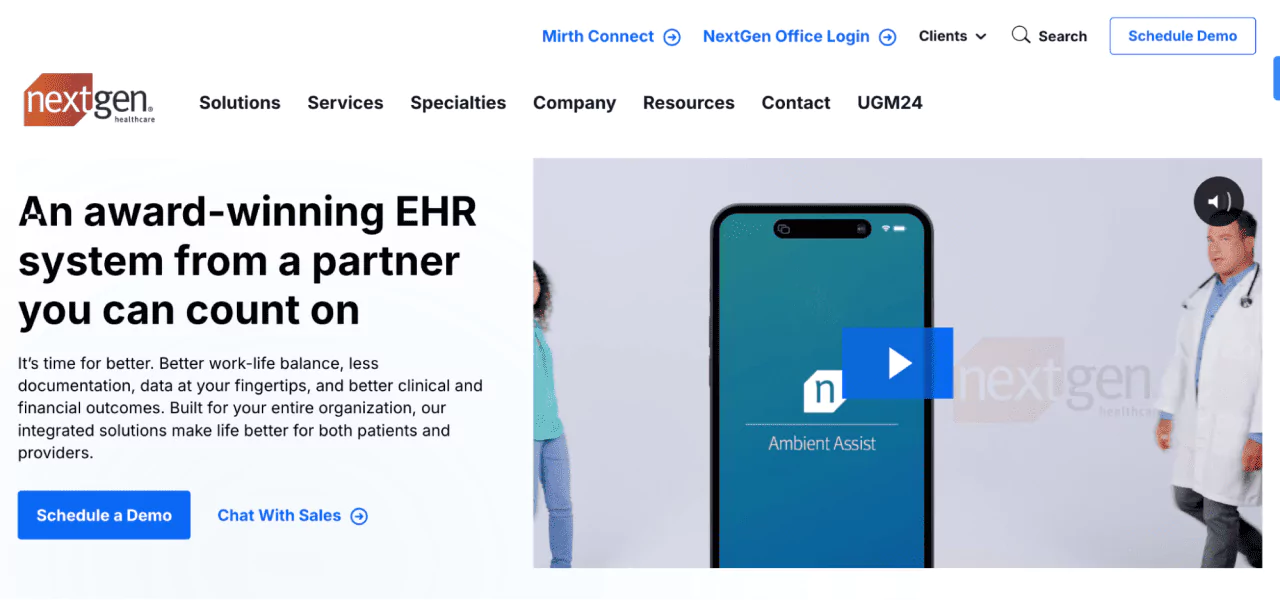
NextGen Healthcare's screenshot of the interface

While all these vendors offer viable options for implementing patient portal systems, Intobi’s tailored, innovative approach makes it the superior choice for organizations aiming to provide the best in patient engagement and operational efficiency.

Patient portal engagement metrics

Measuring the success of patient portal solutions requires tracking key engagement metrics that reflect how effectively the platform is serving patients and healthcare providers. Here are the most critical metrics to monitor:
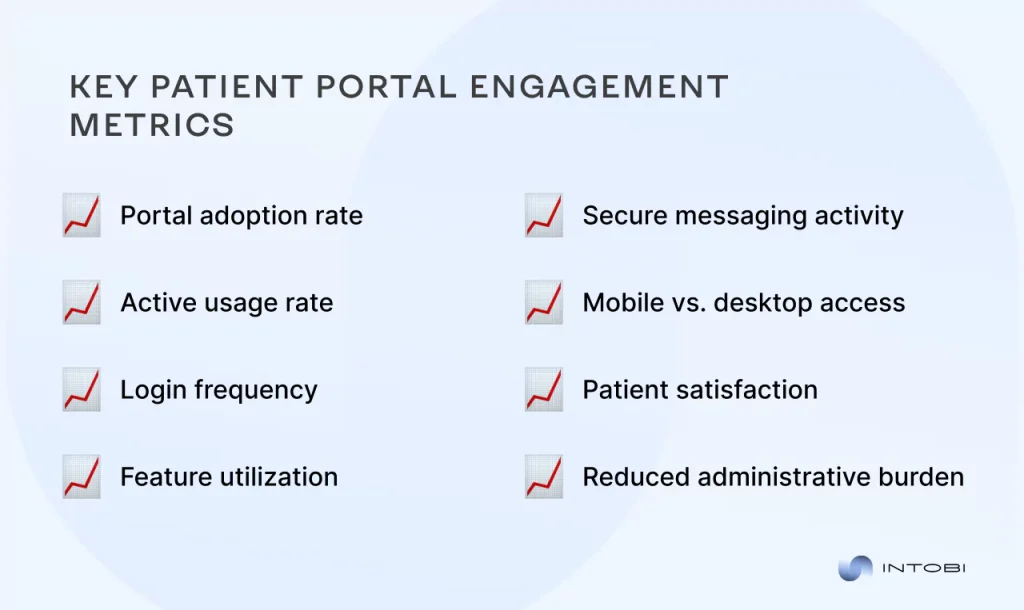
Patient portal engagement metrics
  • Portal adoption rate

The percentage of patients who have signed up for the portal. A high adoption rate indicates that the portal is being promoted effectively and resonates with the patient base.

  • Active usage rate

Beyond sign-ups, it’s essential to track how many patients actively use the portal for tasks like scheduling, viewing medical records, or messaging providers. This reflects the portal’s relevance and usability.

  • Login frequency

Tracking how often patients log in provides insights into their reliance on the portal. Frequent logins suggest high engagement and trust in the platform as a primary tool for healthcare management.

  • Feature utilization

Analyzing which features (e.g., appointment booking, prescription requests, bill payments) are used most helps identify what patients find valuable and areas where functionality can be improved.

  • Secure messaging activity

The number of messages sent between patients and providers indicates the portal’s role in facilitating communication, reducing phone calls, and streamlining care delivery.

  • Mobile vs. desktop access

Understanding the device preferences of users—whether they access the portal through mobile apps or desktops—helps optimize the platform for a better user experience.

  • Patient satisfaction

Feedback through surveys and satisfaction scores provides qualitative data on the portal’s impact on patient experience and overall care delivery.

  • Reduced administrative burden

Metrics like fewer no-show appointments or reduced call volumes to the clinic demonstrate how the portal streamlines operations for healthcare staff.

Why these metrics matter

Tracking engagement metrics ensures that patient portal solutions meet their goals of improving accessibility, enhancing patient experience, and optimizing healthcare workflows. Regularly evaluating these metrics helps healthcare providers make data-driven improvements, ensuring the portal remains an indispensable tool for patients and staff alike.

Perfect tech stack for custom patient portal

Crafting a custom HMS patient portal isn’t just about functionality but rather about creating a seamless, secure, and intuitive experience. To make that vision a reality, you need the perfect tech stack that balances innovation, scalability, and compliance. Here’s the perfect match for the modern patient portal solution: 

1. Frontend development:

  • HTML5, CSS3, JavaScript: Fundamental technologies for structuring and styling the user interface.
  • React.js or Angular: Popular JavaScript frameworks for building dynamic and responsive user interfaces.

2. Backend development:

  • Node.js with Express.js: Facilitates efficient server-side operations and real-time data handling.
  • Python with Django or Flask: Offers robust frameworks for rapid development and scalability.

3. Database management:

  • PostgreSQL or MySQL: Reliable relational databases for structured data storage.
  • MongoDB: A NoSQL database that can manage unorganized information.

4. API integration:

  • RESTful APIs: Standard protocol for enabling communication between the portal and other systems.
  • GraphQL: Provides a flexible approach to querying data, enabling customers to make precise requests.

5. Authentication and security:

  • OAuth 2.0: Ensures secure user authentication and authorization.
  • JWT (JSON Web Tokens): Allows for the safe transfer of data between parties.
  • SSL/TLS Encryption: Protects data in transit, ensuring secure communication channels.

6. Cloud services and hosting:

  • AWS or Microsoft Azure: Offers scalable cloud infrastructure and services.
  • Docker and Kubernetes: Turn on orchestration and containerization for effective deployment and management.

7. DevOps and continuous integration/continuous deployment (CI/CD):

  • Jenkins or GitLab CI/CD: Automates testing and deployment procedures, guaranteeing dependable and continuous updates.

8. Compliance and data protection:

  • HIPAA Compliance Tools: Ensures the portal adheres to healthcare data protection regulations.
  • Regular Security Audits: Identifies and mitigates potential vulnerabilities.

For healthcare providers building browser-based patient portals, web development services can help create secure, scalable, and user-friendly platforms for patients and staff.

Leveraging the right technology stack, your organization can meet current healthcare demands and be prepared for future advancements in patient care and engagement. With these tools, you’re all set to make it right. Selecting this tech stack facilitates the creation of a secure, efficient, and user-friendly HMS portal that enhances patient engagement and streamlines healthcare operations.

Want to offer a seamless patient experience?

Contact us

How much does it cost to build a patient portal? (detailed estimation)

The patient portal development process involves various factors like features, integrations, and compliance, all of which influence the total patient portal software cost. So, how much does a portal cost? Let’s break it down.

CategoryDetailsEstimated cost
Features and functionality
Basic featuresAppointment scheduling, health record access, secure messaging$15,000–$50,000
Advanced featuresTelehealth integration, payment gateways, data analytics$40,000–$100,000+
Custom featuresMultilingual support, wearable device integration$10,000–$ endlessly
Development team
In-house teamHiring and managing a dedicated team$50,000+ annually
OutsourcingOffshore developers: $25–$50/hour; US-based: $100–$200/hourVaries by region
Technology stack
Backend and frontendFrameworks like React.js, Node.js$20,000–$40,000
Database and APIsEHR integration, secure database setup$5,000–$20,000
Security and compliance
HIPAA complianceEncryption, multi-factor authentication, data security$10,000–$30,000
Testing and QA
Quality assurance
Comprehensive testing to ensure usability and bug-free performance
$5,000–$15,000
Deployment and maintenance
Cloud deploymentHosting on platforms like AWS or Azure$5,000–$15,000 annually

Investing in patient portal development is a critical step toward improving patient engagement and streamlining healthcare workflows. While the patient portal software cost varies based on complexity, a well-designed portal pays off by enhancing efficiency and delivering a seamless patient experience.

Intobi dental case study

Intobi partnered with a dental clinic to create a patient portal system, as part of their broader software. The goal was to transform outdated, manual workflows into an automated, efficient patient portal solution that could scale seamlessly with the clinic’s growth. The clinic’s reliance on Excel spreadsheets for managing orders, billing, and client interactions was limiting both efficiency and expansion.

With a vision to simplify operations and enhance patient interactions, Intobi’s team built an intuitive SaaS platform that integrated cutting-edge technologies like .NET, Angular, and Node.js. This custom patient portal solution provided automation, real-time tracking, and user-friendly interfaces to support both dental professionals and patients.

Key value delivered included: 

  • Operational efficiency: Automation reduced errors and saved time across workflows.
  • User satisfaction: A functional, easy-to-use platform improved the experience for both dental professionals and their patients.
  • Growth enablement: The clinic expanded its customer base by over 50x, thanks to scalable and efficient processes.
  • Streamlined financials: Automated billing integrated with major accounting software ensured accuracy and reduced financial overhead.

Intobi’s expertise in patient portal development and SaaS solutions can transform your operations, enhance patient interactions, and drive business growth for your healthcare organization. If you’re looking for a custom patient portal development, contact Intobi today for a free consultation!

Conclusion 

A patient portal is an essential part of modern healthcare. By embracing patient portal software development, you can enlarge the base of loyal patients, enhance patient care, streamline your operations, and improve overall efficiency in your practice.

The ability to make appointments, view their medical records, and speak with their healthcare providers directly from the convenience of their own devices is critical for the patients. This empowers clients and fosters stronger relationships between them and their providers.

At Intobi, we specialize in building custom patient portal systems that are specially designed to satisfy the particular requirements of your medical practice. Whether you need a portal that integrates with your existing systems or a completely new solution, we’re here to help you every step of the way.

Need a seamless, secure, and user-friendly patient portal? Contact us today and let’s discuss how we can help you build a platform that improves both patient engagement and your practice’s efficiency! Your journey toward a more connected and patient-focused healthcare experience begins here.

FAQ

What is a patient portal system?

Patient portal systems are a secure digital platform allowing patients to interact with clinicians, make appointments, get prescription refills, and view their medical records. Integrated with EHRs, these systems improve patient engagement through convenience and transparency.

Is a patient portal or a phr more useful?

A patient portal is more useful for real-time provider-patient interactions. It offers access to medical records and secure communication. A PHR, managed solely by the patient, is better for tracking health data from multiple sources.

Can I build a custom web patient portal?

Yes. To create patient portal you need a custom patient portal software development. This entails creating easy-to-use features, such as appointment scheduling, secure messaging, and EHR integration. Customization allows tailoring the portal to your healthcare organization’s needs and workflows.

How much does it cost to build a patient portal?

Features, scalability, and compliance needs determine the cost of patient portal development. Basic portals start at $20,000, while advanced systems with mobile apps, telehealth, and robust security can exceed $250,000. Ongoing maintenance and updates add to the total patient portal software cost.

Creating a Custom Dental CRM: Everything You Need to Know

TL;DR

A dental CRM is a specialized customer relationship management system built around the needs of dental practices. This guide explains how it differs from a general CRM, why a custom dental CRM is worth considering, and the key features it needs – from patient management and appointment reminders to billing, equipment integration, analytics, and HIPAA-grade data security. It also shares steps and best practices for development.

Make a summary of this article with AI:

Customer relationship management system is essential for any modern practice. CRM for dental practice significantly benefits the medical processes. But how exactly does this software for dentists differ from general CRMs, and what makes it indispensable?

Definition and purpose of a CRM dental

A dental CRM is a specialized customer relationship management system developed to meet the unique operational and patient management needs of dental practices. It consolidates patient data, appointment scheduling, communication, and follow-ups into a single, streamlined platform. Why does this matter?

Imagine accessing a patient’s complete treatment history in just a few clicks. That’s the efficiency the best dental practice management software tool brings. The primary purpose of CRM for dental practice is to enhance office efficiency, minimize administrative burdens, and improve patient engagement. Its automated nature and personalized interactions allow it to do it with a maximum outcome. By doing so, it empowers the dental team to allocate more time to patient care while maintaining a high service level.

Key differences between dental CRM and general CRM systems

While general CRM systems cater to a broad range of industries, dental CRMs are tailored specifically for dental practice needs. Let’s break down the main distinctions:

FeatureDental CRMGeneral CRM
Primary focusPatient engagement and clinic efficiencySales pipelines and broad customer management
Appointment managementSpecialized tools for scheduling and remindersBasic scheduling features
Patient communicationAutomated follow-ups and treatment remindersGeneral email and messaging tools
Integration capabilitiesSyncs with dental equipment and practice management softwareIntegrates with generic business tools
Data handlingDetailed patient health records and historiesBasic client and lead tracking
Regulatory complianceDesigned to meet industry-specific standards like HIPAAMay lack dental-specific compliance features

Why consider developing a custom dental CRM?

If you’re a dentist or a member of a dental team, consider creating your own CRM. Don’t be surprised when the CRM software for dentists will make the difference between a well-oiled operation and an administrative headache. Here are the specific advantages it provides:

Why you may want to have a custom CRM for your team

Advantages of customization

  • Patient-centric communication: Custom dental CRMs empower you to design communication flows that resonate with your patients. Automated reminders, follow-ups, and marketing campaigns are personalized to match your practice’s style and services.
  • Unified data integration: Combine data from various systems—such as electronic health records, billing, and patient feedback—into one streamlined platform. Thus, reducing errors and acquiring quick access to comprehensive patient information.
  • Tailored for your practice workflow: Build a CRM that aligns perfectly with your operational processes, minimizing training time and easing your team’s transition. No more navigating irrelevant features that slow down productivity.
  • Custom analytics: Access detailed reporting specifically designed for dental practices, including metrics like treatment acceptance and patient retention. These revealings lead to better strategic planning and decision-making.
  • Marketing tools: Unlike one-size-fits-all solutions, a custom CRM offers marketing features designed for dental-specific needs. Segment patients by their dental history, create targeted offers, and promote seasonal check-ups.

Specific use cases where custom CRMs excel over standard solutions

A custom solution drives productivity and sets the stage for growth. Get inspiration from the frequent use cases of the CRM software for dentists:

1. Automated recall systems for hygiene appointments

Custom dental CRMs can be programmed to send automated, personalized recall messages to patients overdue for hygiene appointments. Dentists ensure a steady flow of returning patients, enhancing both practice income and patient care. 

2. Treatment plan follow-ups

Track treatment acceptance and manage follow-ups effortlessly. A custom CRM reminds staff to check in on patients who haven’t scheduled recommended treatments. Thus, helping maintain higher treatment adherence rates and patient satisfaction.

3. Targeted patient marketing campaigns

Run marketing campaigns based on patient demographics or treatment history, like teeth whitening promotions for patients with upcoming events or special offers for first-time visitors. Custom dental marketing software allows practitioners to focus marketing efforts more strategically.

4. Detailed patient feedback collection

Gather feedback on treatments and overall patient experience through automated post-visit surveys that integrate seamlessly into your workflow. Use this data to adjust services and improve patient satisfaction.

Key features of an effective dental CRM

The best dental software doesn’t just manage patient records. Rather, it transforms the way your practice runs, from check-in to follow-up. When looking for a dental CRM that hits the mark, you need tools that go beyond basic management to support seamless communication, smooth operations, and strong patient relationships.

For dental practices that want to give patients easier access to appointments, records, and secure communication, patient portal development can extend CRM functionality into a more convenient self-service experience.

Here is a summary of what you should include in your checklist:

Patient management system

A patient management system organizes it in a way that enlightens your practice, from tracking treatment plans to viewing patient history in seconds. Do you want your team to be always prepared and informed? Employ the dental clinic software.

Appointment reminders and notifications

No-shows are a silent profit killer. A truly effective CRM automates appointment reminders through SMS, email, or app notifications. It minimizes missed appointments and maintains the efficiency of your calendar. Overall, this feature ensures that patients are well-informed, turning missings into completed bookings.

Billing and payment processing

Billing doesn’t need to be complicated or time-consuming. Integrated billing tools within your dental CRM streamline payment processing, everything from creating invoices to tracking payment statuses. Patients get transparent, hassle-free billing, and your practice gains back valuable time.

Integration with dental equipment and software

Your dental CRM should cooperate well with your other equipment. Integrate it with other tools like imaging software or diagnostic equipment to ensure effective data transfers and reduce manual input errors. Properly developed CRMs allow for an ecosystem where technologies function with each other seamlessly so your team can focus on what matters—patient care.

Analytics and reporting tools

Good analytics and reporting tools give you insights into key metrics: patient retention rates, treatment acceptance, and revenue trends. This function aids in locating areas for improvement and growth prospects so you’re scaling your practice smartly.

Communication tools: automated follow-ups, email, SMS

Effective communication keeps patients engaged and informed while making them trust you. Your dental CRM should include tools for sending automated follow-ups post-appointment, targeted emails for ongoing care, and SMS updates for appointment confirmations. So, a custom dental CRM is a digital assistant who never forgets a task.

Data security: HIPAA or relevant data protection regulations

Trust matters, especially when handling sensitive patient data. A reliable dental CRM will ensure compliance with the Health Insurance Portability and Accountability Act (HIPAA) or relevant data protection regulations so patient information stays private and secure. Peace of mind for your patients and your practice is non-negotiable.

Interesting

Combined, these features create a powerful, effective dental CRM that makes the daily grind smoother, patients happier, and your practice ready for anything.

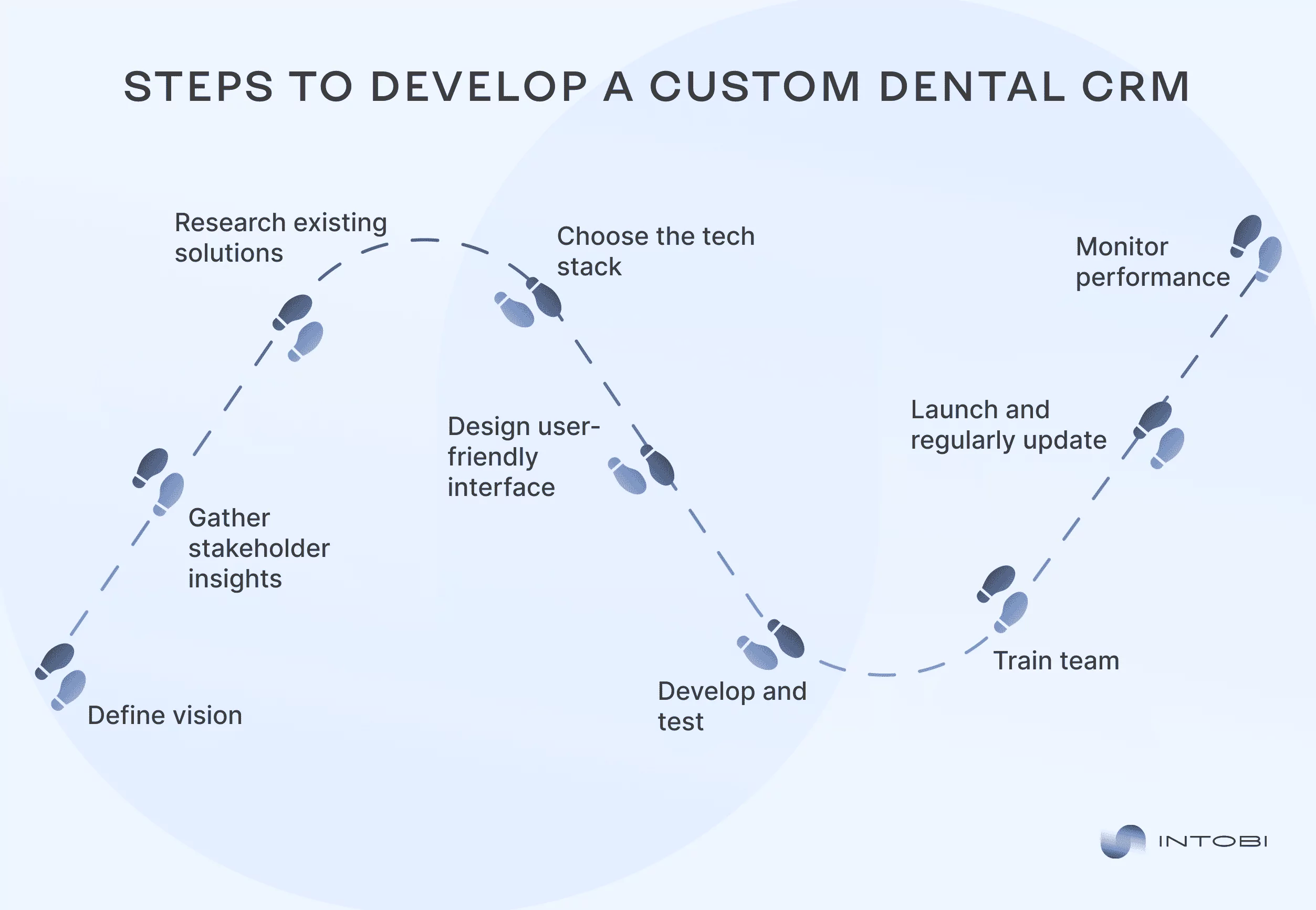
Steps and best practices to develop a custom dental CRM

Developing a custom dental CRM is your ticket to seamless operations, enhanced patient relationships, and powerful marketing capabilities. Here’s how to make the best dental practice management software — detailed and step-by-step:

What to do to create a custom CRM step-by-step

1. Define vision

Start with clarity. What do you want your CRM to achieve? Dive deep into your practice’s needs, from patient management to marketing strategies. Get specific—this vision will be your guidance.

2. Gather stakeholder insights

Involve your team. Get feedback from dentists, hygienists, and administrative staff. Their insights are invaluable. Collaborating here ensures the final product resonates with everyone who uses it.

3. Research existing solutions

Explore the landscape. What’s already out there? Identify gaps in the market and opportunities for innovation. Knowing what others offer will inspire your unique approach and set your dental marketing software apart.

4. Choose the tech stack

Select your tools wisely. Your CRM may succeed or fail based on the technological stack. Look for scalable solutions that support integration with existing systems and can grow with your practice.

5. Design user-friendly interface

Create appealing and easy-to-navigate interfaces. A user-friendly design is crucial for adoption. Give a clear layout and easy navigation top priority. The goal is to make everyday tasks feel effortless for your team.

6. Develop and test

Now, it’s time to build. Start the development process, keeping your vision and user feedback in mind. Conduct comprehensive testing to find errors. Involve your team during this phase for real-world testing.

7. Train team

Roll out the red carpet for training. Dentist CRM is only as good as the people know how to use it. Organize thorough training sessions to empower your employees and harness the CRM’s full potential.

8. Launch and regularly update

The best dental software is never static. It changes in response to the demands of the industry and your practice. Regular updates ensure your custom CRM remains useful. This means not just fixing bugs but also integrating new features that enhance functionality.

9. Monitor performance

Keep an eye on how it performs. Track user interaction, spot bottlenecks, and find new areas for improvement with analytics. A CRM is a living entity—it grows and improves with you.

Common challenges and how to overcome them

Developing a custom dental clinic management system is a rewarding venture, but, as everything is great, it’s not without hurdles. These are three typical obstacles you may face along the route, and the methods to overcome them.

  1. Integration with existing systems

One of the most significant obstacles in creating a dental CRM is ensuring seamless integration with existing dental clinic software and dental office programs. If your new system can’t communicate with current tools like billing, scheduling, or patient management software, it can create more chaos than clarity.

Here is the solution: 

  • Start with a comprehensive analysis of all systems currently in use. 
  • Map out how data flows between them and identify integration points. 
  • Choose a CRM platform that supports open APIs and can easily connect with your existing software. 
  • Work with your IT staff or engage professionals who specialize in system integration to guarantee a seamless transfer.
  1. User adoption and training

A dental clinic management system is only effective if your team knows how to use it. Resistance to change can be a significant barrier, especially if staff members are accustomed to older systems or manual processes.

Here is the solution: 

  • Prioritize user-friendly design and include your group in the development process. 
  • Create a training program that caters to different learning styles, using a mix of hands-on workshops, tutorials, and ongoing support. 
  • Highlight the new system’s benefits—like time savings and improved patient interactions—to motivate staff buy-in.
  1. Data security and compliance

Maintaining data security and adherence to laws such as HIPAA can be difficult when handling sensitive patient data. A lapse in security can lead to data breaches and legal repercussions that jeopardize your practice’s reputation.

Here is the solution: 

  • Build security measures into the CRM from day one. 
  • Implement encryption, access controls, and regular security audits to protect patient data. 
  • Assure your CRM is built to fulfill these standards by keeping up with compliance regulations. 
  • Seek advice from legal professionals with expertise in healthcare to create strong data security rules and procedures.

Choose Intobi for successful custom dental CRMs

Want the best dental practice management software for your team to greatly increase efficiency? Turn to Intobi to get the CRM for dentists tailored to your needs. 

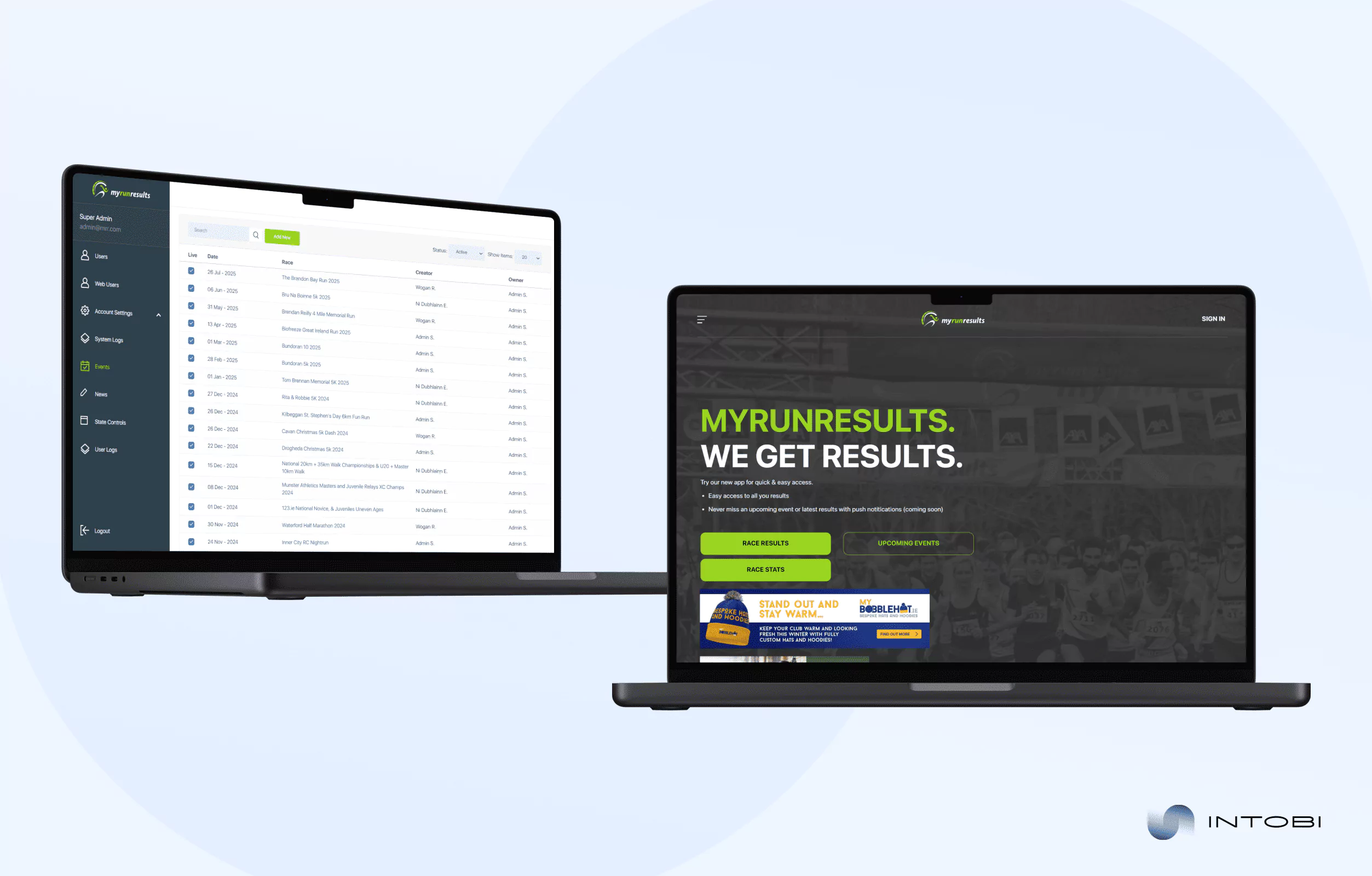
Here is the case that we are proud of – MyRunResults.

When MyRunResults approached Intobi, they encountered several significant hurdles:

  • Slow performance during high-traffic event periods
  • An inadequate admin interface that hindered effective event management
  • Dependence on manual data processing, which led to increased errors and inefficiencies
  • Difficulty integrating crucial third-party services, such as Strava for tracking activities and Stripe for payment processing, resulting in a disjointed user experience
How MyRunResults looks after Intobi's implementations

Intobi revitalized the MyRunResults platform by completely redesigning the admin panel. Our enhancements included:

  • Dynamic event creation capabilities
  • Enhanced participant management tools
  • Automated workflows for generating real-time race results and video content

The benefits of these improvements were substantial:

  • A marked reduction in manual tasks
  • Increased data accuracy
  • The platform’s capacity to manage high traffic volumes effortlessly

We successfully integrated Strava and Stripe, enhancing user experience and providing seamless activity tracking. The outcome was a powerful and scalable CRM solution that distinguishes it from its competitors.

If you’re looking to develop a dentist CRM tailored to your specific requirements while addressing unique challenges, Intobi is ready to assist. We provide a thorough approach that consists of a full transformation of your existing performance systems.

Ready to build a custom dental CRM?

Contact us

Conclusion 

CRM systems successfully tackle the data management challenges dentists face. A dental CRM offers a centralized platform with all the necessary tools that professionals need. 

Enter dental CRM software means having a reliable tool tailored specifically to streamline operations, enhance patient engagement, and optimize marketing efforts. It simplifies patient interactions, streamlines appointment scheduling, and automates follow-ups. With a tailored approach, your custom CRM can significantly improve workflow efficiency, reduce administrative burdens, and foster stronger relationships with your patients.
Want to transform your working routine? Don’t hesitate to explore your options for customized dental CRM software. Contact us today!

FAQ

What is CRM in dental?

Customer relationship management in dental practices refers to software systems that help manage interactions with current and potential patients. It streamlines appointment scheduling, patient communication, follow-ups, and marketing.

What is the most popular dental software?

Open Dental, Eaglesoft, and Dentrix are among the most widely used dental software programs. They are widely used because of their comprehensive features, such as patient scheduling, billing, charting, and practice management.

What software is used in dental office?

Dental offices commonly use a combination of practice management software (Dentrix, Open Dental, Eaglesoft), imaging software (Dexis, Carestream), and CRM tools to enhance patient engagement.

What is CMR in dentistry?

CMR in dentistry is the “Continuous Medical Record,” a detailed and ongoing patient record system that helps in comprehensive documentation of patient history and treatment plans.

What is CCM in dentistry?

CCM stands for “Chronic Care Management.” In dentistry, it is the coordinated treatment plans and follow-ups for patients with chronic dental or oral health conditions.

The Benefits of a Project Discovery Phase in Software Development

TL;DR

A project discovery phase checks whether an idea brings real value to the market before development starts. This article explains what project discovery is and the impact it has – faster problem solving, higher team motivation, better resource allocation, and more satisfied stakeholders – and walks through the discovery process, the tools and techniques that make it effective, and the common challenges to plan for.

Make a summary of this article with AI:

What should you do right after having a market-disrupting idea? The answer is not let it stay in your dreams. To ensure its successful real-world embodiment, it is important to define whether it brings value to the market. Here is when the discovery phase of project comes into play.

Today, we’ll discuss what is the discovery phase of a project and why it is a must for an idea realization. You will learn which unpleasant issues you can avoid by conducting a project discovery phase, along with the main benefits it provides. Next, we will clarify the stages of the discovery phase process and which tools you can use for an effective project discovery phase. Additionally, we’ll identify the challenges you may face during the discovery phase and how to deal with them. Let’s start.   

What is project discovery? 

The shortest answer to the question of what the discovery phase is – the discovery phase is the skeleton of your project. Being a foundation, it defines all future developmental decisions. 

For companies planning complex digital products, custom software development starts with a clear discovery phase that aligns business goals, technical requirements, and project scope.

During the discovery phase of project, you gather info on the current market state, especially within your niche. It is a time for analyzing competitors to ensure your proposal will appear as unique as you expect. This phase allows to write down all the technical specifications required for the smooth realization and secondary plans in case of a problem. 

The discovery phase is also essential to align the separate project objectives with the general company’s values and goals. By listing the project’s details, you can define its scope and due date, important elements of SMART (specific, measurable, achievable, relevant, and time-bound) goal setting.

If you process discovery phases for a client, prepare and ask as many clarifying questions as possible. Each detail can improve the results, while insufficient information on the project can cause low engagement.

At the end of the discovery phase of project, you have complete documentation on the proposition value, risk management, timelines and required monetary investments. Let’s move on to the non-obvious benefits of the project discovery phase.

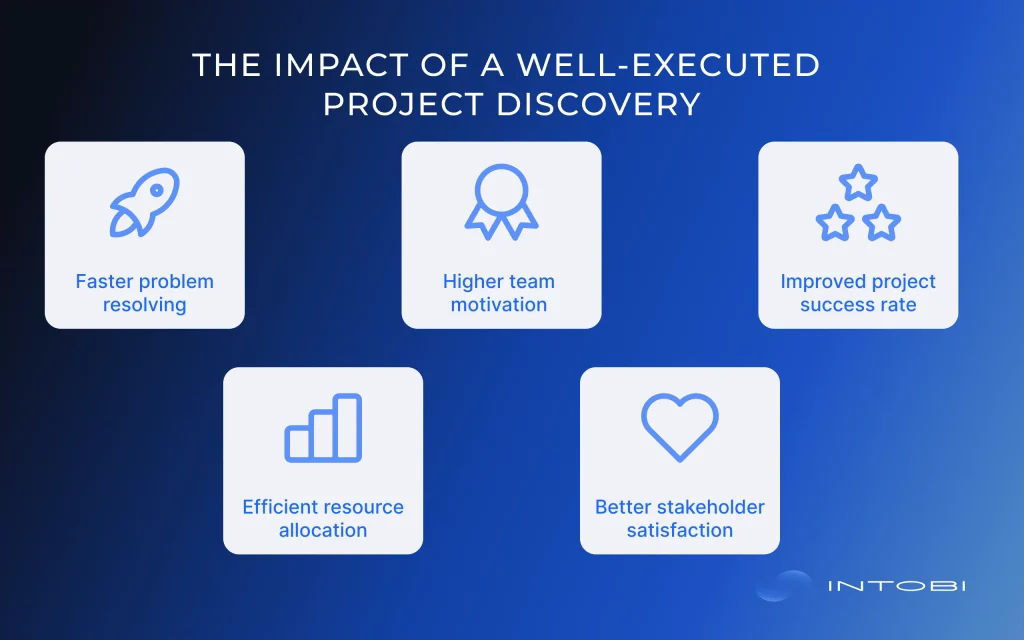
The impact of a well-executed project discovery 

If a company neglects the discovery phase of project, proceeding to realization right after the idea, it does not fully understand what benefits it has. Moreover, such a firm does not consider the risks due to neglect. We collected some unobvious discovery phase deliverables that advance your project:

Faster problem resolving

A project team always faces various confusions throughout idea embodiment. In case of technical problems, the secondary plan pre-written in the discovery phase of a project will prompt a team on what to do. It may include reliable service centers capable of quickly resolving the issue or predefined communication protocols. Resource allocation and task prioritization can also be a part of emergency guidance. Anyway, people can cope with troubles much faster than without a pre-developed plan.

In case of confusion regarding marketing strategies, target audience, or content, discovery phase deliverables are also useful suggestions. By checking on the wider project goals and company values, the marketing department can embrace or adjust particular ads or slightly change the intended public.

Higher team motivation 

A samurai has no goal, only a path. However, we are not samurais and need measurable goals for our projects. The clearly defined objective has two main advantages:

  1. Makes possible success estimation. This allows companies and teams to identify flaws and deficiencies in their approaches. Thus, they can eliminate shortcomings, improve strategies, and increase profit.
  2. Increases the overall team motivation to perform their best at work. Understanding the deep sense and goal of the project lets workers see more than “just do this task quickly and effectively.” Instead, they can see “this step requires a high dedication as it will fulfill such of our company values and increase our reputation in the field, which will favor all our workers.”

Improved project success rate

In life, individuals should know exactly what they want to achieve to get it. It works similarly with the projects! Written specific goals prompt what you should focus your efforts on. It is impossible to accomplish the unclear goal as it barely exists.

That is why the main and secondary goal setting are included in the discovery phase of project. Having a strong objective rather than a moving target allows you to access your achievements objectively. Plus, aligning these goals with the discovery phase market analysis will inevitably bring satisfactory results. 

Efficient resource allocation

Every business wants to see ROI (return on investment) that exceeds the pre-defined expectations. However, such results require a thorough analysis of the available resources and ways to maximaze its usage. 

Resource allocation is a necessary component of a project management discovery phase. By evaluating a company’s investment opportunities, it can wisely choose ways to use them as effectively as possible.

Interesting

The important nuance is that it is better to do this before the project launch rather than making adjustments when part of the investment has gone to waste.

Better stakeholder satisfaction

Arranging a project management discovery for a client is a responsible step. Firsty, ensure that the format suits both the customer and your team to ensure effective communication. Discussing a forthcoming project should go smoothly and comfortably, whether in an offline meeting or a remote conference call.

Emphasizing the need in the discovery phase of project for clients can make them trust you as a professional who considers the tiniest details. As a result, they can see that the discovery phase was not a waste of time but an instrument that leverages their business.

What a discovery phase of project helps to avoid

Apart from listing the benefits of the discovery phase, let’s see in short what problems you can escape by investing your resources in it:

  • Losing money
  • Wasting time
  • Failing to meet user needs
  • Failing to handle unforeseen challenges 
  • Proposing undemanded products to the market

After defining what is a discovery phase and its impact on the project’s progress, let’s review the discovery phase of project components. 

What key points should be involved in your discovery process?

Contact us

The project discovery process 

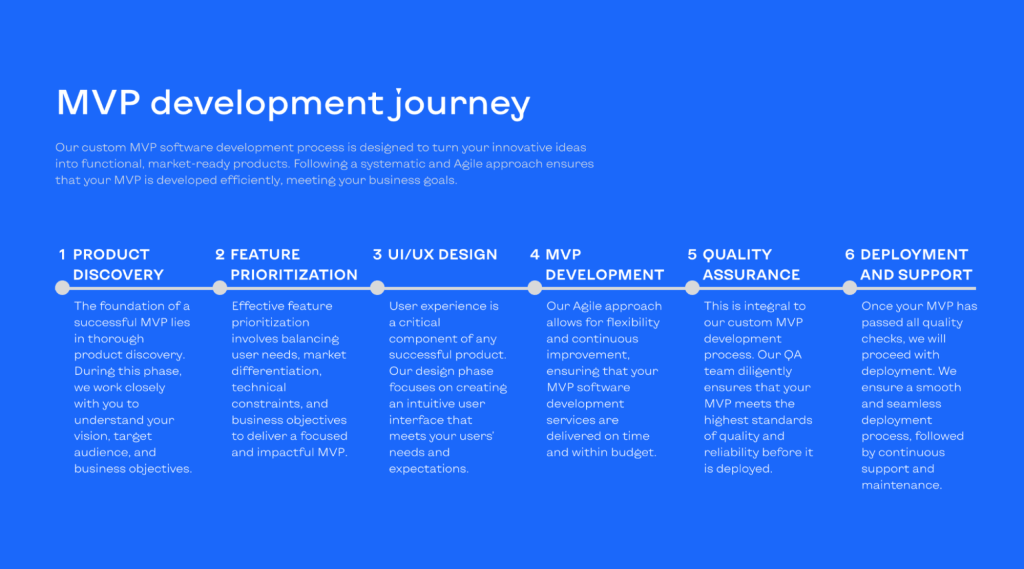
Discovery stage contains but is not limited to the 5 stages. The process leads to the logical conclusion – the roadmap development . 

  1. Stakeholder engagement

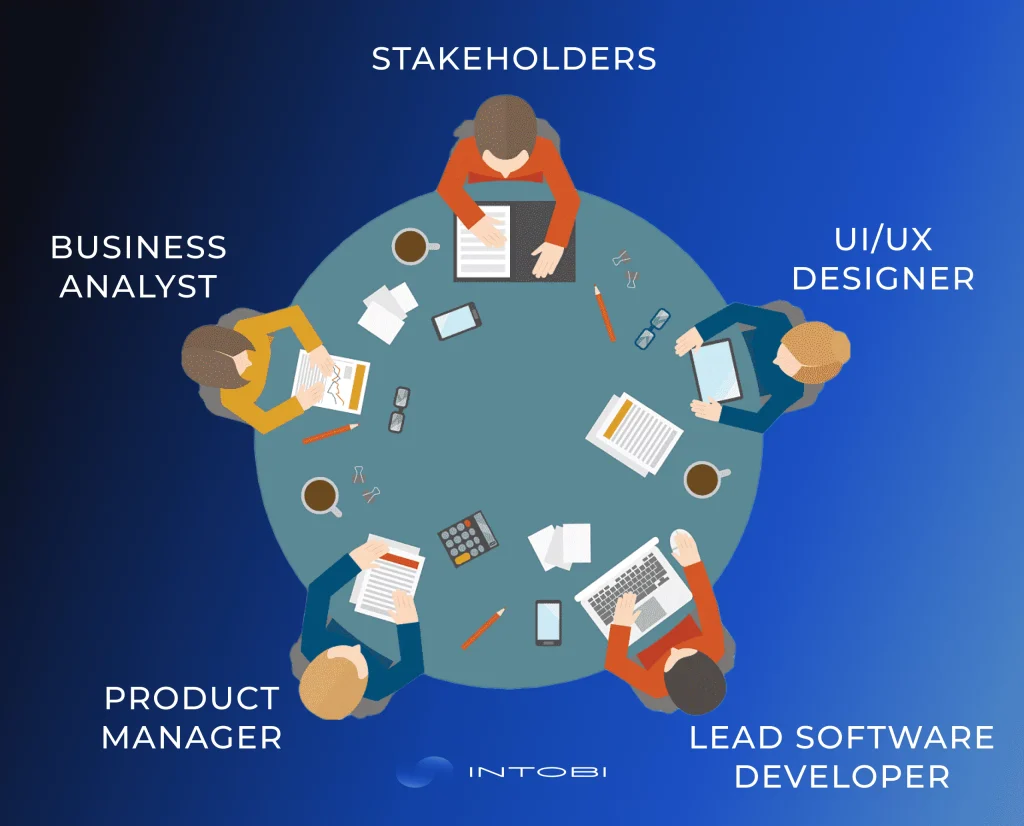
Let’s specify who should participate in the discovery phase of a project to make it a useful tool. Usually, the discovery phase team contains:

  • Stakeholders: Clients, investors, or end-users whose needs and expectations must be met. Inviting them to the discovery phase of project helps to avoid the flaws in understanding the project idea.
  • Business analyst: Business analysts write down all the project details the customer presents, such as goals and any specific constraints or expectations. Then, they review the identified niche by analyzing competitors and identifying potential risks. They also validate the relevancy of the proposed solution to current market demands. 
  • Product manager​​: They outline the client’s vision, potential strategy, and roadmap to fulfill their subsequent responsibility. They will monitor that the project aligns with the market needs throughout the discovery and realization phases. 
  • Lead software developer: This role takes charge of the technical side of the project. Lead engineers review and analyze similar projects’ documentation or ask clarifying questions to develop one from scratch. They consider the inner architecture details and propose the best-fit technology stack.
  • UI/UX designer: Designers’ presence at the discovery phase meeting is desirable because the visual component of the promotions and solution interface matters a lot. By talking directly to the client, user interface/user experience designers can create an intuitive web interface that reflects the company’s style and values.

This list can be expanded based on the stakeholders’ request or the project’s large scale.

  1. The project idea discovery

When everybody is in the place, the discovery phase discussion can start. Now, the client and the team should work collaboratively to reach a common understanding of the key concept. The customer starts and elaborates on the idea. The others listen attentively and write down clarifying questions. When the client finishes, the team asks everything they need to get better comprehension, asking the pre-written questions along with those that appeared during the narrative. 

  1. Defining the project scope

The client could have mentioned the approximate project scope in the initial idea description. However, this step is essential to pose clarifying questions about:

  • Intended impressions
  • Desired engagement results
  • Milestones
  • Timeline
  • Available monetary resources

Knowing these details will enable success estimation throughout the project realization and ensure well-organized processes.

  1. Identifying risks and challenges

After the team familiarizes itself with the client’s idea and project scope, it is time to discuss the challenges that may prevent smooth realization. This stage includes each specialist’s consideration of their professional experience. Every role presented at the discussion should mention and write down risks that may appear in their niche. 

Apart from the professional opinion, it is vital to learn about the general problems associated with similar projects realization and note them. An exhaustive discovery phase of project allows for the development of emergency communication protocols and saves much time afterwards.

  1. Developing a roadmap

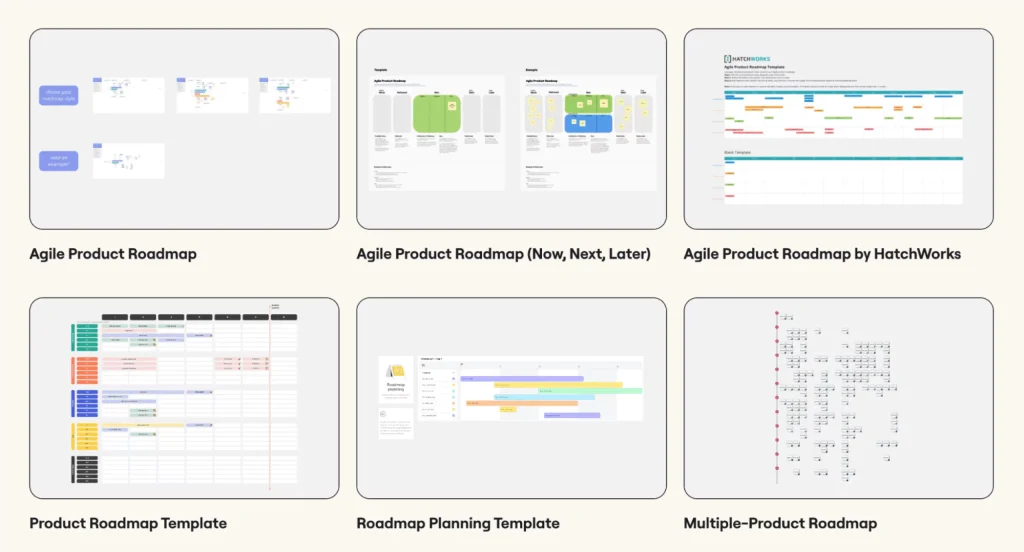
When the concept is clear, and the risks are considered, the discussion can switch to the last stage of the discovery phase – developing a roadmap. It is a comprehensive visualization of key concepts derived during the discussion. Here are free roadmap templates you can use for the project. The examples of how it looks:

It is highly important to fill a roadmap with clearly formulated details, as this will guide the working team throughout the whole project. Now, let’s switch to other valuable tools for the productive discovery phase. 

Tools and techniques for effective project discovery

Though it may be time-consuming, including each following technique in your discovery phase provides the most precise image of the product’s strengths and weaknesses. 

Workshops and brainstorming sessions

The initial discovery phase discussion is the foundation of the discovery phase of project. Yet, additional customer and operating team meetings are essential for progress. Based on the roadmap, you should arrange workshops and brainstorming sessions. They can be dedicated to marketing strategy, advancements in software solutions, budget allocation, product design, competitive analysis, risk management, etc. 

During brainstorming and teamwork, an unexpected solution can emerge. Workshops are a necessary part of a discovery phase project management. They encourage innovative ideas and out-of-the-box thinking, which is necessary for creating a competitive advantage. 

Market research tools

Specific analyzing tools will be helpful for any project stage but mandatory during the discovery phase. Some of the most widespread market research tools involve Google Trends, Semrush, SWOT, and PESTLE analyses. Google Trends and Semrush can provide exhaustive reports on current market trends. SWOT and PESTLE analyses are widely used to evaluate internal and external factors affecting the project.

Additional instruments for effective surveys are tables like Power BI and Tableau and programs for collecting customer feedback such as Qualtrics or SurveyMonkey. Power BI is better for building dynamic dashboards and data analysis, whereas Tableau is ideal for exploring and visualizing complicated data. SurveyMonkey’s main purpose is to collect feedback. Qualtrics is more attractive to enterprise clients as it provides extensive market research functions.

Let’s look closer at SWOT analysis, as it is a constant instrument of project teams. 

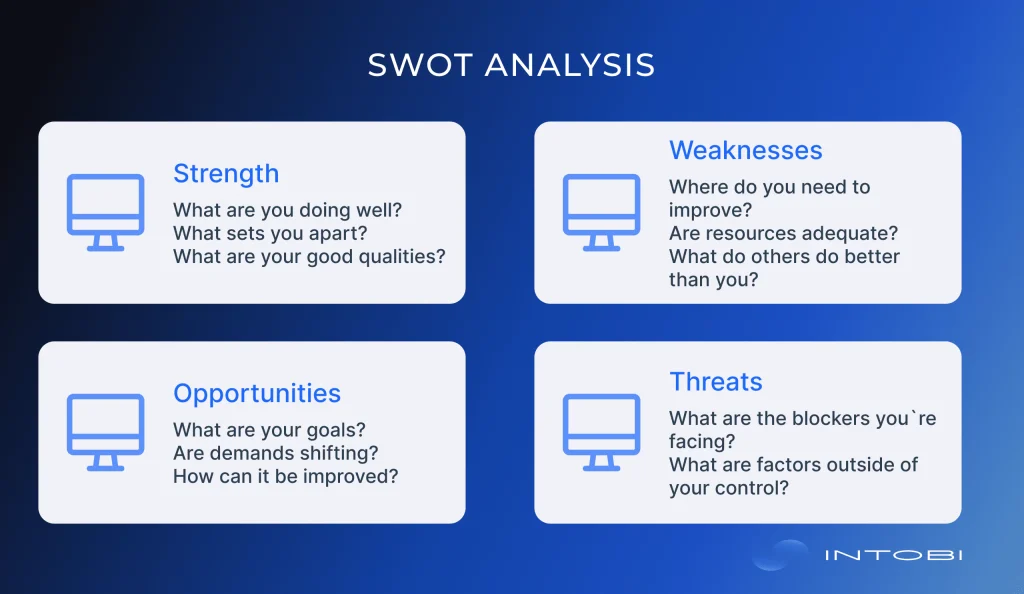
SWOT Analysis

It contains four stages of analysis, which provide insights into the project’s real opportunities and threats.

SWOT stands for strengths, weaknesses, opportunities, and threats. You should formulate and highlight these factors while analyzing the market. Let’s look at the details:

Strengths

Think of them as your secret weapons—unique strategies, capabilities, resources, or technologies that set you apart in the marketplace. Once you have defined your strengths, emphasize them throughout the entire project.

Weaknesses

These are areas where your competitors might have the advantage. You should identify your weaknesses not to highlight faults but to unravel growth points.

Opportunities

By analyzing the market state and competitors’ technologies, you can face an unknown opportunity, such as a technological advancement or a tendency in current consumer behavior. Apply this knowledge immediately to jump on the trend.

Threats

Analyze the up-to-date regulatory environment particularly carefully. Noncomplianсe with the regulatory standards may cause great problems and even a project closure.

Some companies claim the SWOT analysis should be conducted every 3-5 years. However, this frequency does not fit in the modern, fast-paced business environment. We advise performing the SWOT analysis at least twice a year to maintain a competitive advantage.  

Prototyping and MVPs (minimum viable products)

Apart from the aforementioned, prototyping and launching MVPs for startups are helpful techniques for success. By prototyping your product, you can test functionality and gather narrowly focused feedback. Doing so helps to improve the product quality before launching to a large audience. This strategy reduces the risk of money and time waste by confirming functioning and sufficient demand. 

For instance, Dropbox’s MVP, a basic film that showcased the software’s features, allowed the company to access people’s interest in the product. With the early customer feedback, Dropbox advanced the later versions to more abundant features and sophisticated solutions.

As a software development company, we always launch MVPs before launching a large-scale version of a product. This allows us to receive positive client feedback and be proud of our project results.

How can product discovery improve your project?

Contact us

Common challenges in project discovery and mitigation strategies

Some challenges that can prevent you from conducting an effective discovery phase are:

  • Stakeholder’s refusal to engage: There may be cases when clients want your company to do everything, including the discovery phase, by themselves. Such customers argue that they pay you big money, so you must know how to make the best of it without their participation. Unfortunately, such situations often lead to client complaints and dissatisfaction with the product.

In this case, you should convey to them that their engagement is crucial for the project’s success. Explaining that without their active participation, your team may misunderstand the project’s specific goals and miss critical details. Thus, you can persuade them to devote their time.

  • Limited time and resources: A client can set a tense deadline slightly out of your plan. Additionally, the requirements claimed during project management discovery may not fit the allocated resources.

When dealing with limited time and resources, it’s crucial to set priorities. Review and prioritize the project requirements with the client. Identify the critical tasks and those that can be adjusted or completed in later phases. This will help manage client expectations and ensure the project’s success.

  • Resistance to new Ideas or change: Customers may not be willing to modify their previous strategies, insisting on preserving the previous approaches. However, this resistance can hinder innovation and profitable solutions.

When faced with resistance to change, highlight the benefits of the new approach and the associated risks. If the client understands that the risks are low and the benefits are high, they are more likely to agree to the new terms.

Case studies 

As an awarded web development company, we always include a discovery phase when starting a new project. After discussing your idea’s details, we create a step-by-step development strategy, including all the potential risks and mitigation strategies.

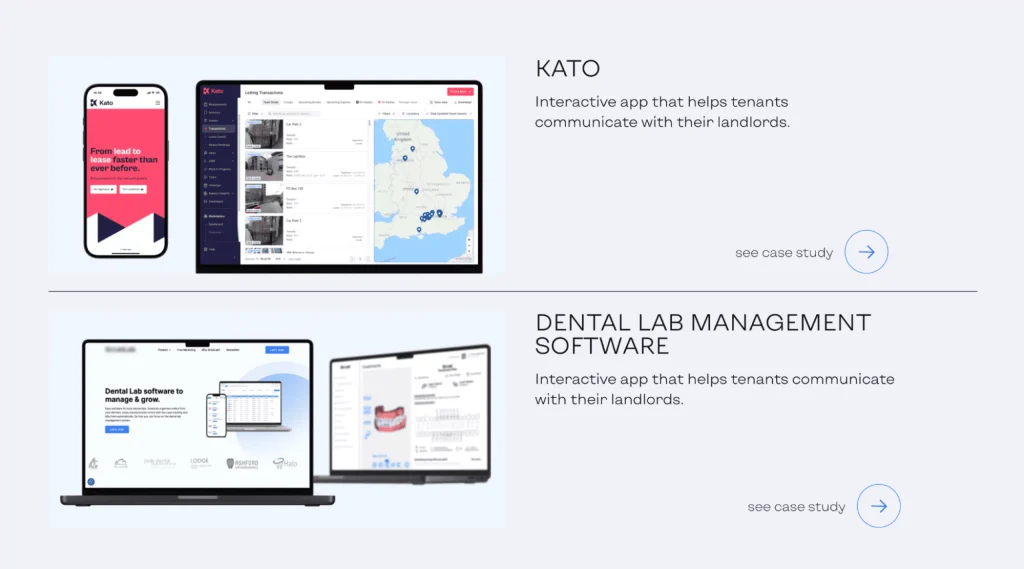
Among our recent case studies, we want to highlight the development of an interactive app – Kato.

For companies planning similar digital products, mobile app development services can help turn discovery insights into scalable, user-friendly applications.

The application is an all-encompassing platform intended to transform the transaction process within the commercial real estate field. We successfully met Kato‘s needs, producing a single tool that handles every step of the real estate transaction process. The app handles all steps – from marketing and matching to tracking, negotiating, signing, and finalizing deals. 

We also enhanced the user experience by making the interface intuitive and user-friendly. Thanks to our advancements, the platform now offers Kato’s clients more streamlining tools and services.

From a frontend perspective, we implemented some frontend improvements that supplemented the platform functionality. For instance, we added email campaign functionality and insights reports to give our clients fast access to the required information. 

Additionally, integrating numerous third-party services, such as OnTheMarket, Property News, PropertyPal, BPI Expresso, Imovirtual, Idealista, and eGO Real Estate allowed Kato to extend its reach of services.

If you need to advance your application or develop a new one from scratch – contact us to negotiate the prospects of your project and develop an initial MVP!

Conclusion

In this article, we grasped the discovery phase meaning and what happens in discovery phase. To answer shortly to what is project discovery – it is the first stage of any project that ensures its compliance with current market demand. 

The discovery phase implies a thorough discussion of the project idea with the stakeholders. It includes discovering project ideas and scope, defining risks based on the specialists’ knowledge, and developing a roadmap with all the derived details. A properly conducted discovery phase of project allows to effectively allocate money and time. Furthermore, it helps to avoid issues such as undemanded or low-quality products and failing to deal with urgencies.

By trusting your next project to Intobi, you get access to a dedicated team of experts committed to turning your vision into reality. We’ll arrange an effective discovery phase by aligning with any timezone and customizing our approach to fit your requirements.

FAQ

FAQ

What is a project discovery meeting?

A project discovery meeting is an initial session between stakeholders and processing team. Discovery phase of a software project includes writing down the project idea, scope, potential risks and challenges, denoting financial resources, timeline, and developing a roadmap.

What does discovery mean in a project?

If asking what is discovery phase, it is foundation of a project’s launch. Discovery project management does not mean just an announcement of an idea and a due date. It is rather an exhaustive analysis of its relevance to the current market demand and available resources for realization.

What comes after discovery in a project?

What comes after the discovery phase in a project depends on the derived information. Usually, after a discovery phase project, business analysts analyze the market and niche. Then, the team develops a prototype and an MVP – minimum viable product to discover people’s interest in the product.

How to do discovery for a project?

The project phases discovery includes arranging an initial meeting of stakeholders and a working team. The client first tells the team about the idea and any associated details. Then, the participating specialists ask clarifying questions to develop a project roadmap.

What is a discovery phase?

Discovery phase of project is a must for a successful idea realization. Discovery phase is a time to discuss the main goals and risks on a shore. It comprises various specialists’ market analysis and prevents subsequent money and time losses.

What is the discovery project structure?

In the season of discovery phases, the team meets with stakeholders to decide what to do next. Discover the idea, identify potential emergencies, discuss available monetary resources, milestones, due date, and develop a roadmap. A roadmap will lead all the professionals throughout the project.

What is the purpose of discovery?

The discovery phase in project management allows to get the most of the initial idea and prevents unnecessary risks. It includes a sufficient analysis that helps to ensure that the product is demanded in the market and has all necessary functions.

Building a Meditation App: Tips & Step-by-Step Guide

TL;DR

Building a meditation app means creating a tool that helps people manage stress and practice mindfulness every day. This guide explains what a meditation app is, gives an overview of the market and top apps, and lists the basic features users expect. It then walks through how to build a meditation app – from idea validation and monetization to the team, tech stack, and design – and what it costs.

Make a summary of this article with AI:

As Andy Puddicombe, a meditation and mindfulness expert, said, “Meditation is not about having yet another new strategy of self-help plan, but rather providing a framework in which to see yourself more clearly.” So, building a meditation app is not just about creating another digital product; it’s about making a shelter where users can retreat from the chaos and find inner peace.

But how do you create your own meditation app that stands out in a market flooded with wellness tools? What features can genuinely enhance the user’s experience and foster long-term engagement? This comprehensive guide involves understanding the nuances of meditation, selecting the best features, and more. Let’s dive into the journey of meditation together!

What is a meditation app?

In fact, meditation apps have revolutionized how individuals approach mindfulness and mental well-being in the digital age. At their core, these apps are portals to serenity, guiding users through practices that cultivate inner peace and clarity amidst life’s demands.

Imagine having a personal meditation guide in your pocket, ready to help you relax wherever you are. A meditation app development typically offers a variety of guided sessions tailored to different needs and experience levels, from beginners seeking relaxation to seasoned practitioners deepening their practice. These sessions often include guided meditations, breathing exercises, and mindfulness practices designed to reduce stress, enhance focus, and promote emotional balance.

With the continuous evolution of technology, meditation apps are also evolving, incorporating innovations such as biofeedback sensors, augmented reality (AR) environments, and AI-driven personalization. These advancements enhance user engagement and effectiveness and make mindfulness more accessible globally. They help individuals to foster a deeper connection with themselves and their surroundings.

Thus, a meditation app is a modern tool rooted in ancient wisdom, offering a pathway to mental clarity and emotional resilience. Whether new to meditation or looking to deepen your practice, these apps provide invaluable resources to support your journey towards a more balanced and mindful life.

Meditation app market overview 

In recent years, the meditation app market has seen exponential growth, driven by increasing mental health awareness and the pursuit of holistic well-being. As individuals seek practical tools to manage stress and cultivate mindfulness, meditation apps have emerged as convenient and accessible solutions. 

Once confined to temples and quiet retreats, meditation app development has seamlessly integrated into the digital realm through smartphone apps. These apps offer diverse guided meditation sessions, mindfulness exercises, and relaxation techniques that satisfy users of all levels, from beginners to experienced practitioners.

Interesting

The convenience of accessing guided meditations anytime, anywhere has democratized mindfulness practices, making them accessible to a global audience.

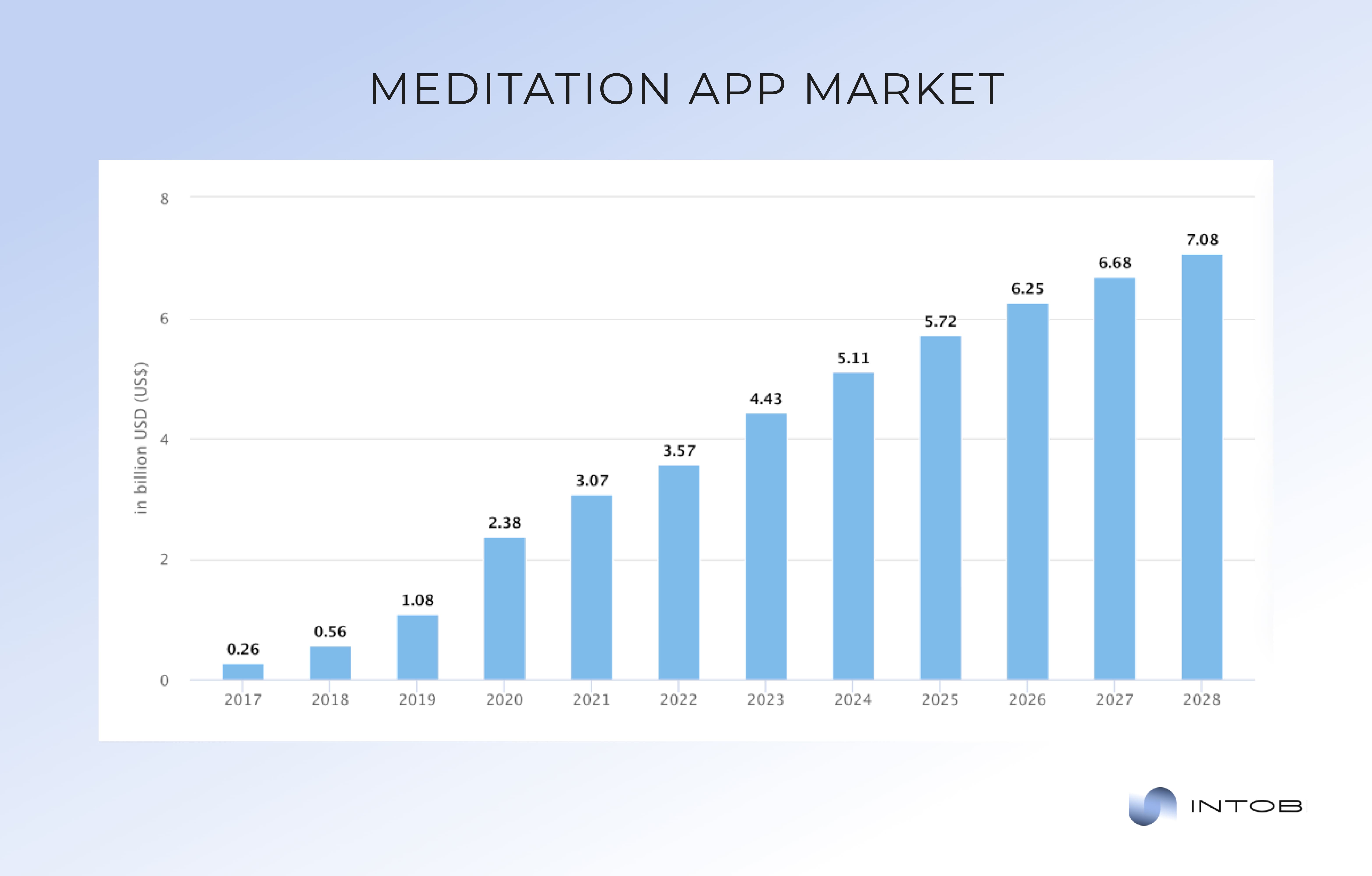
The meditation app market has experienced significant expansion, fueled by increasing stress levels, growing interest in wellness practices, and advancements in mobile technology. According to Statista, the global market for meditation apps is anticipated to achieve a revenue of US$5.72 billion by 2025, with an expected annual growth rate of 8.49% (CAGR 2024-2028). This growth trajectory is forecasted to lead to a market volume of approximately US$7.08 billion by 2028.

Global market for meditation apps

The meditation app development market is characterized by several notable trends that reflect evolving consumer preferences and technological advancements:

  • Personalization: Apps increasingly use AI (artificial intelligence) and user data to personalize meditation recommendations, adapting sessions to individual preferences and progress.
  • Integration of additional features: Beyond guided meditations, apps integrate features like sleep aids, mood tracking, and stress-relief techniques to offer comprehensive wellness solutions.
  • Corporate wellness programs: Many companies integrate meditation apps into their employee wellness initiatives, recognizing the benefits of mindfulness for productivity and stress management.
  • Technological innovations: Emerging technologies such as AR, biofeedback sensors, and voice-guided interactions are being explored to enhance user engagement and effectiveness.

Top meditation apps  

Several key players dominate the meditation app development market, each offering unique features and approaches to mindfulness:

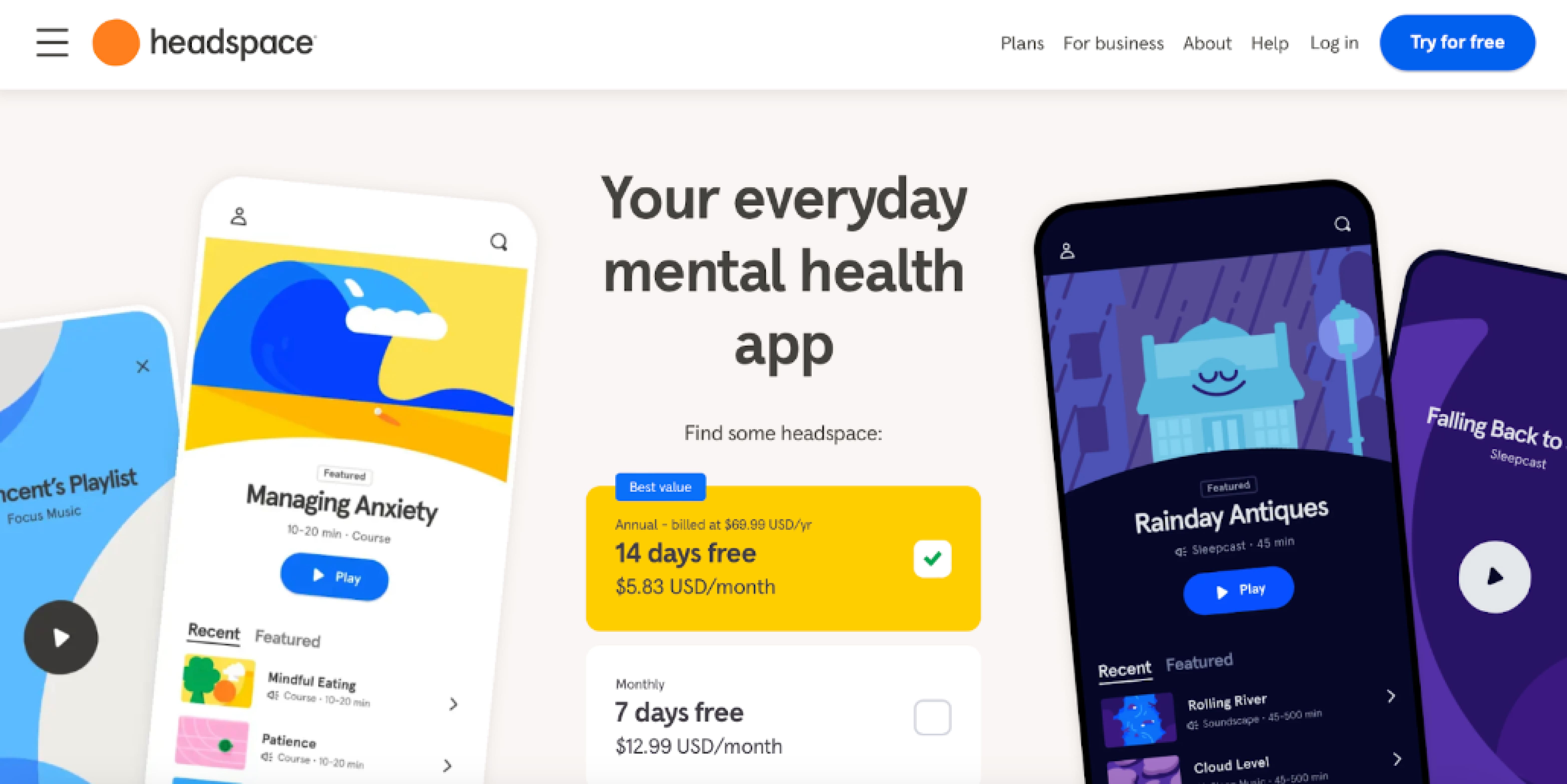
Headspace

Headspace meditation app

One of the pioneers in the meditation app development space, Headspace offers guided meditations, mindfulness exercises, and sleep aids tailored to various needs. Its user-friendly interface and celebrity endorsements have contributed to its widespread popularity.

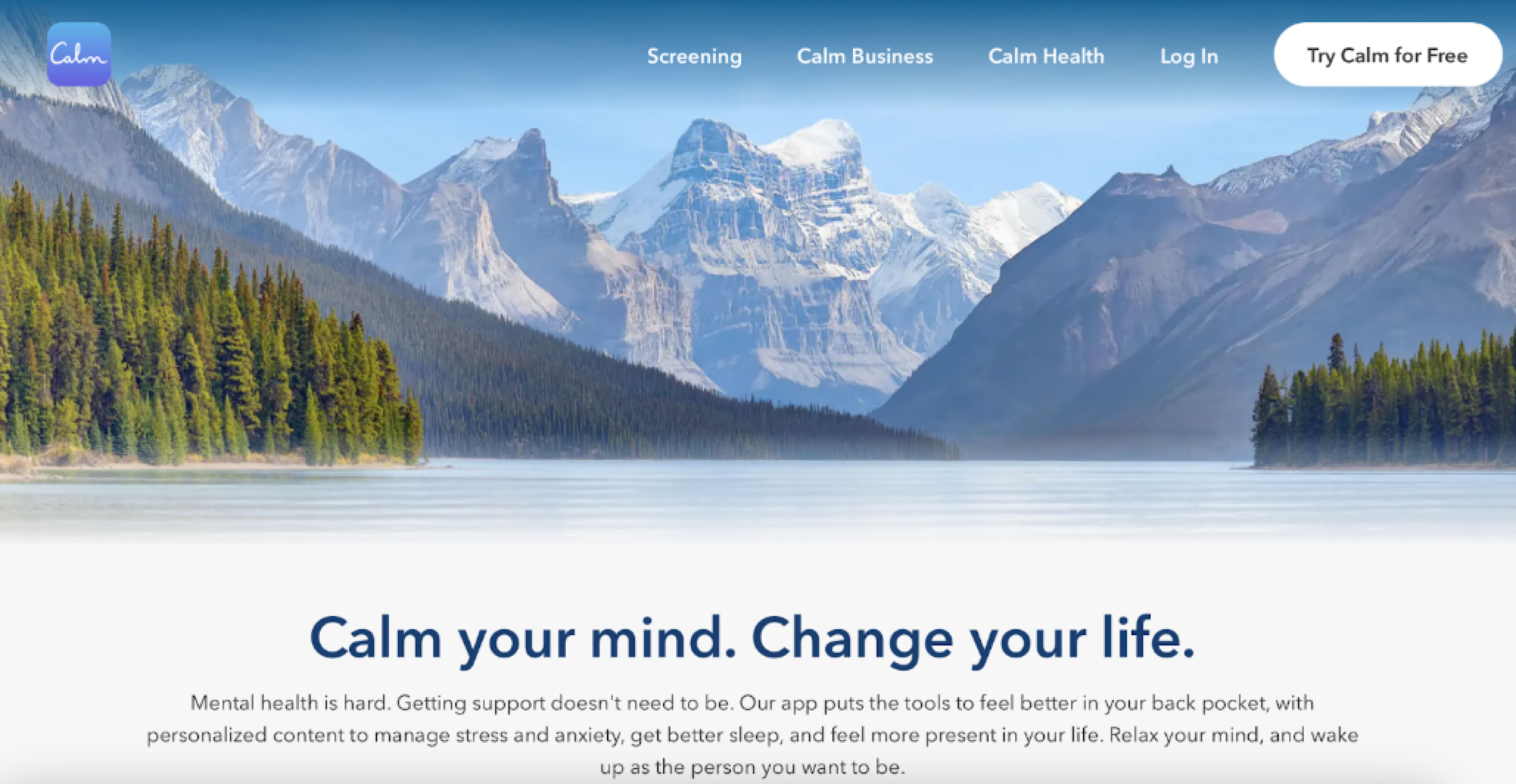
Calm

Calm meditation app

Known for its soothing nature sounds, Calm provides guided meditations, breathing exercises, and sleep stories to reduce stress and promote relaxation. This daily meditation app has garnered a large user base globally.

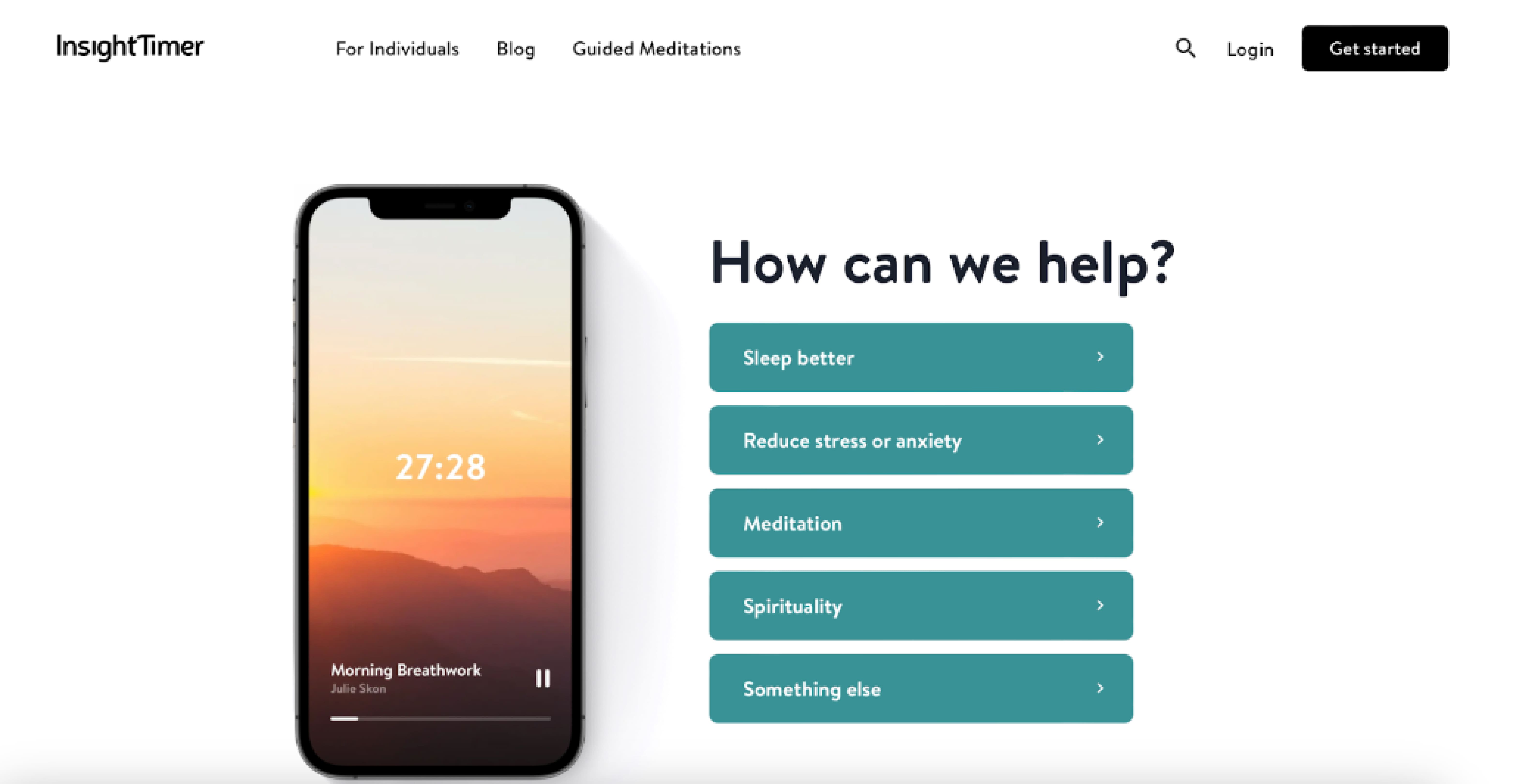
Insight Timer

Insight Timer meditation app

Differentiating itself with a vast library of free meditations contributed by teachers worldwide, Insight Timer emphasizes community and diversity in its offerings. Users can explore various meditation styles and join virtual meditation groups.

Breethe

Breethe meditation app

Offering guided meditations, hypnotherapy sessions, and mindfulness practices, Breethe focuses on personalized wellness plans and relaxation techniques to support mental well-being.

Simple Habit

Simple Habit meditation app

Catering to busy lifestyles, Simple Habit provides short, targeted meditations designed to fit into daily routines. This guided meditation app emphasizes mindfulness for specific situations like work stress, sleep, and relaxation.

Why develop a daily meditation app?

The meditation app development represents a transformative way towards mental well-being and holistic health. Below, we explore the top benefits of building a meditation app, shedding light on how these digital tools can positively impact individuals and communities worldwide.

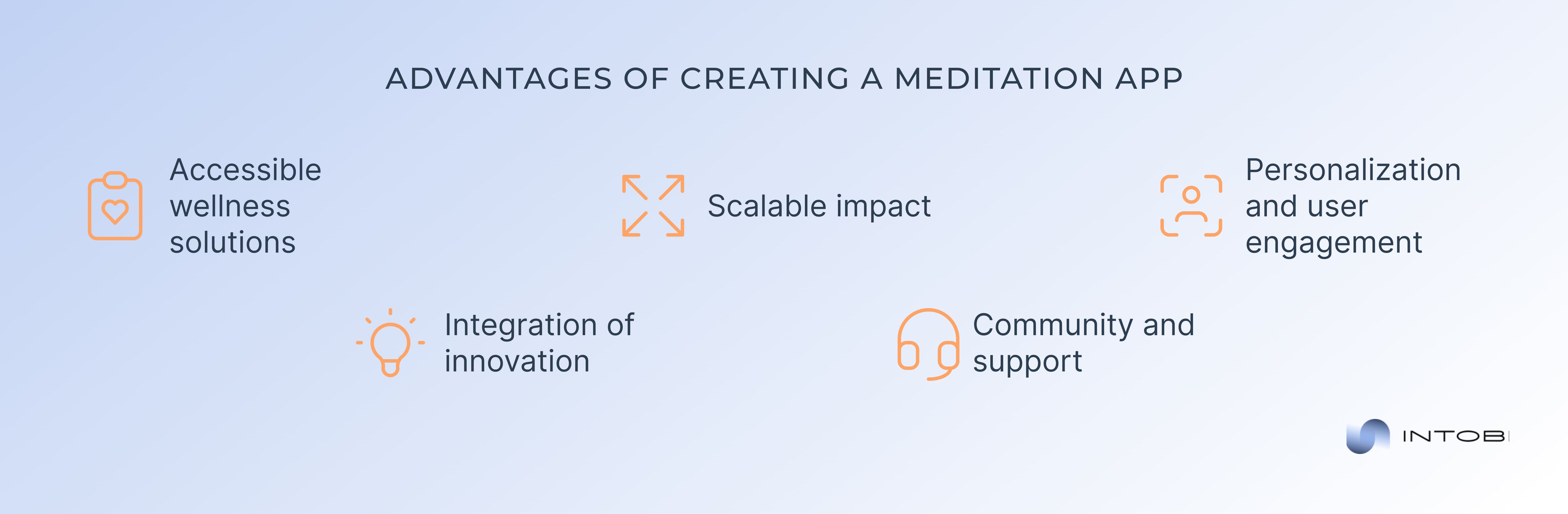
Top benefits of building a meditation app

For wellness products focused on mental well-being, healthcare software development can help create secure, user-friendly apps that support mindfulness, engagement, and long-term care.

Accessible wellness solutions

Meditation apps democratize access to mindfulness practices, offering a convenient platform for users to boost mental clarity and emotional resilience. By providing guided meditations, breathing exercises, and relaxation techniques, these apps break down barriers to entry traditionally associated with meditation, such as time constraints and lack of access to instructors. This accessibility helps users of all backgrounds launch a journey of self-discovery and inner peace.

Scalable impact

The scalability of meditation apps allows developers to reach a global audience, transcending geographical boundaries and time zones. This scalability is key in spreading the benefits of mindfulness practices to diverse communities, fostering a collective effort toward mental health and well-being on a global scale. Moreover, as these apps evolve with technological advancements, their potential to reach and positively impact millions of lives continues to expand.

Personalization and user engagement

Building a meditation app allows for personalized user experiences tailored to individual preferences and goals. Developers can enhance user engagement and retention through features like progress tracking, customized recommendations, and customizable meditation sessions. This personalized approach increases the app’s effectiveness and fosters a deeper connection between users and their mindfulness journey, leading to long-term usage and positive behavioral changes.

Integration of innovation

The meditation app development encourages innovation in health technology, integrating advancements such as AI-driven meditation guides, biofeedback sensors, and virtual reality environments. These innovations enhance the user experience by offering interactive and immersive meditation sessions that adapt to individual needs and preferences. By pushing the boundaries of technology in mindfulness practices, developers contribute to a broader landscape of digital wellness solutions that satisfy evolving user expectations.

Community and support
Meditation app development fosters community and support through features like social sharing, group challenges, and virtual meditation groups. These platforms connect like-minded individuals who share a common goal of mental well-being, creating a supportive network that encourages accountability and motivation. This community-driven approach enhances user engagement and reinforces the benefits of mindfulness practices through shared experiences and collective encouragement.

What features are vital for your meditation app?

Contact us

Basic features in meditation applications 

Meditation applications have become essential tools for promoting mental well-being, stress reduction, and mindfulness in our increasingly hectic lives. To stand out in a competitive market, meditation app development solutions incorporate various features designed to enhance user experience and maximize the benefits of meditation practices.

Here are the top features that make meditation apps effective and engaging, ensuring they satisfy the diverse needs of their users.

Concentration boosting music

Music profoundly impacts our mental states, and concentration-boosting music is a staple feature in many meditation apps. These specially curated soundtracks and ambient sounds help users achieve a deeper state of focus and relaxation.

Whether it’s the gentle sound of waves, serene forest sounds, or carefully composed instrumental music, these audio tracks aid in creating an immersive and calming environment. The right music can significantly enhance the daily meditation app, making it easier for users to disconnect from distractions and connect with their inner selves.

Progress tracking

It is an essential feature that allows users to monitor their meditation journey. Users can see their improvements over time by keeping track of session lengths, frequency, and milestones. Some apps offer detailed analytics, showing trends and patterns in the user’s practice.

This feature provides a sense of accomplishment and helps users identify areas for improvement and set personal goals. Progress tracking can be a powerful motivator, reinforcing the benefits of regular meditation practice.

Zenitizer progress tracking

Access to guided meditation

Guided meditation is at the core of many meditation apps, providing users step-by-step instructions to facilitate their practice. These sessions, led by experienced meditation teachers, can range from a few minutes to over an hour, catering to beginners and advanced practitioners.

The diversity of each guided meditation app covers various themes such as stress relief, sleep enhancement, mindfulness, and emotional healing. This feature is crucial for helping users guide their meditation journey, offering structure and expertise that can lead to more effective and consistent practice.

Community integration 

One of the most influential features of modern meditation apps is community integration. Users can join virtual groups, participate in forums, and share their experiences with like-minded individuals. This sense of community fosters a supportive environment where users can motivate each other, share insights, and even engage in group meditation sessions.

Community integration enhances user engagement and retention by creating a network of support and accountability, which can be especially beneficial for those new to meditation.

Daily challenges and streaks 

Many meditation app development solutions incorporate daily challenges and streaks to encourage consistent practice. These features gamify the meditation experience, providing users with specific tasks to complete each day and rewarding them for maintaining regular practice.

Streaks track consecutive days of meditation, motivating users to keep their momentum going. By turning meditation into a daily habit through challenges and streaks, apps help users build discipline and integrate mindfulness into their everyday lives.

Reminder notifications

In the hustle and bustle of daily life, it’s easy to forget to take time for meditation. Reminder notifications serve as gentle prompts to encourage users to practice regularly. These customizable alerts can be set at convenient times, ensuring that meditation becomes a part of the user’s routine.

By providing timely reminders, apps help users prioritize their mental well-being and maintain consistency in their practice.

Headspace reminder notifications

In-app chat support 

This support offers users immediate assistance and guidance, enhancing their overall experience. Whether users have technical questions or need advice on their meditation practice, chat support provides quick and accessible help.

This feature can be especially beneficial for beginners needing extra support as they guide the daily meditation app and develop their meditation routines. Responsive and helpful support can significantly improve user satisfaction and retention.

In-live streaming videos 

These videos bring a dynamic and interactive element to meditation apps. Users can join live sessions with meditation teachers, participate in real-time Q&A sessions, and even engage in live group meditations. This feature adds a sense of immediacy and connection, making the meditation experience more engaging and immersive. Live streaming can also introduce new content and practices, keeping the app fresh and exciting.

How to build a meditation app?

If you’re considering building a meditation app, this guide will take you through the essential steps, ensuring your app stands out in a competitive market.

How to create a meditation application

1. Idea validation 

The first step in building a meditation app is validating your idea. This involves conducting market research to understand the demand and identify your target audience. Analyze existing meditation apps to find gaps in the market and gather user feedback to determine what features are lacking or could be improved.

Surveys, interviews, and focus groups can provide valuable insights into what potential users seek in a meditation app. This process helps you refine your concept and ensure a market need for your app.

2. Choosing an application type 

Once your idea is validated, decide on the type of daily meditation app you want to develop. There are several options:

  • Native apps: These are developed specifically for iOS or Android, offering the best performance and user experience but requiring separate development efforts for each platform.
  • Cross-platform apps: Built using frameworks like React Native or Flutter, these apps run on iOS and Android with a single codebase, reducing development time and cost.
  • Web apps: Accessible via web browsers, these apps are easy to maintain and update but might lack the performance and offline capabilities of native apps.

Choosing the right type depends on your target audience, budget, and the features you plan to include.

3. Monetization models 

Monetization is crucial for the sustainability of your daily meditation app. Standard monetization models for meditation apps include:

  • Freemium: Offering basic features for free while charging for premium content or advanced features. This model can attract a large user base and convert free users to paying customers over time.
  • Subscription: This model charges users a monthly or annual fee for access to all features. It ensures a steady revenue stream and is popular among meditation apps.
  • In-app purchases: Selling additional content such as exclusive meditation sessions, courses, or sounds. This can complement the freemium model and provide additional revenue.
  • Advertisements: Displaying ads within the app. While this can generate revenue, it may disrupt the user experience, so it’s essential to balance ad frequency and placement.

4. Team and tech stack 

When you create your own meditation app, you require a skilled team and a robust tech stack. Your team should include:

  1. Project manager: To oversee the development process and ensure timely delivery.
  2. UI/UX designers: To create an intuitive and visually appealing user interface.
  3. Developers: Experienced in your chosen platform(s), whether native or cross-platform.
  4. QA testers: To ensure the app is bug-free and functions smoothly.
  5. Marketing experts: To promote your app and attract users.

For the tech stack, consider the following:

  • Front-end: Swift or Objective-C for iOS, Kotlin or Java for Android, React Native or Flutter for cross-platform.
  • Back-end: Node.js, Python, Ruby on Rails, or other frameworks for server-side development.
  • Database: Firebase, MongoDB, or SQL databases to manage user data and app content.
  • Cloud services: AWS, Google Cloud, or Azure for scalable infrastructure.

For wellness startups building iOS, Android, or cross-platform products, mobile app development services can help turn meditation app ideas into scalable, user-friendly mobile solutions.

5. Meditation app design 

The design of your meditation app plays a crucial role in user engagement and satisfaction. Here are fundamental meditation app design principles to follow:

Simplicity

A clean and intuitive interface that makes navigation easy and minimizes distractions.

Consistency

Uniform design elements and interactions across the app to create a seamless user experience.

Visual appeal

Soothing colors, calming images, and thoughtful typography that align with the app’s purpose of promoting relaxation and mindfulness.

Accessibility

Ensuring the app is usable by people with various disabilities, incorporating features like voice guidance, adjustable font sizes, and contrast settings.

Responsive design

Ensuring the app looks and functions well on different devices and screen sizes.

Onboarding

A smooth onboarding process that introduces new users to the app’s features and benefits, helping them get started quickly.

How can you stand out in the app market?

Let’s chat

How much does it cost to build a meditation app? 

Building a meditation app is a substantial investment that involves various stages of development, from initial planning and design to coding and deployment. The total cost can vary significantly based on the app’s complexity, features, platform, and the development team’s location.

Here’s a table outlining the potential meditation app cost at different levels of complexity.

App complexityEstimated cost rangeTimeline
Simple app$10,000 – $60,0001-3 months 
Basic app$60,000 – $150,0003-6 months 
Complex app$300,000+9+ months 

How can Intobi help you build a meditation app? 

Building a meditation app requires strategic planning, technical expertise, and creative design. Our software development company offers the full spectrum of services needed to bring your meditation app to life. We are dedicated to helping you create an app that meets your business objectives and positively impacts users’ lives by promoting mindfulness and mental well-being.

Now, let’s check how our team delivered a meditation app.

MindTales

It is a guided meditation app that offers convenient access to online wellness support anytime and anywhere.
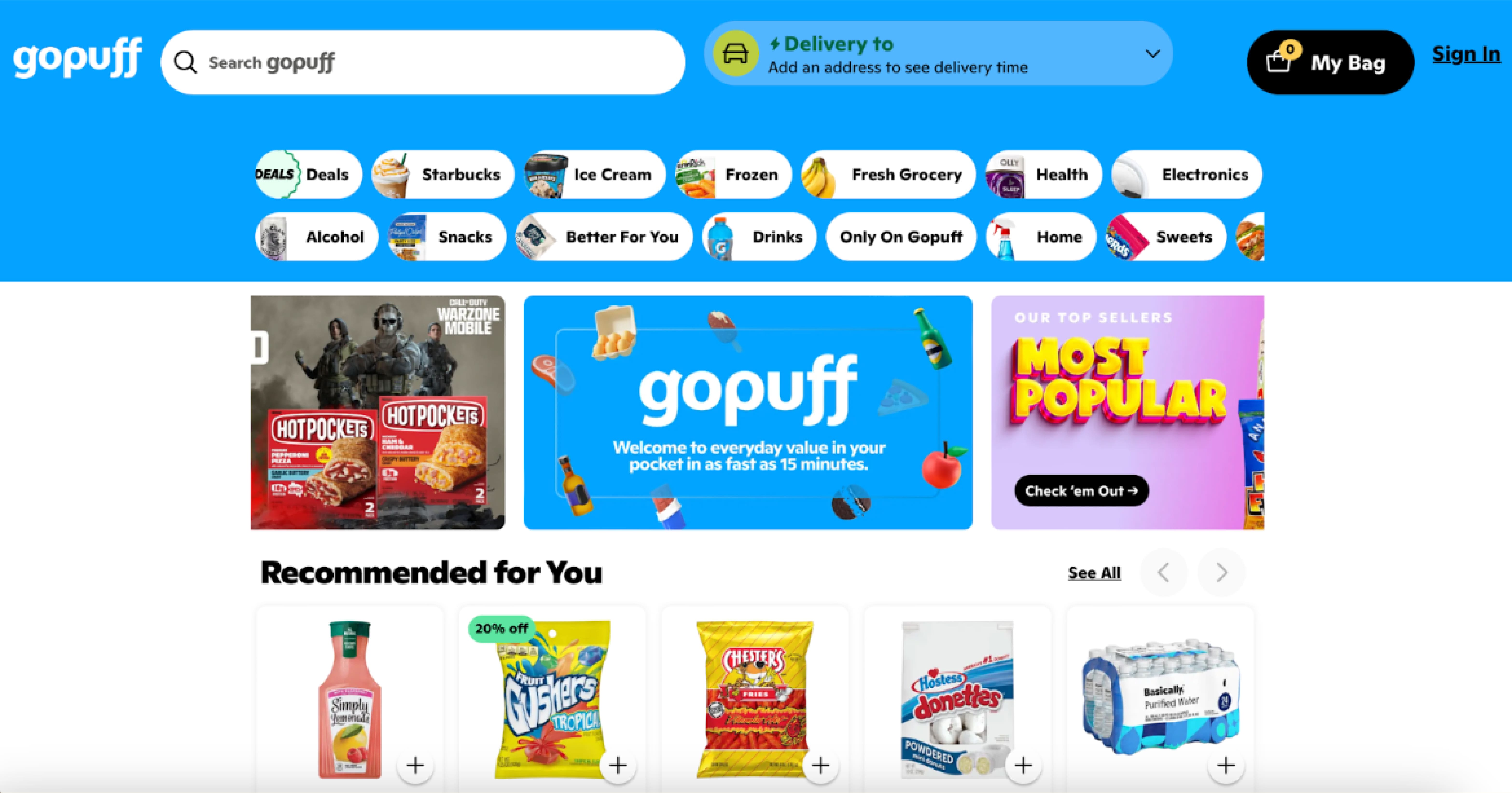
MindTales main page

At MindTales, our primary goal was to enhance users’ well-being. The Intobi team undertook a comprehensive design cycle, beginning with the minimum viable product (MVP) and advancing to the launch of an enhanced version. Our user-centric approach ensures an improved user experience, thereby increasing the business value we provide.

Conclusion

This article explores the intricate process of developing a meditation app, from conceptualizing and designing to coding and launching. We discovered the challenges and opportunities, offering a digital solution that meets the needs of today’s users and elevates their path to inner tranquility. Whether you’re a developer, an enthusiast, or an entrepreneur, this guide will provide valuable insights into creating a meditation app that resonates deeply with its users.

Want to create your own meditation app? Partner with our software development company, where innovation meets expertise. Contact us today to start building an effective meditation app that stands out and makes a difference. Let’s create something extraordinary together!

FAQ

How to create a meditation app?

Creating a meditation app involves several steps: research and planning, UI/UX design, development, content creation, testing, launch, maintenance and updates.

What is the future of meditation apps?

The future of meditation apps looks promising due to the growing awareness of mental health and wellness. These apps are expected to offer more personalized experiences through AI and machine learning. Integration with wearable devices will provide real-time feedback on physiological data.

How much does it cost to build a meditation app?

The cost of building a meditation app varies based on complexity and the development team. Basic apps are less expensive, while advanced ones with personalized recommendations and wearable integrations cost more. High-quality design, testing, marketing, and maintenance also impact the budget.
What is the growth rate of meditation apps?

According to the Statista report, the growth rate of meditation apps is strong, with an expected annual growth rate of 8.49% (2024-2028). This growth is projected to result in a market volume of $7.08 billion by 2028.

What is the best meditation app?

Determining the best meditation app depends on individual preferences and needs. However, widespread and highly-rated meditation apps include Headspace, Calm, Insight Timer, etc. Our team also can boast a great project, Mind Tales.

Food Delivery App Development: Features, Process, and Cost

TL;DR

Food delivery apps have changed how people eat, and the market keeps growing. This guide gives an overview of the food delivery app market, the main reasons to build one, and 10 examples of leading apps such as Uber Eats, DoorDash, and Deliveroo. It then explains how to create a food delivery app step by step, the top revenue models, essential features, development tools, and the costs involved.

Make a summary of this article with AI:

It is well-known that convenience reigns supreme. The evolution of technology has not only transformed the way we communicate and work but has also revolutionized how we eat. Among busy schedules and lifestyles, the concept of food delivery brings culinary delights directly to our doorsteps with just a few taps on our smartphones.
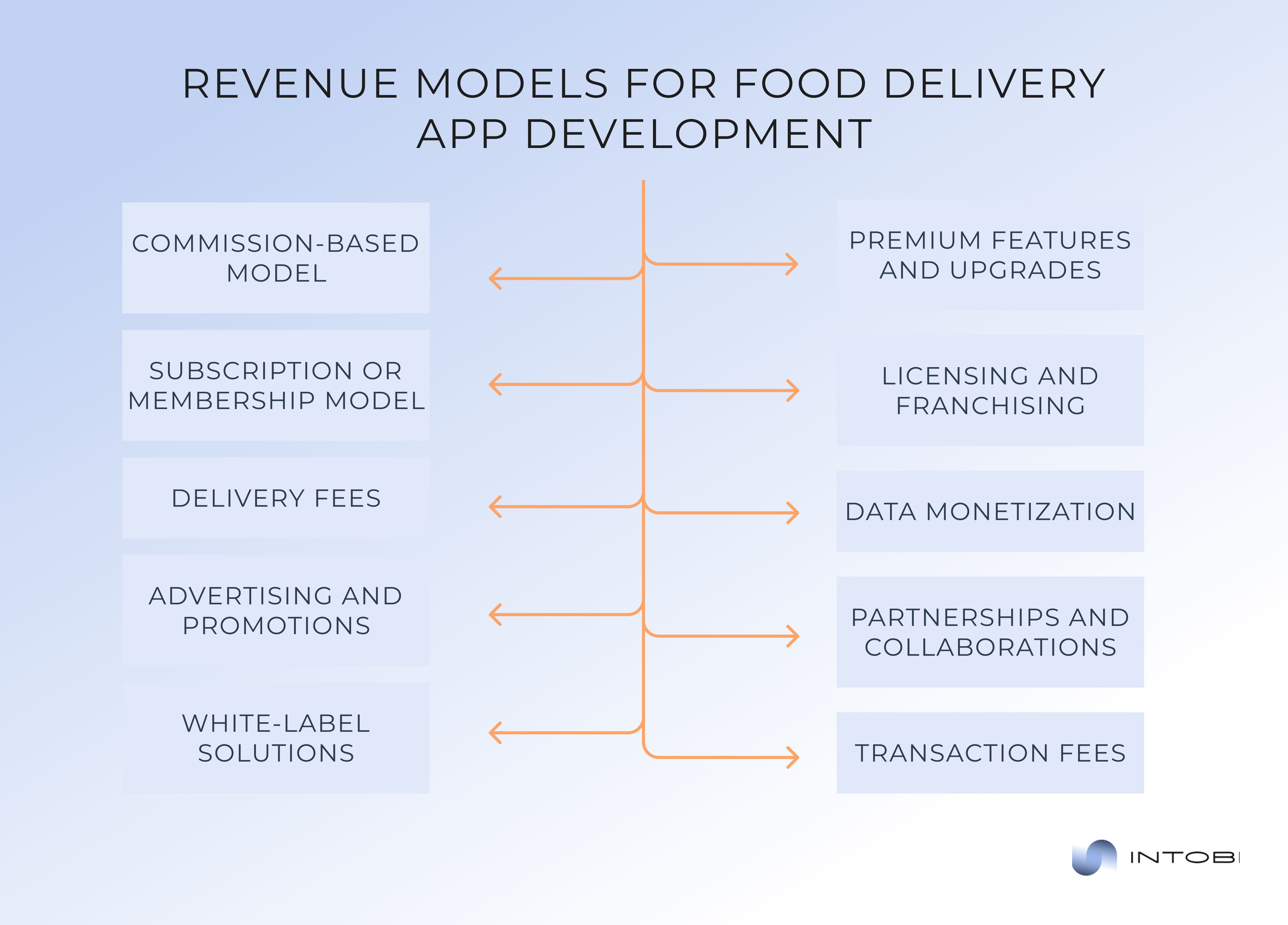
But have you ever wondered how these apps are made? In this article, we’ll walk through the whole food delivery app development process, from developing the idea to ensuring the app works smoothly.

You will also discover the best food delivery app examples, essential features, average development costs, and more. Let’s begin this research!

Overview of the food delivery app development market

The food delivery mobile app industry has witnessed a remarkable transformation over the past decade due to technological advancements and changing consumer preferences. With the rise of smartphones and the increasing demand for convenience, food delivery apps offer users the ability to order their favorite meals online. As a result, the food delivery app development market has experienced significant growth, presenting profitable opportunities for businesses and entrepreneurs alike.

Market trends and growth drivers

One of the primary drivers of growth in the food delivery app development market is the shifting consumer behavior towards online ordering and home delivery. Busy lifestyles and the desire for convenience have moved the adoption of food delivery apps, driving increased demand for innovative solutions. Moreover, the COVID-19 pandemic has further accelerated this trend, as social distancing measures and lockdowns have encouraged more consumers to rely on food delivery services for their dining needs.

Another key trend shaping the food delivery app development market is the integration of advanced technologies such as artificial intelligence (AI), machine learning (ML), and data analytics. These technologies enable app developers to enhance user experiences (UX), optimize delivery routes, and make personalized recommendations based on user preferences. Additionally, features like real-time order tracking, contactless payments, and predictive ordering have become increasingly popular among users, driving the adoption of food delivery apps.

Challenges and opportunities

Despite the rapid growth of the online food delivery app development market, several challenges persist, including fierce competition, regulatory complexities, and operational challenges, such as ensuring timely deliveries and maintaining food quality standards. Moreover, the high commission fees charged by some delivery platforms have led to concerns among restaurant owners regarding profitability and sustainability.

However, among these challenges, considerable opportunities abound for innovation and growth in the food delivery app development market. Emerging trends such as ghost kitchens, dark stores, and vertical integration of delivery services present new avenues for expansion and diversification.
In fact, the online food delivery market is booming. According to Statista report, this market is expected to grow from US$1.23tn in 2024 to US$1.79tn by 2028, with a steady annual growth rate of 10.06%.

The world of online food delivery

Main reasons to create a food delivery app

Online food delivery app development offers considerable benefits for users and businesses involved in the food industry. Some of the key advantages include:

  • Convenience: Food delivery apps provide users with the convenience of ordering food from their favorite shops or restaurants without the need to visit physically. They can browse menus, place orders, and make payments directly through the app.
  • Wide variety of options: These apps typically feature a wide range of restaurants and cuisines, giving users access to a diverse selection of food options. This variety satisfies different tastes and preferences, ensuring something for everyone.
  • Time-saving: With food delivery apps, users can save time that would otherwise be spent traveling to a restaurant, waiting for a table, or waiting for their food to be prepared. This is particularly beneficial for busy individuals with limited meal preparation or dining out time.
  • Real-time tracking: Many food delivery apps offer real-time tracking features that allow users to track the status of their orders from the moment they are placed until they are delivered to their doorstep. This transparency gives users peace of mind and helps manage expectations regarding delivery times.
  • Seamless payment options: These apps typically support multiple payment methods, including credit/debit cards, digital wallets, and cash on delivery, making it convenient for users to pay for their orders. This flexibility enhances the overall user experience and eliminates the hassle of handling money.
  • Personalized recommendations: Food delivery apps can use data analytics and user preferences to offer customized recommendations, suggesting restaurants and dishes based on past orders, ratings, and reviews. This personalization enhances user engagement and encourages repeat usage of the app.
  • Increased revenue for restaurants: Partnering with food delivery apps can significantly improve their visibility and reach, allowing them to attract new customers and increase sales without investing in additional infrastructure or marketing efforts. This can be particularly beneficial for small and independent restaurants looking to expand their customer base.
  • Cost-effectiveness: Developing a food delivery app can be a cost-effective way for businesses to enter the online food delivery market compared to setting up their delivery infrastructure. By using existing platforms, businesses can save on overhead costs while still reaching a large audience of potential customers.
Interesting

Overall, food delivery app development offers a win-win situation for users and businesses by providing convenience, variety, and efficiency in food ordering and delivery.

10 vivid examples of food delivery app development 

In fact, the convenience of food delivery has revolutionized the way people dine. With food delivery apps, users can satisfy their favorite dishes from the comfort of their homes or offices. These platforms offer diverse cuisines, quick service, and seamless transactions, making them necessary today.

Let’s analyze top food delivery apps and explore their main features and advantages.

Uber Eats

Uber Eats main page

As a branch of the renowned ride-sharing service Uber, it has swiftly become a well-known player in the food delivery industry. Its user-friendly interface allows customers to browse through many restaurant options, conveniently filter by cuisine, price, and dietary preferences, and track their orders in real-time.

Uber Eats’ widespread availability in multiple cities worldwide ensures that users can enjoy a diverse range of cuisines delivered straight to their doorstep. Its integration with the Uber ecosystem ensures seamless payment processing and reliable delivery.

Pros:

  • Extensive restaurant network.
  • Real-time order tracking.
  • Seamless payment integration with Uber.

DoorDash

DoorDash main page

This app has gained popularity for its commitment to fast and reliable food delivery services. The app’s intuitive interface enables users to explore nearby restaurants, read reviews, and place orders effortlessly.

DoorDash’s innovative features, such as scheduled deliveries and group ordering, satisfy the diverse needs of its user base. Moreover, its DashPass subscription service offers users unlimited free deliveries, providing customer loyalty and retention.

Pros:

  • Fast and reliable delivery.
  • Scheduled deliveries and group ordering.
  • DashPass subscription for unlimited free deliveries.

Glovo

Glovo main page

It distinguishes itself by offering more than just food delivery services. In addition to delivering meals from restaurants, Glovo delivers groceries, pharmaceuticals, and other essentials, providing users with outstanding convenience.

Its user-centric approach focuses on delivering orders within minutes, thanks to its vast network of couriers. Glovo’s diverse delivery options and seamless ordering process have contributed to its widespread popularity across various countries.

Pros:

  • Multi-category delivery services.
  • Quick delivery within minutes.
  • Seamless ordering process.

Grubhub

Grubhub main page

First, Grubhub has established itself as a leading food delivery platform in the United States, connecting users with nearby local restaurants. Its robust search functionality allows users to discover new dining options based on their preferences, including cuisine type, ratings, and delivery time. Grubhub’s partnership with restaurants enables users to access exclusive deals and discounts, enhancing the value proposition for its customers.

Pros:

  • Extensive restaurant network in the United States.
  • Advanced search filters.
  • Exclusive deals and discounts.

Swiggy

Swiggy main page

This app has revolutionized food delivery in India with its innovative features and exceptional service quality. The app’s lightning-fast delivery and vast restaurant network have made it a preferred choice among Indian consumers. Swiggy’s robust technology infrastructure ensures efficient order management and real-time tracking, providing users with a seamless dining experience.

Pros:

  • Lightning-fast delivery.
  • Vast restaurant network in India.
  • Efficient order management and tracking.

Want to boost your delivery services?

Contact us

Deliveroo

Deliveroo main page

It prioritizes quality and variety, offering users access to premium dining experiences from top restaurants. Its curated selection of restaurants ensures that users can discover secret gems and be satisfied with gourmet cuisine delivered to their doorstep. Deliveroo’s focus on quality extends to its delivery service, with dedicated riders ensuring timely and professional delivery of orders.

Pros:

  • Curated selection of premium restaurants.
  • Dedicated riders for professional delivery.
  • Emphasis on quality and variety.

Just Eat

Just Eat main page

Within various top food delivery apps, Just Eat is a one-stop destination for users seeking a wide array of dining options. Its extensive restaurant network spans multiple cuisines and price ranges, satisfying diverse tastes and preferences. Just Eat’s user-friendly interface and streamlined ordering process make it easy for customers to find and order their favorite dishes with minimal effort.

Pros:

  • Various dining options.
  • User-friendly interface.
  • Streamlined ordering process.

Foodpanda

Foodpanda main page

This food delivery app has emerged as a notable player in the food delivery market, particularly in Asia and Eastern Europe. Its partnership with local restaurants enables users to explore authentic flavors and regional specialties. Foodpanda’s commitment to customer satisfaction is evident through its reliable delivery service and responsive customer support, ensuring a seamless dining experience for users.

Pros:

  • Partnership with local restaurants for authentic flavors.
  • Reliable delivery service.
  • Responsive customer support.

Instacart

Instacart main page

In fact, Instacart revolutionizes grocery shopping by offering on-demand delivery of groceries and household essentials from local stores. Its user-friendly app allows customers to browse a wide selection of products, add them to their cart, and schedule deliveries at their convenience. Instacart’s partnership with various retailers ensures access to fresh produce and quality products, making grocery shopping hassle-free for users.

Pros:

  • On-demand delivery of groceries and essentials.
  • Wide selection of products from local stores.
  • Convenient scheduling options.

Gopuff

Gopuff main page

This app stands out for its unique model of delivering convenience store items and everyday essentials directly to users’ doors. Its extensive inventory includes snacks, beverages, household goods, and more, making it a convenient solution for last-minute needs. Gopuff’s lightning-fast delivery service ensures that users receive their orders within minutes, enhancing its appeal among busy urban dwellers.

Pros:

  • Delivery of convenience store items and essentials.
  • Extensive inventory.
  • Lightning-fast delivery service.

Thus, suppose you’re ordering a gourmet meal from a premium restaurant or stocking up on groceries for the week. In that case, these platforms satisfy your needs and preferences, enhancing the overall dining experience.

Now, let’s discover how to make similar applications.

How to create a food delivery app?

A detailed process extends to developing and maintaining these food delivery apps, ensuring seamless user experiences and operational excellence. Let’s move through the stages of food delivery app development, from inception to ongoing support.

Crafting your own food delivery app

1. Specification and discovery

Every successful food delivery mobile app development begins with a clear understanding of user needs, market trends, and technological capabilities. During this phase, the development team conducts thorough research to gather insights and define project requirements.

Understanding user personas, preferences, and pain points is crucial. If busy professionals seek quick meal options or families desire restaurant-quality food at home, identifying target demographics helps tailor the app’s features and functionality.

Example of buyer persona

Market analysis delves into competitors’ strengths and weaknesses, identifying opportunities for differentiation. Exploring emerging trends such as contactless delivery, customization options, and integration with smart devices informs strategic decision-making.

Technical feasibility assessment evaluates the viability of implementing desired features within the app’s framework. Considerations include scalability, data security, payment integration, and compatibility across multiple platforms.

2. UI/UX design

User interface (UI) and user experience (UX) design are vital in shaping the app’s usability, engagement, and brand identity. Designers collaborate closely with developers and stakeholders to translate concepts into visually appealing and intuitive interfaces.

A seamless user journey is critical, from browsing menus to placing orders and tracking deliveries. Streamlined navigation, visually distinct call-to-action (CTA) buttons, and intuitive search functionalities enhance user satisfaction and encourage repeat usage.

Visual elements such as color schemes, typography, and imagery are carefully selected to evoke desired emotions and reflect the app’s brand identity. Consistency in design elements across platforms fosters a cohesive UX.

Accessibility features ensure inclusivity and provide users with diverse needs and preferences. Clear labeling, adjustable font sizes, and voice-activated commands enhance usability for all users.

3. Development 

With specifications finalized and designs approved, food delivery app development commences, bringing the app to life. Agile methodologies allow cross-functional teams to collaborate iteratively, adapting to evolving requirements and feedback.

Backend development focuses on building a robust infrastructure capable of handling concurrent user interactions, processing orders in real time, and managing inventory and delivery logistics. Scalability and reliability are crucial to accommodate fluctuating demand.

In turn, frontend development transforms design mockups into interactive interfaces, using frameworks like React Native or Flutter for cross-platform compatibility. Responsive layouts adapt seamlessly to various screen sizes and orientations, ensuring a consistent user experience across devices.

Moreover, integrating third-party services enriches the app’s functionality, from payment gateways and location-based services to customer relationship management tools and analytics platforms. API-driven architecture facilitates seamless data exchange and interoperability.

For restaurants and delivery businesses with unique workflows, custom software development can help build tailored ordering, payment, tracking, and logistics features.

4. QA and optimization

Quality assurance (QA) is a continuous process spanning multiple stages of development, ensuring that the app meets performance, usability, security, and regulatory standards. Rigorous testing protocols identify and rectify defects before deployment.

Functional testing validates core functionalities such as user registration, order placement, payment processing, and real-time tracking. Regression testing safeguards against unintended consequences of code changes, maintaining stability and reliability.

On the other hand, performance testing evaluates the app’s responsiveness, scalability, and load-bearing capacity under simulated usage scenarios. Optimization techniques such as code refactoring, caching, and server-side rendering enhance speed and efficiency.

Next, security testing assesses vulnerabilities such as data breaches, injection attacks, and authentication flaws. To safeguard sensitive information, encryption, firewalls, and access controls are implemented. Compliance with data protection regulations such as GDPR (The General Data Protection Regulation) and CCPA (The California Consumer Privacy Act) is ensured.

5. Maintenance and support

Even after deployment, the food delivery app development journey continues through ongoing maintenance and support. Proactive monitoring, timely updates, and responsive customer service are essential to address evolving user needs and technological advancements.

Regular maintenance activities include bug fixes, performance optimization, security patches, and compatibility updates. Feedback mechanisms such as user reviews, analytics, and customer surveys inform iterative improvements.

Scalability planning anticipates future growth opportunities, aligning infrastructure, resources, and workflows accordingly. Cloud-based solutions offer flexibility and scalability to accommodate changing demand patterns.

Customer support channels such as in-app chat, email, and phone support provide timely assistance and troubleshooting. Knowledge bases, FAQs, and video tutorials empower users to resolve common issues independently.

Want to transform your food business?

Contact us

Top revenue models for on demand food delivery app development

Revenue models for food delivery app development cover various strategies that enable app developers and businesses to generate income from their platforms. Here are some common revenue models employed in the food delivery mobile app development:

Common revenue models for food delivery app development

Commission-based model

Under this model, the food delivery app charges restaurants a commission for each order placed through the platform. The commission percentage typically ranges from 10% to 30% of the order value. Third-party aggregator apps like Uber Eats, DoorDash, and Grubhub widely use this model.

Subscription or membership model

Some food delivery apps offer subscription-based plans or memberships to users, providing benefits such as free delivery, exclusive discounts, and priority service for a monthly or annual fee. This model encourages customer loyalty and generates recurring revenue streams. Examples include DashPass by DoorDash and Swiggy Super by Swiggy.

Delivery fees

In addition to commission charges, food delivery apps may charge users for each order delivered to their doorstep. The delivery fee can vary based on distance, time of day, and order value. Offering options for free delivery above a specific order value can incentivize users to spend more.

Advertising and promotions

Food delivery apps can monetize their platforms by offering advertising space to restaurants, brands, and local businesses. Restaurants may pay for featured placements or sponsored listings to increase their visibility and attract customers. Additionally, apps can run targeted promotions and sponsored campaigns to promote specific deals or menu items.

White-label solutions

White-label food delivery app development involves creating custom-branded apps for restaurants or businesses that want to offer delivery services under their brand. Developers charge upfront fees for app development, customization, and ongoing maintenance, providing a one-time revenue stream for their services.

Premium features and upgrades

Some food delivery apps charge users for premium features or upgrades. These features may include faster delivery options, advanced order tracking, and customization tools. Apps can generate extra revenue by providing value-added services while enhancing the user experience.

Licensing and franchising

Larger food delivery app companies may explore licensing or franchising opportunities to expand their reach into new markets. By licensing their technology and brand to local partners, they can generate revenue through franchise fees, royalties, and revenue-sharing agreements.

Data monetization

Food delivery apps collect valuable data on user preferences, ordering habits, and market trends. They can monetize this data by selling anonymized insights to restaurants, food manufacturers, and other businesses seeking to better understand consumer behavior and market trends.

Partnerships and collaborations

Such apps can enter into strategic partnerships and collaborations with other businesses to offer complementary services and generate additional revenue streams. For example, you can partner with grocery stores, pharmacies, or liquor stores to offer delivery services for a broader range of products.

Transaction fees

Some food delivery apps charge transaction fees for processing payments made through the platform. This fee may be a percentage of the order value or a flat fee per transaction. By facilitating secure and convenient payment processing, apps can generate revenue while providing value to users and restaurants.

Overall, a food delivery app’s success depends on selecting the right revenue model that aligns with the app’s target audience, market dynamics, and competitive landscape. By diversifying revenue streams and continuously innovating, food delivery apps can maximize profitability and sustain long-term growth in the competitive market.

Essential features for online food delivery app development

Developing a successful app requires careful consideration of essential features that satisfy user needs and pain points while ensuring seamless operations for both customers and restaurants. Below are some key features that are crucial for online food delivery app development:

User registration and profile management

Allow users to create accounts easily using email, phone number, or social media login. Include options to edit profiles, manage delivery addresses, and view order history.

User registration by Swiggy

Intuitive restaurant search and menus

Implement a robust search functionality that enables users to discover restaurants based on cuisine, location, ratings, and special offers. Provide detailed menus with images, descriptions, and prices for each item.

Ordering and checkout process

Streamline the ordering process with a user-friendly interface that allows customers to add items to their cart, customize orders, and specify delivery preferences. Ensure secure payment processing and multiple payment options, including credit/debit cards, digital wallets, and cash on delivery.

Real-time order tracking

Offer real-time tracking of orders from confirmation to delivery, providing users with updates on the status of their orders and estimated delivery times. Integration with GPS (Global Positioning System) technology allows customers to track the delivery driver’s location on a map.

Reviews and ratings

Enable users to leave reviews and ratings for restaurants and individual dishes, helping others make informed decisions. Implement a rating system for delivery drivers to maintain service quality and accountability.

Push notifications

Keep users informed about order status, promotions, and special offers through push notifications. Personalize notifications based on user preferences and past orders to enhance engagement.

Loyalty programs and rewards

Encourage user retention by offering loyalty programs, rewards, and discounts for frequent orders or referrals. Implement a point-based system where users earn rewards for each purchase, motivating them to return to the app.

Responsive customer support

Provide timely and responsive customer support through multiple channels, including in-app chat, email, and phone. Address user inquiries, complaints, and feedback promptly to enhance customer satisfaction.

Support service by Just Eat

Restaurant partner dashboard

Offer a dedicated dashboard for restaurant partners to manage menu listings, update prices, and track orders. Provide analytics and reporting tools to help restaurants monitor performance and make data-driven decisions.

Delivery driver management

Create a separate interface for delivery drivers to receive order assignments, navigate delivery routes, and update order status. Include features for driver tracking, earnings tracking, and communication with support staff.

Advanced search filters

Enhance the user experience with advanced search filters, allowing users to refine restaurant options based on criteria such as price range, dietary preferences, delivery time, and distance.

Multi-language and multi-currency support

Satisfy a diverse user base by offering support for multiple languages and currencies. Allow users to switch between languages and currencies seamlessly within the app.

Multi-language option by Deliveroo

Social media integration

Enable users to share their dining experiences, order updates, and promotions on social media platforms. Integrate social sharing buttons and referral links to encourage user-generated content and word-of-mouth marketing.

In-app chat and feedback

Facilitate communication between users, restaurants, and customer support through in-app chat features. Allow users to provide feedback on orders, restaurants, and delivery experiences directly within the app.

Smart recommendations and personalization

Utilize machine learning algorithms to analyze user behavior and preferences and offer personalized recommendations for restaurants and dishes. Use data analytics to identify trends and tailor recommendations to individual users’ tastes.

Incorporating these essential features into your online food delivery app development ensures a comprehensive and user-centric experience for customers while empowering restaurants and delivery drivers with efficient management tools. By focusing on usability, reliability, and innovation, you can create a competitive advantage and drive success in the food delivery market.

Progressive tools used for food delivery app development

Advanced tools are crucial in developing food delivery apps, enabling developers to create scalable and user-friendly applications. Our experts prepared a table of some cutting-edge tools commonly used in food delivery app development:

CategoryTools
Integrated development environments (IDEs) and text editorsVisual Studio Code, Atom, Sublime Text
Programming languagesJavaScript (React Native, Angular, Vue.js), HTML, CSS, Node.js, Python (Django, Flask), Ruby (Ruby on Rails), Java (Spring Boot), Go
Frameworks and librariesReact Native, AngularJS, Vue.js, Bootstrap, Express.js, Django Rest Framework, Flask-RESTful, Ruby on Rails, Spring Boot
Database management systemsMySQL, PostgreSQL, MongoDB
Application programming interfaces (APIs) and software development kits (SDKs)Stripe, PayPal, Braintree, Google Maps API, Mapbox, Firebase Cloud Messaging (FCM), OneSignal, JSON Web Tokens (JWT), OAuth
Version controlGit (GitHub, GitLab, Bitbucket)
Project management and collaborationJira, Trello, Asana, Slack
Continuous integration/continuous deployment (CI/CD)Jenkins, Travis CI, CircleCI
Design toolsAdobe XD, Sketch, Figma
TestingJest, PyTest, Selenium, Cypress, Postman
Deployment and hostingAmazon Web Services (AWS), Google Cloud Platform (GCP), Microsoft Azure, Heroku, Firebase, Docker
Monitoring and analyticsGoogle Analytics, Mixpanel, New Relic
SecuritySSL Certificates, OWASP guidelines, Encryption libraries
DocumentationSwagger/OpenAPI, API Blueprint

By employing these progressive tools and services, food delivery app developers can accelerate the development process, enhance app functionality, and deliver exceptional user experiences that drive engagement and business growth.

Food delivery app development cost

The cost of developing a food delivery mobile app can vary significantly depending on various factors such as features, complexity, platform (iOS, Android, or both), design, development team location, and more. However, our team can provide you with an average estimate based on industry standards.

  • Basic features: A basic food delivery app typically includes user registration, menu browsing, order placement, order tracking, payment integration, and push notifications. Development costs for such an app can range from $20,000 to $50,000.
  • Advanced features: The cost to add more advanced features, such as real-time order tracking, customer reviews and ratings, multiple payment options, loyalty programs, social media integration, etc., can range from $50,000 to $100,000 or more.
  • Design: A well-designed app can attract more users. Design costs can vary based on the design’s complexity and the designers’ expertise. Expect to allocate 20-30% of the total development cost for design.
  • Platform: Developing iOS and Android platforms will increase costs compared to developing a single platform. Android apps often have slightly higher development costs due to the various devices and OS versions they support.
  • Backend development: Building a robust backend infrastructure to handle user data, orders, payments, and other functionalities is essential. The backend development cost depends on the complexity of the app and the scalability required. It can range from $20,000 to $50,000 or more.
  • Testing and quality assurance: Testing is crucial to ensure the app functions smoothly across different devices and platforms. Allocate around 15-20% of the total development cost for testing and quality assurance.
  • Maintenance and support: After the app is launched, you’ll need to allocate resources for ongoing maintenance and support, which usually costs around 15-20% of the total development cost annually.

It is essential to understand that actual food delivery app development costs may vary based on your specific requirements and the rates charged by the development team you choose. Discussing your project in detail with development agencies or freelancers is critical to getting accurate cost estimates.

Let's discuss

Contact Us

Our expertise in food ordering app development

Building a food ordering app is like solving a fun puzzle. At Intobi, we use our creativity and skills to make ordering food easier for restaurants and customers. Let’s discuss our development experience based on the following exciting project.

Case study: Myfood

Myfood main page

Myfood is a permaculture business that designs greenhouses for citizens who want to produce food by combining the most sustainable and efficient production techniques on a reduced surface.

Challenge:

At first, the client hired us to carry out small web projects, but it eventually turned into a full-time and long-term cooperation. The main goal was to refine the web application, improve existing functionality, and add new features.

Solution:

The first step was to migrate Shopify from WP CMS to Shopify CMS + and add new logic. The second step was to migrate the web application from outdated .NET technology to the latest .NET 5 version and add new functionalities. The third step was to continue developing the web application and adding new features.

Results:

We can confidently say that the Myfood web application has become much more stable and fresh, with brand-new features. Thus, Myfood delivers an intelligent greenhouse, allowing everyone to reconnect quickly and effectively with their food.

Final thoughts

Food delivery mobile app development has become an essential part of our modern lifestyle, offering remarkable convenience and variety to users worldwide. Through innovative technology and user-friendly interfaces, such apps have reshaped how we think about dining, making it easier to satisfy our desires without stepping outside.

So, the next time you order your favorite meal through a food delivery app, take a moment to appreciate the incredible work that goes into making it all possible. And as you enjoy your delicious feast, remember that it’s all thanks to the creativity and dedication of the developers behind the scenes.

Are you looking to develop your food delivery app? Our software development company specializes in custom solutions tailored to your needs. Contact us today to learn more and start your journey to business success!

FAQ

What technology makes online ordering of food possible?

Web development technologies (HTML, CSS, and JavaScript) enable the creation of attractive interfaces for customers to browse menus/place orders. Backend technologies like server-side scripting languages (e.g., PHP, Python, Ruby) handle order processing, user authentication, and database management.

How to create a food delivery app?

Conduct market research to understand user needs and preferences. Define the app’s features, including user registration, menu browsing, etc. Design an intuitive and attractive app interface. Thoroughly test the app for usability, functionality, and security before launching it publicly.

How to create a food delivery app in Android Studio?

Set up Android Studio and create a new project. Design the user interface using XML layout files. Test the app on different Android devices to ensure responsiveness. Prepare the app for deployment to the Google Play Store by generating signed APKs and following Google’s submission guidelines.

How to start a food delivery business?

Starting a food delivery business involves market research, business plan development, obtaining licenses, building restaurant partnerships, developing a delivery app or partnering with platforms, hiring and training drivers, and launching a marketing campaign.

Software Development Team Structure: Optimizing Efficiency

TL;DR

The structure of a software development team defines how efficiently it works and how well it delivers. This article explains why a modern team structure matters and compares three typical models – generalist, specialist, and hybrid. It also covers what to consider when building a team, from project complexity and deadlines to budget, and the key roles every software development team needs.

Make a summary of this article with AI:

The composition of a software development team defines its efficiency, adaptability, and, ultimately, its ability to deliver outstanding products. This structure is the cornerstone upon which innovation thrives and projects flourish. From startups to established enterprises, the software product development team structure can make all the difference between stagnation and breakthrough.

For businesses building tailored digital products, custom software development requires a team structure that matches project complexity, goals, and required expertise.

In this article, we will show you the intricacies of software development team structures, exploring the diverse types, key characteristics, team roles, best practices, and more. Let’s get started!

Why is it essential to establish a modern software development team structure?

Composing a modern software development team structure is crucial in today’s technological landscape. Here are several reasons why this is essential:

  1. Efficiency and productivity: A well-structured team can significantly enhance efficiency and productivity. By drafting clear software development team roles and responsibilities, tasks are completed more effectively, avoiding duplication of efforts and reducing unnecessary delays.
  2. Specialization and expertise: Modern software development often requires diverse skills. By structuring teams appropriately, you can ensure that individuals with specific expertise work together, fostering collaboration and enabling the team to tackle complex problems more effectively.
  3. Innovation and creativity: Cross-functional teams with diverse perspectives foster innovation and creativity. Modern team structures create an environment where fresh ideas can flourish by bringing together individuals with different backgrounds, experiences, and skill sets. This leads to innovative solutions and competitive advantages.
  4. Alignment with Agile methodologies: Agile methodologies, such as Scrum and Kanban, have become increasingly popular in software development due to their focus on iterative development and continuous improvement. Establishing a modern team structure facilitates the implementation of Agile practices, enabling teams to deliver high-quality software incrementally while remaining responsive to customer feedback.
  5. Scalability and growth: Having a scalable team structure becomes essential as software projects grow in complexity and scope. A modern team structure can accommodate growth by providing frameworks for adding new team members. This establishes processes for knowledge transfer and maintaining continuity across different project phases.

In general, establishing a successful software development team structure is essential for maximizing efficiency, fostering innovation, enabling adaptability, and delivering high-quality software. By employing modern team structures, companies can position themselves for success in an increasingly competitive market.

Exploring 3 typical software development team structures

The structure of these teams significantly influences their ability to deliver high-quality software products. There are various approaches to organizing software development teams, each with unique characteristics and implications.

Basic types of software development team structures

Let’s explore three types of software development team structures: generalist, specialist, and hybrid.

1. Generalist team structure 

In a generalist team structure, members possess a broad range of skills and can handle various aspects of software development. These teams are characterized by their versatility and adaptability, as team members can perform multiple roles within the project.

Generalist teams typically consist of individuals with diverse skill sets, including programming, design, testing, and project management. Each team member can contribute to different stages of the development process, allowing for flexibility in task allocation and resource utilization. Communication and collaboration are vital in generalist teams to ensure smooth coordination and knowledge sharing among team members.

ProsCons
Flexibility in task allocationLack of specialized expertise
Easy adaptation to changing needsPotential for skill gaps in specific areas
Improved collaboration and communicationLimited depth of knowledge in certain domains

2. Specialist team structure

In a specialist team structure, each team member has expertise in a specific area of software development. These teams are highly focused and excel in their specialized domains, aiming to achieve excellence through deep knowledge and skill mastery.

Specialist teams consist of experts in particular fields such as frontend development, backend development, UI/UX (user interface/user experience) design, quality assurance, etc. Each team member is assigned tasks according to their specialized skills, leading to high proficiency and efficiency within their respective areas. Collaboration within specialist teams often involves integrating individual contributions into a cohesive whole, emphasizing the importance of clear communication and shared goals.

ProsCons
High expertise and specializationLimited flexibility in task allocation
Efficient problem-solving within specialized domainsDependency on other teams for cross-functional tasks
Deep knowledge and skill masteryPotential for communication barriers between specialists

3. Hybrid team structure 

A hybrid team structure combines elements of both generalist and specialist approaches, aiming to leverage each team’s strengths while decreasing their weaknesses. These teams seek to balance versatility and expertise by organizing members into cross-functional teams with complementary skill sets.

Cross-functional teams within the hybrid structure encourage collaboration and knowledge sharing across domains, fostering innovation and holistic problem-solving approaches.

Interesting

Effective communication and clear role definitions are essential for the success of hybrid teams, enabling seamless coordination and alignment of efforts toward common objectives.

ProsCons
Versatility combined with expertiseComplexity in managing diverse skill sets
Efficient utilization of resourcesPotential for role ambiguity within teams
Enhanced collaboration and innovationRequires effective communication and coordination 

Thus, each type of software development team structure offers distinct advantages and challenges, and the choice between them depends on project requirements, organizational culture, and team dynamics.

What should be considered when building a software product development team structure?

In fact, creating a well-defined software team structure is crucial for project success. Several key factors should shape your team structure to ensure efficiency, collaboration, and timely delivery. Let’s check these elements and explore how they influence the formation of an effective software development team.

Critical components of software product development team structure

Complexity of your project

The complexity of a software project plays a crucial role in determining the optimal team structure. Projects varying in complexity, from simple web applications to intricate enterprise systems, demand different skill sets and organizational approaches.

For mobile-first products, mobile app development services can help define the right team structure for iOS, Android, or cross-platform delivery.

For relatively straightforward projects, a more minor team comprising universal developers may suffice. These teams can adapt quickly to changes, maintain clear communication channels, and deliver results efficiently. On the other hand, complex projects necessitate specialized expertise and a more hierarchical team structure. Roles such as software architects, database administrators, quality assurance engineers, and project managers become vital in guiding complex requirements and technical challenges.

Tailoring the team structure to match the project’s complexity ensures that each team member’s skills are utilized effectively, minimizing blockages and maximizing productivity throughout the development lifecycle.

Project deadlines

Time constraints often dictate the pace and intensity of software development projects. If you’re racing to meet a market deadline or attaching to a client’s timeline, project deadlines significantly influence team structure.

Adopting an agile team structure proves beneficial in situations where time is of the essence. Agile methodologies promote iterative development cycles, enabling teams to deliver incremental updates while remaining responsive to changing requirements. Cross-functional teams collaborate closely to prioritize tasks and streamline the development process.

Alternatively, a traditional hierarchical structure may suit projects with more flexible timelines. Here, project managers oversee scheduling and resource allocation, ensuring that milestones are met within the designated timeframe.

Adapting the team structure to align with project deadlines fosters a sense of urgency and accountability among team members, driving them toward successful project completion.

Team collaboration

Effective collaboration lies at the heart of successful software development initiatives. A cohesive team structure that promotes communication, knowledge sharing, and collective problem-solving enhances productivity and morale.

Cross-functional teams foster innovation and creativity. By breaking down silos and encouraging open dialogue, team members gain a comprehensive understanding of project objectives and dependencies. Tools such as version control systems, collaborative IDEs (International Data Exchange Systems), and project management platforms further facilitate communication and collaboration, regardless of geographical barriers.

Moreover, establishing clear software development team roles and responsibilities within the team structure enhances accountability and decreases conflicts. By defining workflows, establishing feedback mechanisms, and conducting regular team meetings, project teams can overcome challenges collaboratively and achieve shared goals efficiently.

Project expenses

Managing project expenses is important in ensuring the viability and profitability of software development initiatives. The team structure directly impacts resource allocation, budget planning, and cost management strategies.

For cost-sensitive projects, lean team structures comprising a core group of skilled professionals offer a cost-effective approach. By minimizing overheads associated with larger teams, companies can allocate resources judiciously and optimize project budgets. Additionally, employing outsourcing or distributed team models can further reduce expenses while tapping into global talent pools.

Conversely, investing in a comprehensive team structure may yield long-term benefits for projects with ample financial resources. Allocating funds towards training, infrastructure, and employee bonuses fosters a conducive work environment, attracting top-tier talent and enhancing team morale.

Balancing project expenses with the desired level of expertise and scalability is essential in composing a sustainable team structure that aligns with organizational goals and budgetary constraints.
In conclusion, companies can optimize productivity, foster innovation, and achieve successful project outcomes by carefully considering these factors and adapting the team structure accordingly.

Ready to innovate your business?

Contact us

Key members of a software development team composition

Software product success hinges on more than just lines of code. A well-structured team can make all the difference between a project that meets its goals and one that falls short. In fact, each member brings a unique set of skills and expertise, contributing to the project’s overall success.
Let’s analyze the roles and responsibilities of various members of a software development team structure and how they collaborate to create exceptional software solutions.

Typical software development team

Project manager

The project manager is at the helm of the software development team, tasked with directing the entire development process. Their role involves setting project goals, defining timelines, allocating resources, and ensuring smooth communication among team members.

A proficient project manager excels in risk management, resolving conflicts, and adapting to evolving project requirements. They are the primary point of contact for stakeholders, keeping them informed about project progress and addressing any concerns promptly.

UI/UX designers

User interface (UI) and user experience (UX) designers play crucial software development team roles in creating the product’s look, feel, and functionality. They collaborate closely with stakeholders to understand user needs, preferences, and pain points.

UI designers focus on creating visually appealing interfaces that are intuitive to navigate, while UX designers prioritize user satisfaction by optimizing usability and accessibility. Their designs seamlessly combine aesthetics with functionality, enhancing the overall user experience.

Business analysts

They bridge the gap between technical teams and business stakeholders, ensuring that software solutions align with organizational objectives. They conduct in-depth analysis of business processes, gather requirements, and translate them into actionable tasks for the development team.

Business analysts also play an essential role in identifying opportunities for process improvement and innovation, driving continuous enhancement of software products to meet evolving business needs.

Developers

The basis of any software development team structure is that developers are responsible for bringing the project to life through writing code. It is crucial to recognize that developers come with varying skill sets

Comparison table of development team members

Frontend developers

These developers focus on building user-facing interfaces using technologies like HTML (HyperText Markup Language), CSS (Cascading Style Sheets), and JavaScript. 

Backend developers

In turn, backend developers work behind the scenes, developing server-side logic and database structures to support the application’s functionality.

Full-stack developers

So, full-stack developers possess proficiency in front and backend technologies, enabling them to contribute across the entire development stack.

For projects that require strong frontend, backend, and full-stack expertise, web development services can help assemble the right team to build reliable web products.

Basics of full stack developer

Quality assurance (QA) engineers

QA specialists ensure the software meets quality standards and performs as expected before deployment. They develop comprehensive test plans, conduct functional and regression testing, and identify and report bugs or inconsistencies.

Moreover, QA engineers work closely with developers to resolve issues promptly and maintain the integrity of the software throughout the development lifecycle. Their meticulous attention to detail helps deliver robust, reliable software solutions that delight end-users.

DevOps engineers

They focus on streamlining the development process through automation, collaboration, and continuous integration/continuous deployment (CI/CD) practices. They build and maintain infrastructure, configure deployment pipelines, and optimize workflows to accelerate the delivery of software updates.

DevOps engineers foster a culture of collaboration between development and operations teams, enabling faster feedback loops, shorter release cycles, and improved overall efficiency.

DevOps team

Technical writers

These writers play a crucial role in creating documentation accompanying the software, including user manuals, API (application programming interface) documentation, and release notes. They clarify complex technical concepts in clear, concise language accessible to end-users and stakeholders.

Technical writers collaborate closely with developers and QA engineers to ensure that documentation remains accurate and up-to-date throughout the software development lifecycle.

System administrators

They are responsible for configuring, maintaining, and securing the software’s infrastructure. System administrators manage servers, databases, networks, and security protocols to ensure optimal performance, reliability, and data integrity.

These administrators collaborate closely with DevOps engineers to provision resources, monitor system health, and troubleshoot issues to minimize downtime and maximize uptime.

Step-by-step guide to creating a successful software development team structure

Building a successful software development team structure requires careful planning, clear communication, and a commitment to continuous improvement. In this detailed guide, we’ll analyze the key components necessary for creating a thriving team poised for success.

1. Understand project requirements

Before creating your team structure, it is crucial to have a comprehensive understanding of the project requirements. This involves gathering stakeholder input, analyzing the scope of work, and identifying the skills and expertise needed to accomplish the project goals. With a clear understanding of the project requirements, you can form a team equipped to tackle the challenges ahead.

2. Determine the team size

Once you fully grasp the project requirements, it is time to determine the ideal team size. Consider factors such as the project’s complexity, the completion timeframe, and the availability of resources. While larger teams may offer more diverse skill sets, smaller teams often benefit from increased agility and streamlined communication. Strive to strike a balance that optimizes productivity without sacrificing efficiency.

3. Define roles and responsibilities

With the team size established, define clear software development team roles and responsibilities for each team member. This ensures that everyone understands their contributions to the project and minimizes the risk of duplication or confusion.

Roles may include developers, designers, testers, project managers, and other specialized positions dictated by the project requirements. By clearly defining expectations from the outset, you set the stage for collaboration and accountability.

4. Choose a suitable methodology

The proper development methodology is essential for guiding the team’s workflow and decision-making processes. When you opt for Agile, Scrum, Kanban, or another methodology, choose one that aligns with the project requirements and team dynamics.

The Agile approach, for example, emphasizes adaptability and iterative development, making them well-suited for projects with evolving requirements or tight deadlines. Whatever methodology you choose, ensure that it fosters transparency, collaboration, and continuous improvement.

5. Form cross-functional teams

These teams bring together individuals with diverse skills and expertise to tackle complex problems from multiple perspectives. Rather than siloing team members into specialized software development team roles, encourage collaboration and knowledge sharing across disciplines. This fosters creativity and innovation and enables the team to adapt more readily to changing priorities and challenges.

Cross-functional team

6. Establish effective communication channels

Compelling communication lies at the heart of any successful team. Establish clear communication channels facilitating collaboration, information sharing, and feedback loops. This may include regular team meetings, daily stand-ups, virtual collaboration tools, and software development management. Encourage open dialogue and active listening to ensure everyone feels heard and valued within the team.

7. Provide necessary resources

Equip your team with the tools, technologies, and resources to succeed. This may involve providing access to development environments, training opportunities, mentorship programs, and support from other departments within the company. Investing in your team members’ growth and development enhances their capabilities and fosters a culture of trust and empowerment.

8. Promote a culture of continuous improvement

You can encourage a growth perspective within the team by promoting a culture of continuous improvement. Celebrate successes, learn from failures, and regularly solicit feedback from team members and stakeholders. Create opportunities for professional development, skill-building, and knowledge sharing to foster individual and collective growth. By assuming a continuous learning and adaptation culture, your team will stay ahead of the curve in a rapidly evolving industry.

9. Encourage autonomy and accountability

It is important to empower team members to take ownership of their work and make decisions autonomously within their areas of expertise. Foster a sense of accountability by setting clear goals, defining success metrics, and holding team members responsible for their contributions. 

Encourage self-organization and trust your team to find creative solutions to challenges as they arise. By granting autonomy while maintaining accountability, you empower your team to thrive in a dynamic environment.

10. Adapt as necessary

Finally, remain flexible and adaptable in response to changing circumstances, feedback, and lessons learned. Regularly reassess the team structure, processes, and goals to ensure they stay aligned with the evolving needs of the project and the organization. Be willing to make course corrections, pivot strategies, and embrace new opportunities. By staying agile and responsive, your team will remain resilient and capable of overcoming any obstacle.

So, with each step outlined in this block, you can empower your team to tackle challenges head-on, adapt to change, and deliver exceptional results in software development.

Looking for expert development guidance?

Let’s chat

Basics of Agile software development team structure

The Agile approach emphasizes iterative development, collaboration, and customer feedback, enabling teams to respond swiftly to changing requirements and deliver high-quality software. However, to tackle Agile’s full potential, it’s crucial to establish a well-structured team that aligns with Agile principles and practices.

Let’s compare the Agile software development team structure with the traditional team composition.

Traditional team vs. Agile team

A typical software development team structure is often hierarchical, clearly illustrating roles and responsibilities. Teams typically follow the Waterfall model, where each phase of the development cycle (requirements gathering, design, development, testing, deployment) is completed sequentially.

On the other hand, Agile teams are characterized by their flexibility, collaboration, and iterative approach to development. The team structure is often flat, encouraging communication and shared ownership of tasks. Agile methodologies like Scrum and Kanban promote incremental software delivery, allowing for continuous improvement based on customer feedback.

Below is the comparison table of these software development team structures.

AspectTraditional team structureAgile team structure
Team structureHierarchicalFlat and cross-functional
WorkflowLinearIterative
Customer involvementLimitedContinuous
FlexibilityLimitedHigh
Response to changeRigidAdaptive

Agile software development team roles

Several vital roles in an Agile software development team contribute to the project’s success. Each role has distinct responsibilities but works collaboratively towards a common goal of delivering value to the customer.

Agile software development team

Product owner (PO)

The product owner represents the customer’s voice and is responsible for defining and prioritizing the product’s features. Their primary focus is maximizing the product’s value and ensuring that it meets the needs of the stakeholders. The product owner collaborates closely with the development team, providing precise requirements and feedback throughout the development process.

Scrum master  

The Scrum master is a facilitator and coach for the Agile team, ensuring commitment to Agile principles and practices. They remove obstacles, foster collaboration, and promote continuous improvement within the team. The Scrum master also facilitates the various ceremonies of the Scrum framework, such as Sprint Planning, Daily Standups, Sprint Reviews, and Retrospectives.

Development team

It consists of individuals responsible for designing, developing, testing, and delivering increments of the product. The cross-functional team includes members with diverse skill sets in software development, design, quality assurance, and business analysis. Collaboration within the development team is essential to ensure the timely delivery of high-quality software.

Product delivery manager

The product delivery manager manages the overall delivery of the product, ensuring that it aligns with the organization’s goals and objectives. They coordinate with various stakeholders, handle dependencies, and track progress towards milestones. The product delivery manager is crucial in facilitating communication and alignment between the Agile team and other parts of the company.

Solution architect

The solution architect is responsible for designing the technical architecture of the software solution. They collaborate with the product owner and development team to understand the requirements and define the system’s overall structure. The solution architect ensures that the solution is scalable, maintainable, and aligned with industry best practices. They also guide and support the development team throughout the implementation phase.

Conclusion

Our research on software development team structures has revealed a key insight: success is a collective effort. It is about a team that thrives on fresh ideas, fosters clear communication and executes smart planning. 

In the tech world, adaptability is critical. Teams need to be flexible and ready to adjust to new challenges and opportunities as they arise. By encouraging a culture of learning and teamwork, companies can build teams that meet goals and surpass them. So, remember that software development isn’t just about writing code. It is also about the people who work together, share ideas, and push boundaries. 

Contact us if you want to innovate, collaborate, and make a difference in the tech world!

FAQ

How to structure a software development team?

Start with a clear vision and goals for the project. Establish roles and responsibilities within the team. Consider agile methodologies for flexibility and adaptability. Foster effective communication channels and collaboration. Encourage a culture of continuous learning and improvement.

What are some roles in a software development team?

It is about product owners, project managers, software architects, developers, quality assurance (QA) engineers, UI/UX designers, DevOps engineers, Scrum masters, and more.

What is the team structure of a software development team?

Matrix and flat structures belong to the traditional approach. Matrix: teams are organized by function with project managers coordinating across teams. Flat: fewer hierarchy levels, promoting collaboration. Agile: teams with flexible roles, focusing on iterative development.

Top 20 Most Successful Ideas for Ecommerce Business

TL;DR

The right e-commerce idea can be a game-changer in the fast-paced online business world. This article explains why starting an e-commerce business makes sense, the main types of e-commerce, the key benefits, and the common challenges. It then shares 20 of the best e-commerce business ideas – from online courses and dropshipping to smart home products, subscription boxes, and pet supplies.

Make a summary of this article with AI:

Finding the right ecommerce idea can be a game-changer in the fast-paced online business world. As we navigate the digital landscape, the demand for innovative and practical solutions continues to increase.

In fact, ecommerce is like a digital marketplace where people can shop for products or services, and businesses can sell them, making transactions happen on the Internet instead of in physical stores.

In our article, you can discover the pulse of the latest ecommerce ideas, ranging from trendy products to innovative services that cater to diverse consumer needs. This article breaks down each idea, providing insights into its potential, target audience, and the technology behind its success.

So, let’s explore the dynamic realm of best niches for ecommerce business.

Starting an ecommerce business: unveiling the crucial reasons

The question immediately arises whether it is profitable to create your ecommerce business. Let’s take a look at the statistics to understand the market situation.

In 2023, the money earned in the eсommerce market is estimated to reach $3,099 billion. By 2028, it’s expected that around 2.5 billion people will be using the ecommerce market, and the percentage of users compared to the total population is predicted to rise from 29.7% in 2023 to 34.1% in 2028. On average, each user is anticipated to contribute approximately US$1,790.00 in revenue.

Ecommerce, short for electronic commerce, means selling things online to individual customers. This includes buying stuff using computers like laptops or mobile devices such as smartphones and tablets through websites or apps. In ecommerce, businesses can be entirely online or have both online and physical stores. Ecommerce ideas cover many industries like retail, travel, and more, and it’s increasing worldwide.

Also, we should keep in mind the different types of ecommerce business ideas. Let’s look at them now.

Various types of ecommerce 

In fact, ecommerce, or online buying and selling, comes in various forms to suit different interactions. Let’s analyze the common types:

Various types of ecommerce

Business to business (B2B)

This is when one business sells products or services to another. It’s like companies helping each other out in the digital world (e.g., Alibaba).

Consumer to consumer (C2C)

Here, regular folks sell stuff directly to each other online. It’s like having your own digital garage sale (e.g., eBay).

Business to consumer (B2C)

In B2C, businesses sell directly to individual customers. It’s the online shopping we all love, from clothes to gadgets (e.g., Amazon).

Consumer to business (C2B)

In C2B, individuals offer products or services, and businesses buy from them. It’s like freelancers or influencers selling their skills or content to companies (e.g., Upwork).

Business to government (B2G)

This happens when businesses sell products or services to the government. It’s like companies providing goods for public projects (e.g., Lockheed Martin).

Government to business (G2B)

Lastly, G2B involves the government selling goods or services to businesses. It’s the government being a supplier for companies (e.g., SAM.gov (former FedBizOpps)).

Understanding these types helps us see how the ecommerce business name ideas cater to different needs, whether you’re a regular shopper, a business owner, or a government entity.

Key benefits of launching your ecommerce business project

Creating your own ecommerce business brings a bundle of advantages. If you want to know the primary benefits of ecommerce business ideas, let’s discover them below:

Essential advantages of ecommerce
  • Global reach. Seamlessly reach out to customers worldwide, breaking free from geographical constraints and tapping into the rich diversity of cultural landscapes. Your online presence transcends borders, allowing you to connect with a global audience.
  • 24/7 accessibility. Your virtual storefront operates 24/7, enabling customers to engage and make purchases conveniently, irrespective of time zones or traditional business hours.
  • Affordable startup. The startup costs for an online business are notably lower than establishing a traditional brick-and-mortar store. This fosters increased accessibility for aspiring entrepreneurs across a spectrum of industries.
  • Targeted marketing. This focused approach maximizes the effectiveness of your outreach efforts across diverse sectors, ensuring that your message resonates with the right demographic.
  • Data insights. Harness valuable customer data to refine and optimize your business strategies for sustained growth, applicable across a diverse range of products and services.
  • Technological adaptability. Integrating advanced tech stack from artificial intelligence (AI) to virtual reality (VR) enhances the user experience (UX) and keeps your online business at the forefront of innovation.
  • Multichannel presence. Extend your reach across diverse online channels. It is about social media platforms, search engines, and emerging digital avenues, benefiting businesses ranging from retail to specialized services.

In summary, delivering successful ideas for ecommerce business provides a flexible, cost-effective, and scalable path to turn your enterprise dreams into reality. The digital marketplace awaits, and the advantages are yours to explore.

Common challenges when you start an ecommerce business

Initiating an ecommerce business is an exciting journey, but it comes with its fair share of challenges. In a world dominated by digital transactions, guiding these hindrances is crucial for success.

Essential challenges in ecommerce
  • Fierce competition. With countless businesses vying for consumer attention, differentiation becomes a critical challenge. Developing a unique value proposition and identifying a target niche can help reduce the noise.
  • Technical know-how. Setting up and maintaining a website demands technical expertise. Navigating the constantly evolving landscape of web development tools and platforms adds an extra layer of complexity.
  • Logistics and shipping. Coordinating a seamless supply chain, negotiating with shipping carriers, and implementing effective inventory management systems are pivotal to meeting customer expectations and maintaining operational efficiency.
  • Cybersecurity concerns. With the rise of online transactions, the risk of data breaches and cyberattacks is ever-present. Implementing robust cybersecurity measures and encryption protocols and staying updated on the latest security trends are imperative for safeguarding sensitive information.
  • Customer trust. Gaining trust in the virtual realm is a slow and steady process. Building a reputable brand involves consistently delivering quality products, providing excellent customer service, and garnering positive reviews.

As a result, while the success of ecommerce business ideas is laden with challenges, a strategic approach and perseverance can turn obstacles into opportunities.

Ready to launch your online store?

Contact us

20 best ecommerce business ideas for success

The dynamic landscape of ecommerce business name ideas provides a vast canvas for entrepreneurs to paint their success stories.

Interesting

The potential for innovative and profitable online businesses is boundless in a world increasingly reliant on digital connectivity.

Let’s check each ecommerce business idea separately.

Online courses

The demand for online courses is rocketing. It is a good idea to explore various ecommerce business ideas within the online education sector. Create engaging and educational content in technology, arts, or professional development.
Example: Coursera, founded in 2012, offers a diverse range of courses from top universities globally, making education accessible to a vast audience.

Coursera home page

Dropshipping

For those seeking low-risk ecommerce business ideas, dropshipping is an intelligent choice. You can sell products without handling inventory or shipping with minimal upfront investment.
Example: Oberlo, now part of Shopify, enables entrepreneurs to connect with suppliers and seamlessly import products into their online stores.

Oberlo home page

Clothes

Fashion remains a thriving industry, and starting an ecommerce store for clothing allows you to tap into this market. Focus on one of the best ecommerce niches 2025, ensuring your offerings resonate with your target audience. Utilize social media platforms and influencers for effective marketing.
Example: Fashion Nova, founded in 2006, has become a global online fashion retailer, leveraging social media to reach a massive audience.

Fashion Nova home page

Groceries and foods

What about shop ideas? The convenience of online grocery shopping continues to grow. Start an ecommerce business offering fresh produce, pantry staples, or even specialty foods. Build partnerships with local suppliers and use user-friendly platforms for a seamless shopping experience./
Example: Instacart has revolutionized grocery shopping by providing a platform connecting customers with personal shoppers who fulfill and deliver their orders.

Instacart home page

AR/VR tools

Within the best ecommerce niches, augmented reality (AR) and virtual reality (VR) technologies advance, and there’s a growing market for AR/VR tools. Start an ecommerce business offering AR/VR hardware, software, or experiences. Cater to gamers, companies, or educational institutions seeking immersive solutions.
Example: Oculus, owned by Meta Platforms, offers VR products like the Oculus Rift, providing users with immersive gaming and entertainment experiences.

Oculus home page

3D printing service

This is one of the trendy ideas for ecommerce business. Capitalizing on the customization trend, a 3D printing service ecommerce business allows customers to create personalized products. Offer 3D printing services for prototypes, custom merchandise, or unique creations.
Example: Shapeways, founded in 2007, empowers individuals and businesses to turn ideas into physical products through 3D printing.

Shapeways home page

Jewelry

The timeless appeal of jewelry makes it one of the best ecommerce niches. Create an online store showcasing unique, high-quality jewelry. Consider offering customization options to attract customers seeking personalized pieces.
Example: Blue Nile, established in 1999, has become a leading online retailer of diamonds and fine jewelry, providing customers with a vast selection and customization options.

Blue Nile home page

Electronics and IoT devices

In the era of smart technology, delivering shop ideas for electronics and IoT (Internet of Things) devices can be highly profitable. Stay updated on the latest tech trends and offer innovative gadgets to tech enthusiasts.
Example: Adafruit Industries, founded by Limor Fried in 2005, is an online retailer specializing in electronics, DIY kits, and open-source hardware catering to the maker community.

Adafruit home page

Smart home products

With the rise of smart homes, there’s a growing demand for connected devices. Deliver ecommerce business ideas focusing on smart home products like thermostats, security systems, or automated lighting. Educate customers on the benefits of a connected home.
Example: Nest, acquired by Google in 2014, offers a range of smart home products, including thermostats, cameras, and doorbells.

Nest home page

Organic and natural products

What are some other ecommerce business name ideas? Cater to the health-conscious consumer by starting an ecommerce business specializing in organic and natural products. Offer a curated selection of skincare, food items, or household goods, emphasizing their eco-friendly and sustainable qualities.
Example: Thrive Market, founded in 2014, provides an online marketplace for organic and non-GMO products, making healthy living accessible and affordable for a wide audience.

Thrive Market home page

Subscription boxes

Welcome the joy of surprise and convenience by launching into the world of ecommerce ideas like subscription boxes. Curate themed boxes tailored to specific interests, from beauty products to snacks. The subscription model fosters customer loyalty and consistent revenue.
Example: Birchbox, founded in 2010, delivers monthly beauty and grooming samples, allowing subscribers to discover and try new products in their homes.

Birchbox home page

Handmade items

Celebrate craftsmanship and uniqueness by delivering ecommerce business ideas dedicated to handmade items. Showcase the artistry of artisans, offering customers a chance to own one-of-a-kind creations with a personal touch.
Example: Etsy, founded in 2005, is a global marketplace connecting customers with independent designers and makers, fostering a platform for personalized and unique products.

Etsy home page

Beauty products

Dive into the ever-evolving beauty industry as one of the best ecommerce niches 2025. You can launch an ecommerce store focused on skincare, cosmetics, and personal care products. Stay abreast of trends and offer a curated selection of items that cater to diverse beauty needs.
Example: Sephora, founded in 1970, has successfully transitioned into the digital space, providing customers with a wide range of beauty products and expert advice.

Sephora home page

Wedding goods and services

Let’s talk about ecommerce business ideas for special events. Capture the romance and celebration of weddings by creating an ecommerce platform specializing in wedding goods and services. From bridal attire to decorations, offer couples a seamless and personalized experience.
Example: The Knot, founded in 1996, is a comprehensive wedding planning platform with an online marketplace for wedding-related products and services.

The Knot home page

Pet products and food

Cater to the love and care pet owners have for their furry companions. Deliver ecommerce business ideas offering a diverse range of pet products, from toys to specialty foods, ensuring the well-being of pets.
Example: Chewy, founded in 2011, has emerged as a leading online retailer of  pet products, providing a convenient way for pet owners to shop for their animals.

Chewy home page

Health and wellness products

Address the growing interest in health and well-being by delivering ecommerce ideas focused on wellness products. From supplements to fitness equipment, cater to individuals seeking a healthier lifestyle.
Example: Myprotein, founded in 2004, is an online retailer specializing in sports nutrition products, providing customers with a wide range of health and fitness essentials.

Myprotein home page

Children’s toys

Delight young minds and hearts by bringing into reality ecommerce business ideas dedicated to children’s toys. Offer a curated selection of educational and entertaining toys that spark creativity and imagination.
Example: KiwiCo, founded in 2011, delivers subscription boxes with educational and STEM-focused activities for children, combining learning with fun.

KiwiCo home page

Furniture and home decor

Transform living spaces into havens of style and comfort by entering the world of furniture and home decor. This is one of the best ideas for ecommerce business. So, curate a collection of unique pieces catering to various design preferences.
Example: Wayfair, founded in 2002, is an ecommerce giant offering a vast selection of furniture and home goods, providing customers with endless options for home decor.

Wayfair home page

Outdoor and adventure gear

Appeal to the adventurous spirit by delivering ecommerce business name ideas focusing on outdoor and adventure gear. From camping essentials to hiking gear, cater to enthusiasts who embrace an active lifestyle.
Example: REI (Recreational Equipment, Inc.), established in 1938, is a renowned retailer providing outdoor gear, clothing, and equipment for outdoor enthusiasts.

REI shop page

Recommerce/second-hand products

Embrace sustainability and affordability by establishing an ecommerce platform for recommerce or second-hand products. Offer a range of pre-loved items, from clothing to electronics, contributing to a circular economy.
Example: Within various ecommerce ideas, ThredUp (founded in 2009) is an online thrift store specializing in second-hand fashion, allowing customers to buy and sell high-quality used clothing.

ThredUp home page

In conclusion, these diverse ecommerce business ideas offer opportunities for entrepreneurs to tap into evolving markets, providing value to customers and driving success in the digital landscape.

Ready to boost your online presence?

Contact us

Vital tips to create a successful ecommerce business

Successful ideas for ecommerce business require careful planning, dedication, and a strategic approach. Here are some critical steps to help you create a thriving online store.

Identify your niche

Before diving into the ecommerce world, identify a niche or a specific market segment you are passionate about or have expertise in. Choosing the best ecommerce niches allows you to target a particular audience and stand out.

Market research

Conduct thorough market research to understand your target audience, their needs, and the competitive landscape. Analyze your competitors to identify gaps in the market that your business can fill. This information will help you tailor your products and marketing strategies.

Create a user-friendly website

Ensure your website is easy to navigate, visually appealing, and mobile-friendly. Customers should be able to browse products, make purchases, and find information effortlessly.

UI/UX tips for an outstanding ecommerce app

Quality product listings

Include high-quality images, accurate descriptions, and relevant information. Transparency builds trust with your customers and helps them make informed purchase decisions.

Secure payment options

Offer various payment methods to cater to different customer preferences. Ensure your customers feel confident and safe when making transactions on your website.

Payment options of ecommerce solution

Build a strong brand identity

Develop a unique brand identity that reflects your values and resonates with your target audience. A memorable brand encourages customer loyalty and sets you apart from competitors.

Implement SEO strategies

Use relevant keywords, create quality content, and focus on on-page and off-page SEO (search engine optimization) techniques. This will help potential customers find your products online.

Social media marketing

Create engaging content and utilize platforms like Instagram, Facebook, and Twitter to connect with your audience. Social media can be a powerful tool for building brand awareness and driving traffic to your ecommerce site.

Analytical tools and data

Employ analytics tools to track and analyze the performance of your ecommerce business. Pay attention to customer behavior, sales trends, and website metrics. This data will guide you in making informed decisions and optimizing your strategies.

Adapt and innovate

Stay updated with industry trends and be willing to adapt and innovate. Ecommerce is dynamic, and successful businesses can evolve with changing consumer preferences and technological advancements.

Let's discuss

Contact Us

Monetization strategies for the best ecommerce business ideas

For various ecommerce business ideas, there are many clever strategies to boost their income. Let’s explore some of the best monetization techniques.

Subscription services

Many ecommerce platforms offer subscription services, where customers pay a regular fee in exchange for special perks. This could include early access to sales, exclusive deals, or even free shipping. Subscription models create a steady stream of income for the platform.

Affiliate marketing

Ecommerce platforms can partner with affiliates to promote their products. Affiliates earn a commission for each sale they generate through their unique links. It’s a win-win situation – the platform gets increased exposure, and affiliates make a share of the profits.

Premium features

Introducing premium features or memberships on the platform can be a lucrative strategy. Customers can pay extra for features like advanced search options, personalized recommendations, or a premium customer support experience.

Ad spaces

Selling advertising space on the platform is another effective way to monetize. Brands can pay to have their ads featured prominently, increasing their visibility among the platform’s user base.

Data monetization

Ecommerce platforms often accumulate valuable customer data. Platforms can sell insights and analytics to third parties by anonymizing and aggregating this data. This helps businesses make informed decisions based on consumer behavior.

Cross-selling and upselling

Recommending related or upgraded products during the checkout process can significantly increase revenue. Cross-selling involves suggesting complementary items, while upselling encourages customers to choose a more premium product version.

Partnerships and collaborations

Forming partnerships with other businesses can open up new revenue streams. This could involve joint promotions, co-branded products, or exclusive collaborations that attract a broader audience.

Loyalty programs

Implementing a loyalty program encourages repeat business. Customers earn points for each purchase, which can be redeemed for discounts, freebies, or exclusive offers, fostering customer loyalty and increasing sales.

In conclusion, successful monetization for ecommerce business ideas involves a mix of creativity and understanding the needs of both customers and businesses.

Our exceptional expertise in delivering exciting ecommerce business ideas

Launch on a seamless journey to ecommerce success with Intobi, our leading company renowned for its proficiency in creating cutting-edge business solutions. Our commitment to excellence is reflected in every stage of the ecommerce development process.

Product discovery

At Intobi, our journey begins with a thorough product discovery phase. We collaborate closely with clients to understand their unique business needs, target audiences, and market trends. This insightful exploration lays the foundation for a customized ecommerce solution that stands out in a competitive landscape.

UI/UX design

Boosting user experience (UX) is at the core of our design philosophy. Our skilled designers prepare visually appealing interfaces that captivate users and enhance usability. Intuitive navigation and engaging designs are our hallmarks, ensuring an immersive online shopping experience.

Development

With a focus on robust and scalable solutions, our development team brings concepts to life. Employing the latest technologies, we deliver ecommerce business ideas that are secure, efficient, and adaptable to growing business requirements.

At Intobi, our specialist designed and developed a great tool to onboard new leads – Referbi. We created this affiliate referral marketing software and a mobile app for iOS and Android to help businesses accelerate customer acquisition and brand loyalty.

Referbi offers services for referrals and individuals to refer others, providing discounts and incentives. It provides an online referral program with software, such as cost savings, loyalty, and automation. This platform serves in the B2B and SaaS (software as a service) space.

Referbi referral program

Testing

Quality assurance is ingrained in our development process. Rigorous testing protocols ensure the reliability and functionality of your ecommerce solution, guaranteeing a seamless experience for end-users.

Maintenance and support

Our commitment extends beyond launch day. Intobi provides ongoing maintenance and support, ensuring that your ecommerce platform remains optimized, secure, and ready to adapt to changing market dynamics.

Intobi’s holistic approach to ecommerce development ensures that your business meets and exceeds expectations. Let’s check one of our successful projects.

Case study: jewelry ecommerce app

Within the best ecommerce niches, Chaumet is an ecommerce mobile app for buying jewelry that combines technology, emotion, and passion. Our aim was to create an easy-to-use app for online shopping, ensuring a smooth and mistake-free experience. By thinking like a user, we designed a solution that provides functionality and a great user experience while having a visually appealing and attractive design.

Chaumet as a vivid example of ecommerce business ideas

Our work consists of several stages:

  • Research: when competitor benchmarking and interviews were conducted;
  • Analysis: research data was structured and summed up in wireframes;
  • UI (user interface) design: when we were working on a high-fidelity prototype.

With our robust software development services, this ecommerce app has many exciting features:

Search and filter

Using clear, efficient, and understandable search form with a filtering and sorting system.

Presentation

Allowing users to virtually try on the jewelry to get a complete idea of how it will look like.

Communication

Providing users with an opportunity to evaluate items and assisting others in making a choice.

Navigation

Creating intuitive, accessible, and user-friendly navigation that adopts best practices.

Final thoughts

The diverse range of ecommerce business ideas discussed above showcases the versatility and potential within this rapidly growing industry.Remember, the key lies in understanding your target audience, employing social media and digital marketing strategies, and continuously adapting to the dynamic nature of online commerce. The beauty of ecommerce is that it provides a level playing field for small businesses to thrive alongside industry giants.

Do you want to create your ecommerce solution in a way that will be second to none? Feel free to contact us to discuss your project in more detail.

FAQ

Where to find ecommerce business ideas?

Finding the perfect ecommerce business idea requires combining creativity, market research, and staying attuned to current trends. You can explore social media trends, attend niche-specific events, get customer feedback, collaborate with influencers, pay attention to emerging technologies, and more.

What are the best niches for ecommerce in 2025?

Predicting the best niches for ecommerce in the future requires an awareness of evolving client behaviors. For example, it is about virtual and augmented reality, educational and skill-based products, health and wellness tech, sustainable living products, tech accessories for remote work, and more.

Referral Program Automation: 5 Proven Strategies for Success

TL;DR

Referrals from existing customers are one of the most reliable ways to win new clients, and automation makes referral programs scalable. This article explains the basics of automated referral programs and their key benefits – scalability, efficiency, and data-driven insights. It then shares five proven strategies to maximize your program and examples of successful referral programs at PayPal, Airbnb, and Tesla.

Make a summary of this article with AI:

To expand a business, you need to sell more goods or services. This can be achieved by increasing the average check amount or attracting new customers. In an ideal case, the company improves both of these components. But today, we will focus on getting additional clients from an existing customer base.

Recommendations are the fastest and most economical way to promote business. Therefore, referral marketing should be in the marketing strategy of every company. Referral marketing promotes products or services through bits of advice, usually word of mouth or as part of a marketing strategy.

In this article, we will explore exactly how to properly automate referral programs and what popular strategies exist for this practice. So, you can increase trust in your brand using the client base as a source of business recommendations.

Let’s get started with our detailed research!

The basics of the automated referral program

In a nutshell, a referral program is a marketing strategy. It encourages existing customers, employees, or partners to refer new customers/clients to a business in exchange for rewards or incentives.

If customers like your product or service quality, they will pass on company information to their relatives, friends, and acquaintances. However, a conscious marketing effort will bring the best results. Here’s why it works:

  • You expand your sphere of influence by connecting to the social circles of your potential referrals.
  • Then, it comes down to the referral – a user who attracts other clients to the system and receives a reward for each one involved. This referral gives a recommendation and declares trust in the company.
  • Referral’s recommendations are listened to if someone knows and trusts them.

Essentially, the referral marketing program functions like this:

  • Identifying key people in your niche (existing customers, business partners, friends, etc.);
  • Offering products or services of the company to evaluate the quality and evoke positive emotions;
  • Requesting feedback on a company’s product or service.

Is it worth spending money and time creating a referral program if satisfied customers can recommend your products/services to others for free? Statistics illustrate that the percentage of buyers ready to recommend a product or service to others exceeds the rate of those who actually recommend it. Therefore, customers should be encouraged to do so.
Kantar Media’s research on people’s trust in advertising showed that referral marketing has high potential. The survey revealed that 93% of respondents consider the recommendations of friends and relatives to be the most reliable.

Percentage of trust in brand by categories

As a result, referral marketing automation will help you increase brand awareness. Potential buyers are more likely to be interested in a company they hear about from acquaintances they tend to trust. For the same reason, sales will begin to increase – the decision to buy a product recommended by a friend is made faster.

Following this, the contact base will grow because someone from the referrals will want to subscribe to your newsletter. The loyalty of the referral, who receives a gift as a thank you for the recommendation, will also increase.

So, let’s check the primary advantages of referral automation. 

Essential benefits of referral program automation

In an era where time is money, businesses continually seek innovative strategies to optimize their operations. And referral programs are no exception. The essence of referral marketing automation lies in the power of word-of-mouth and personal recommendations. Yet, as these programs expand and evolve, the demand for efficient and scalable management has led to a new frontier: referral program automation.

There are many advantages of referral programs, but it is worth paying exceptional attention to the following:

Referral program automation advantages

Scalability beyond limits

One of the most compelling benefits of referral program automation is scalability. No matter how well created, a manual referral program can only grow to the extent that it can be managed manually. This limitation can deter a business from seizing new opportunities and expanding its customer base. Automation delivers referral programs from these constraints.

With automation, businesses can effortlessly manage an ever-increasing number of referrals. There’s no longer a need to worry about the administrative overhead of tracking referrals, managing incentives, and manually ensuring fairness. As your business grows, your referral program can seamlessly scale to meet the rising demands without putting pressure on your resources.

Improved efficiency

In fact, efficiency is the name of the game regarding referral program success. Manual management often requires substantial time and effort. From verifying referrals to calculating and paying rewards, these tasks can be time-consuming and prone to errors. This is where automation shines.

Automation streamlines the entire process, reducing the need for manual intervention. This efficiency saves time and frees up your team to focus on other critical aspects of your business. With automated tracking, management, and reward distribution, you can redirect your human resources to areas that require creativity, innovation, and strategic thinking.

Data-driven insights

In the digital age, data is king, and automation empowers referral programs to harness the power of data-driven insights. Tracking and analyzing the performance of your program becomes remarkably easy with automation in place. The data collected provides invaluable information about referral behavior, engagement levels, and the most effective incentives.

Data-driven insights advantages

These insights enable you to make informed decisions about your program. Moreover, you can identify trends, discover what works and doesn’t, and make necessary adjustments to maximize the program’s impact.

Interesting

In general, automation ensures that your referral program isn’t just a shot in the dark but a well-informed, evolving strategy.

Overcoming manual challenges

Manual management of referral programs can present various challenges. For instance, it often takes more work to accurately track the source of referrals, which can lead to disputes or an unfair distribution of rewards. Moreover, manual processes may suffer from delays, impacting the user experience and the perceived reliability of the program.  

Automation, with its precise tracking mechanisms, helps overcome these challenges. It attributes referrals accurately, ensuring fairness. Additionally, automated communication systems keep participants engaged and informed, reducing the risk of confusion or frustration.

In conclusion, the main benefits of referral program automation are various. It offers businesses the potential for unlimited growth, increased efficiency, and data-driven insights while also addressing the challenges associated with manual management. In a fast-paced and data-centric business environment, automation is the key to unlocking the full potential of referral marketing.

Finally, we moved to the basic information on how to use referral programs effectively. Let’s analyze together!

Looking to boost your referral process?

Contact us

Comprehensive guide to maximizing your referral program’s triumph

Referral programs are powerful tools for businesses looking to expand their customer base, boost customer loyalty, and drive growth. While manual management of referral programs can be effective, it’s not always the most efficient or scalable approach. To maximize the benefits of your referral program, automation is an excellent idea. 
It is crucial to discuss five successful strategies to help you automate your referral program effectively. We’ll cover every aspect of setting up an automated referral program for success.

Steps to improve referral program

Below, we will consider each marketing strategy for automating the referral program separately.

Strategy 1: Selecting the right referral automation software

Automating your referral program begins with choosing the right automation software. The software you select plays a pivotal role in the success of your program. Here’s why it’s important:

Significance of choosing the right software

Selecting the right referral automation software is like choosing the right tool for a job. It can make all the difference in the world. The right software can offer you the following:

  • Ease of management: A user-friendly dashboard simplifies the management of your program. It should allow you to easily create, monitor, and adjust your referral program.
  • Tracking and analytics: Comprehensive monitoring is essential. You need to know who referred whom and when. Analytics should provide insights into your program’s performance.
  • Customization: The software should be flexible enough to adapt to your unique program needs. This includes customizing incentives, branding, and program rules.
  • Integration: Look for software that can integrate seamlessly with your website, app, or e-commerce platform. This ensures a smooth and user-friendly experience.
  • Security: Protect the integrity of your program by choosing software with robust security measures to prevent fraud and abuse.
  • Scalability: As your program grows, you don’t want to outgrow your software. Choose a solution that can scale with your business.

For businesses that need referral tools connected with customer data and sales workflows, CRM development services can help build a system for tracking referrals, rewards, and client interactions.

When selecting automation software, consider the following steps:

Define your goals

Clearly outline what you want to achieve with your referral program. Are you focused on customer acquisition, increasing sales, or enhancing brand loyalty?

Identify key features

Determine the features you need. Do you require in-depth tracking, analytics, or social sharing capabilities? Make a list of essential features.

Research and compare options

Look for automation software providers that offer the features you need. Popular options include ReferralCandy, Ambassador, and Post Affiliate Pro.

Read reviews and seek recommendations

User feedback from industry peers can provide valuable insights. Consider the experiences of others who have used the software.

Request demos or trials

Many software providers offer demos or trials. Take advantage of these to get a hands-on feel for how the software works.

Budget considerations

Assess the cost of the software and determine if it aligns with your budget. Remember that the right software is an investment in your program’s success.

Implementation and support

Evaluate the level of assistance provided by the software provider. Consider factors such as onboarding assistance and ongoing customer support.

Make an informed decision

After careful consideration and comparison, select the automation software that best aligns with your program’s goals and requirements.

Let's discuss your product

Contact Us

Strategy 2: Crafting compelling incentives

So, incentives are the lifeblood of a successful referral program. They motivate your existing customers to refer to new ones. Crafting effective bonuses is an art and science, and it’s vital to your program’s success.

The importance of well-defined incentives

Compelling incentives provide a clear “what’s in it for me” message to the referral and the referee. Consider the following when crafting incentives:

  1. Appealing rewards: Incentives should be enticing. This could include discounts, cash rewards, free products, or access to exclusive features.
  2. Balance: The incentive should be attractive to both the referral and referee, creating a win-win scenario.
  3. Simplicity: Ensure that participants can easily understand and redeem the incentives. Complexity can deter participation.
  4. Timeliness: Promptly deliver rewards to maintain enthusiasm and trust.
  5. Clear communication: Explicitly communicate the incentives and program terms to ensure understanding.

Now, what are the examples of attractive incentives? They are the following:

  • Discounts. Offer percentage discounts on future purchases for the referral and referee.

Cash rewards. Provide cash rewards or gift cards for successful referrals. For example, Booking.com offers a cash reward for every successful referral, with no limit to how many friends they can refer.

Cash rewards example
  • Free products. Give away free products or services for every successful referral.
  • Exclusive access. Offer early access to new features, products, or premium content.
  • Charitable donations. Participants can donate to a charity of their choice with each successful referral.

All in all, well-crafted incentives boost participation, so tailor your rewards to your target audience.

Strategy 3: Enhancing user experience

User experience plays a pivotal role in the success of your referral program. A seamless and user-friendly process encourages more referrals and ensures a positive experience for participants.

The critical role of user experience

A user-friendly experience is essential for several reasons:

  1. Ease of participation: The more straightforward the process, the more likely users will participate in your program.
  2. Mobile optimization: Ensure your referral program is mobile-friendly, as many referrals are made from smartphones and tablets.
  3. Integration: It is a great idea to integrate your referral program seamlessly with your website or app. This includes easy navigation and straightforward sharing options.
  4. Transparency: Provide clear information about program rules, incentives, and referral tracking. Transparency builds trust.

There are also some tips for a seamless user experience:

  • Implement a clean and intuitive user interface for the referral program.
  • Ensure the referral process is easy to initiate and complete, with minimal clicks or steps.
  • Provide sharing options for multiple communication channels like email, social media, and messaging apps.
  • Optimize the program for mobile users, making it responsive and user-friendly on all devices.

In conclusion, a positive user experience can turn satisfied customers into enthusiastic advocates of your brand.

Strategy 4: Leveraging automated communication

In general, automated communication is a critical component of a successful automated referral program. It keeps participants engaged and informed at crucial points in the referral journey.

Effective automated communication can:

  • Boost engagement

Regular updates and reminders keep participants engaged in the program.

  • Express gratitude

Automated thank-you messages make referrals feel appreciated and valued.

  • Progress updates

Keep participants informed about the status of their referrals, including pending, successful, and rewarded referrals.

How does it look in practice? Let’s check particular examples of automated messages:
Welcome emails: Send a welcome email when a user joins the referral program, explaining how it works and what they can earn.

Welcome email example
  • Thank-You notes: Automatically send thank-you emails or notifications when a referral is successful.
  • Progress updates: Keep participants in the loop by sending updates on their referrals’ status.
  • Reminders: Send reminders to participants who haven’t completed their referral process.

These automated messages make the process more engaging and maintain participants’ interest in the program.

Strategy 5: Continuous analysis and optimization

The success of a referral program is dynamic; it requires ongoing analysis and optimization. Automation provides the means to collect and interpret data for continuous improvement.

The importance of data analysis and optimization

In fact, analyzing data enables you to:

  1. Identify trends: Understand which incentives and referral channels are the most effective.
  2. Refining incentives: Adjust incentives based on performance to maximize impact.
  3. Optimizing communication: Improve automated messaging for better engagement.
  4. Detecting issues: Identify and resolve any issues or bottlenecks in the referral process.

What is reliable guidance for continuous improvement? First, regularly review program data and analytics to track performance. A/B tests different incentives and messaging to discover what works best. Then, seek feedback from participants to identify areas for improvement. Moreover, adapt your program based on changing market conditions and customer preferences.

So, the success of your automated referral program isn’t a one-time achievement; it’s an ongoing process of fine-tuning and optimization.

Interested in scaling your referral program?

Contact us

Vivid examples of successful referral programs in well-known companies

Thriving referral programs can drive exponential growth, enhance customer loyalty, and boost brand recognition. Let’s check into four well-known companies that have set the gold standard for referral marketing automation:

PayPal

A global leader in online payments, PayPal, has an equally influential referral program. It allows users to refer friends and family, earning rewards for each successful referral. Users are encouraged to refer others with the promise of cash rewards, creating a win-win situation for both the referral and the referee.

Below is an example of PayPal’s referral program.

PayPal business referral program

By the way, the core of PayPal’s marketing strategy they relied on was surprisingly simple: pay people $20 to sign up and $20 to refer a friend. This strategy proved so successful that PayPal acquired 5 million users within the first year (up from 1 million users in March 2000).

Airbnb

A disruptor in the travel industry, Airbnb, has revolutionized the way people find accommodations. Their referral program is equally revolutionary. By offering travel credits to both the referral and the referee, Airbnb encourages users to refer others, fueling the platform’s rapid growth. The brilliance of Airbnb’s referral program lies in the appeal of the incentives.

Airbnb business referral program

Travel credits are a universal language that exceeds borders, making the program attractive to a global audience. Airbnb’s success shows that incentives must be compelling and universally appealing to foster a thriving referral ecosystem.

Tesla

The trailblazing electric car manufacturer, Tesla, showcased the potential of referral programs in the automotive industry. They offered innovative incentives, such as a chance to win a Tesla Roadster, demonstrating that referral rewards can go beyond traditional discounts.

Tesla business referral program

Using the unique “Refer a Friend” link, new customers received a $1,000 Tesla credit. Referrals get $1,000 from Tesla. The program adheres to one of the core principles of referral marketing incentives: make the reward highly valuable and helpful to the recipient.

For example, under the Tesla v3 referral program, new customers received a $1,000 Tesla credit. The referral is automatically entered to win a Ludacris P90 Model X and earn rewards based on the number of referrals:

  • 10 referrals: an invitation to the next Tesla opening event;
  • 5 referrals: Tesla rims, not available for purchase;
  • 3 referrals: Tesla Owners Jacket, not available for purchase;
  • 2 referrals: Tesla Sports Bag, not available for regular purchase.

All rewards are unique; many are only available to Tesla Referrals and are not available for purchase by the general public.

Let's discuss your product

Contact Us

Referbi referral marketing program powered by Intobi

With Intobi development services, our specialists delivered an exciting referral marketing service – Referbi. It helps businesses accelerate customer acquisition and improve brand loyalty. Moreover, this program empowers customers to share your services with their loved ones by rewarding both parties with discounts and bonuses.

Referbi referral program

Referbi achieved impressive results on multiple fronts:

  • Loyalty

Firstly, the program fosters remarkable customer loyalty. Their loyal customer base became their most fervent advocates, consistently referring friends and colleagues to the platform, creating a thriving cycle of trust and recommendations.

  • Cost savings

Moreover, Referbi saves significant costs by streamlining its referral process. Automation allows for efficient tracking, management, and reward distribution, reducing administrative overhead and operating costs. This financial efficiency enabled the company to reinvest resources into product development and customer experience, further strengthening its competitive edge.

  • Awareness

Additionally, the referral program significantly elevates your brand awareness. With Referbi, your brand will begin to resonate within new circles, expanding its reach and market presence. As a result, it will positively impact the company’s growth trajectory.

  • Automation

Last but not least, Referbi is a powerful automated referral program for service business. Automating critical aspects of the referral process ensures that participants can easily engage with the program, track their progress, and receive timely communication. This user-friendly approach boosted participation rates and sustained participant enthusiasm.

Below is a video of how this program functions.

Thus, Referbi is a powerful referral program that accelerates customer acquisition and brand loyalty.

Intobi’s step-by-step guide to creating a robust referral program similar to Referbi

Following Intobi’s guide, you can create a referral program similar to Referbi that is rigorously specified, designed with users in mind, and well-supported for continuous success.

1. Specification

The journey begins with a clear and well-defined vision. Specify the program’s objectives, target audience, and the incentives you wish to offer. This is where you set the program’s parameters, establish its goals, and outline the scope of your referral program. Take the time to consider what success looks like and how it aligns with your business goals.

2. Wireframes and UI/UX design

In fact, wireframing is where you sketch out the skeletal framework of your referral program. First, create wireframes that map out the user interface (UI) and the user experience (UX). Then, ensure the referral process is intuitive and the user journey is seamless. Next, consider the placement of referral buttons, the steps for submitting referrals, and how users will receive notifications. 

User interface and user experience design are essential for the success of your referral program. It is a great idea to craft a plan that’s not only visually appealing but also intuitive and user-friendly. So, pay attention to color schemes, typography, and interactive elements. Your design should be responsive, catering to different devices and screen sizes to guarantee a consistent and pleasant user experience.

3. Development

With the design, it’s time to move to the development phase. It is vital to choose the appropriate technology stack and assemble a skilled team of developers. Also, build the functionalities for user registration, referral tracking, rewards management, and automated communication. Moreover, ensure your referral program seamlessly integrates into your website or app, creating a cohesive user journey.

For companies building scalable referral platforms, SaaS development services can help create user management, referral tracking, rewards, and automated communication features in one product.

4. QA

The quality assurance (QA) stage in the development of a referral program automation software plays a crucial role in ensuring the program’s reliability and effectiveness. During this phase, dedicated QA engineers meticulously examine every aspect of the software, aiming to identify and rectify any defects or inconsistencies in its functionality. They rigorously test the referral program’s core features, such as tracking referrals, generating rewards, and user interfaces, to ensure that they perform as intended and are user-friendly. 

Additionally, they verify that the system can handle various scenarios, including high user loads and potential edge cases. 

The QA team works to guarantee the security and data integrity of the referral program, assessing vulnerabilities and potential risks. Successful QA in this context is essential, as it not only guarantees a seamless experience for users but also safeguards against potential fraud and misuse in the referral program, which is critical for the program’s success and the company’s reputation.

5. Deployment & support

After the development phase, it’s time to launch your referral program to the world. Before going live, ensure everything is thoroughly tested to prevent technical glitches. You can promote the program’s launch through various marketing channels to attract new and existing users. Moreover, post-launch, closely monitor its performance to address any initial issues promptly.

A referral program thrives with ongoing support. You can create accessible channels for users to seek assistance or report issues. Also, provide comprehensive guidelines and frequently asked questions (FAQs) to address common user inquiries. Furthermore, regularly analyze program data to spot areas for improvement. Finally, collect user feedback to make necessary adjustments, keeping the program engaging and user-friendly.

Creating a robust platform like Referbi with cutting-edge technology

Building a powerful referral program like Referbi requires a solid tech stack that seamlessly combines robust functionality with user-friendly design. Here’s a look at the critical elements of the tech stack we employed to create a Referbi referral program:

Programming languages (C#, JavaScript)

  • C#: It is an excellent choice for building the backend of your referral program. It’s a versatile, object-oriented language known for its performance and reliability. C# allows you to create efficient and scalable server-side logic, making it suitable for handling user accounts, referral tracking, and database management.
  • JavaScript: For the frontend of your referral program, JavaScript is vital. With its vast ecosystem and compatibility with web browsers, JavaScript enables you to create dynamic and interactive user interfaces. You can use JavaScript libraries and frameworks like React or Angular to enhance the user experience, allowing the participants to interact with the referral program seamlessly.

Frameworks (.NET)

  • .NET (pronounced as “dot net”): To streamline development, consider using the .NET framework, particularly ASP.NET, for web applications. It provides many tools and libraries for building robust, scalable, and secure web applications. ASP.NET allows you to create a secure user registration system, integrate databases, and implement the logic required for referral tracking and rewards management.

By combining C# and JavaScript within the .NET framework, you can build a referral program that’s not only efficient but also dynamic and user-friendly. This tech stack provides a strong foundation for creating a robust referral program like Referbi, ensuring a seamless and engaging user experience.

Path to referral excellence: which one will you choose?

Automating your referral program can revolutionize your customer acquisition and retention strategies.

Each marketing strategy is essential to the success of your automated referral program, from choosing the right automation software to continually analyzing and optimizing your program. By implementing these strategies effectively, you can unlock your business’s full potential for referral marketing, ensuring sustainable growth and success.
Let’s automate and monitor your referral program thrive with Intobi. Feel free to contact us!